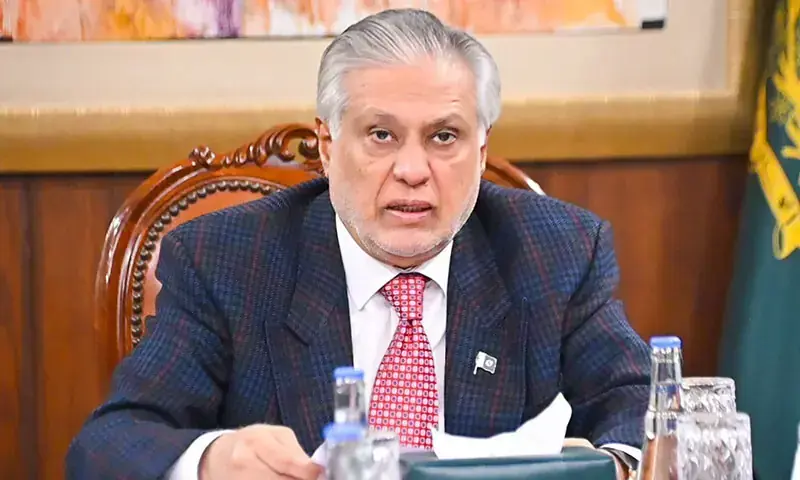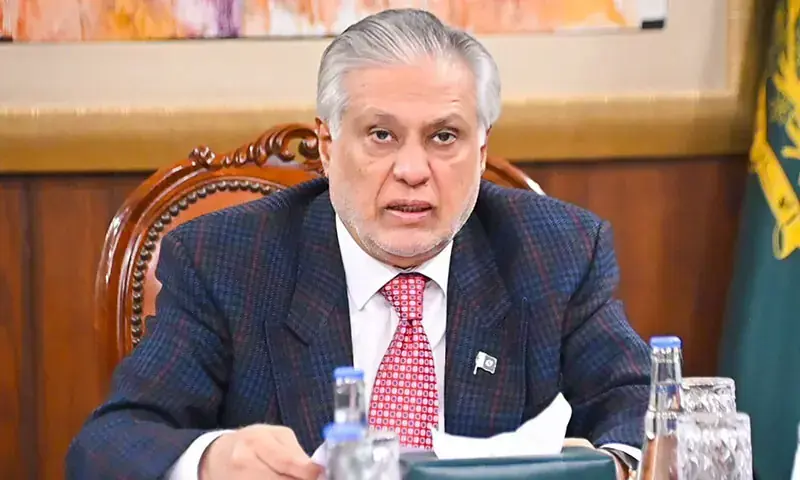
ISLAMABAD: Deputy Prime Minister and Foreign Minister Ishaq Dar disclosed on Tuesday that Pakistan’s diplomatic intervention helped deter heavier Iranian strikes on Saudi Arabia, amid ongoing missile and drone barrages targeting US military bases and allied facilities across the Gulf
Speaking at a media briefing at the Foreign Office, Mr Dar said “The position in KSA is relatively stable.”
Hours earlier, he made similar remarks while speaking in the Senate.
“We have a strategic mutual defence agreement with Saudi Arabia. Everyone knows about that, it is a sovereign agreement and we are bound by that. In view of that I while in Saudi Arabia immediately sensitised the leadership of Iran that they should keep that in mind.”
1,400 citizens stranded in Qatar, 27 in Kuwait, 500 in Kurdistan region
The Pak-Saudi Strategic Mutual Defence Agreement signed in September last year stipulates that any act of aggression against one country will be considered an act of aggression against both, and provides a framework for joint deterrence, enhanced defence cooperation, intelligence sharing and broader security collaboration amid regional instability.
Mr Dar said Iranian leaders sought assurances during the crisis that Saudi soil would not be used for attacks against Iran. “They asked for some assurances that their soil shouldn’t be used against Iran. I then had shuttle communication with both Iranian and Saudi sides and got them those assurances,” he said.
“And look, unlike all other countries, Saudi Arabia faced the least attacks other than Oman that was the mediator.”
Mr Dar said that while Iran claimed it targeted US bases, the impacts suggested otherwise. “Iran says we have attacked American bases. The missiles were not exactly hitting US bases or installations, they also instead fell on airports, hotels, residential areas,” he said.
Pakistani diaspora
Mr Dar also shared details about Pakistani nationals in Gulf and Middle Eastern countries affected by the escalating conflict, saying the government was closely monitoring their safety. He said one Pakistani national had lost his life in Abu Dhabi amid the regional hostilities, without providing further details.
He said there are about 350,000 members of the Pakistani diaspora in Qatar. In addition, around 1,400 Pakistanis who had traveled to Qatar for tourism or short visits are currently stranded due to flight disruptions.
“Our mission is facilitating them. We are thankful to the Qatari government for its cooperation,” he said.
In Iraq, Mr said there are approximately 40,000 Pakistani nationals, including about 3,500 pilgrims, or Zaireen. Around 500 Pakistanis are in the Kurdistan region and have expressed a desire to return home. He said arrangements were being coordinated for those seeking repatriation.
Saudi Arabia hosts the largest number of Pakistani expatriates in the region, with about 2.5 million nationals residing there, he said.
In Kuwait, Mr Dar said there are around 101,000 Pakistanis. Of them, 27 who were visiting are currently stranded due to travel disruptions. “Our mission is in touch and we are looking after them,” he said.
He added that about 134,000 Pakistanis are residing in Bahrain and none are reported stranded.
In Jordan, where approximately 18,000 Pakistanis live, no nationals are stranded, Mr Dar said.
On Pakistan nominating US president for Nobel Peace Prize, the foreign minister said it was in the context of India-Pakistan conflict last year.
Published in Dawn, March 4th, 2026