Roch Cholowsky of UCLA might be one of the first names called in the 2026 MLB Draft. Recent high-profile MLB draft prospects, such as Nick Kurtz of the Athletics and Paul Skenes of the Pirates, reached the majors in only their second professional season. If this were basketball or football, most of Cholowsky’s games would be on national television.
A recent report from Baseball America found that baseball players are reaching the Major Leagues much earlier than ever before. In theory, that should mean more interest in college baseball. But television coverage of the sport is not moving quickly enough.
Of UCLA’s 54 regular-season games, only four will be nationally televised. The remaining 50 will primarily air on the inaccessible B1G+, with a few others streaming on ESPN+ or FloSports.
One of the nationally televised games was on February 20 against TCU. However, the game was announced for FS1 the same day of the broadcast. With no advanced promotion and no time to build anticipation, the result was predictable: just 50,000 people watched, according to data from the TV Media Blog Substack. By comparison, 200,000 people watched the Mets and Yankees play their first spring training game on MLB Network. The next UCLA nationally televised game is not until April 15 on Big Ten Network.
College baseball and Major League Baseball would both benefit from stronger coverage, much like the NBA and college basketball, and the NFL and college football.
The classic example of this dynamic is Zion Williamson’s stardom at Duke. Williamson’s first college game against North Carolina in 2019 averaged 4.34 million viewers and was the most-watched men’s game on ESPN networks until this year’s Michigan-Duke matchup. The 2019 NBA Draft lottery, where Williamson was projected to be the number one pick, averaged 4.43 million viewers, making it the most-watched draft lottery since 2003.
Williamson’s rise was driven in part by the fact that both ACC basketball and the NBA were carried by ESPN. The network benefited directly from promoting him. For Roch Cholowsky and Major League Baseball, a similar opportunity exists. NBC will air the MLB Draft on broadcast television for the first time this year. UCLA is now a member of the Big Ten Conference, which has a contract with NBC. The agreement primarily covers football and basketball, but includes an option for other Olympic sports, which NBC has already exercised to air Big Ten women’s volleyball.
College basketball and football are not limited to one partner, and college baseball should not be either. Both ESPN and FS1 are partners with college baseball and MLB, and both could benefit from placing greater emphasis on future MLB stars while they are still in college.
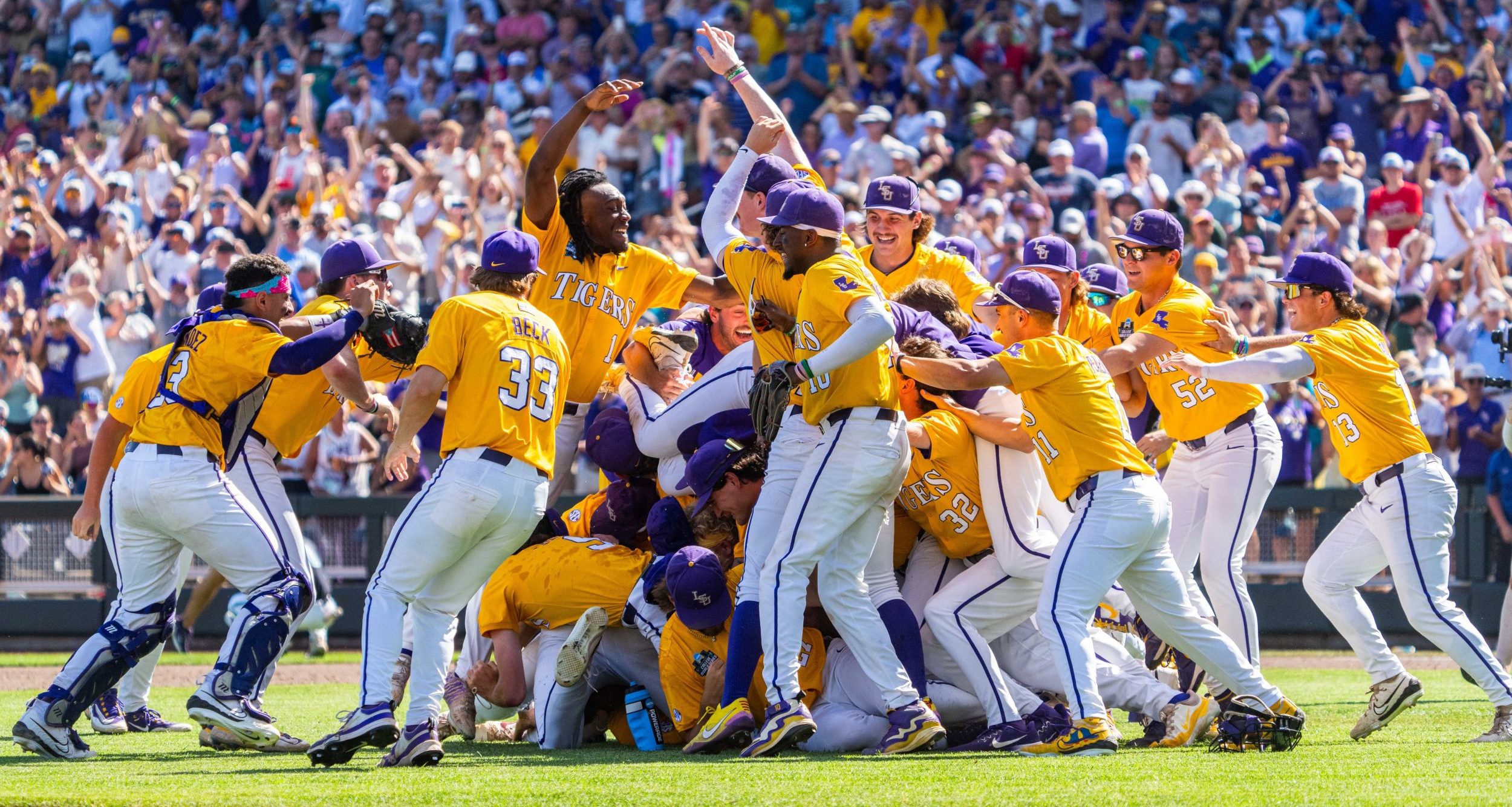
If you question whether there is a meaningful audience for college baseball, College World Series ratings suggest otherwise. The two-game 2025 College World Series averaged 2.50 million viewers across ESPN networks, the most-watched sweep since 2003. Game 2 averaged 2.78 million viewers on ABC and ESPNU, the sixth-largest audience for a College World Series game on ESPN networks.
College baseball games are also well attended. On the opening weekend of the 2026 season, more than 22,000 fans packed Globe Life Field, home of the Texas Rangers, to watch TCU face Arkansas in the Shriners Children’s College Showdown. It was the largest college baseball crowd ever at Globe Life Field. But if you were not among the 22,000 in attendance, the only way to watch was on FloSports.
The number of college baseball tournaments that only air on streaming is striking. In 2026, only two college baseball tournaments will receive national television coverage, both on MLB Network: the MLB Desert Invitational and the Andre Dawson Classic. One other tournament receives local coverage in Houston. Everything else is streaming-only.
Improving college baseball coverage does not even require regular-season changes. These tournaments take place before MLB Opening Day or during spring training. That would seem to be an ideal time to highlight college baseball, yet national networks have not fully capitalized on it. Sure, these events occur during the height of college basketball season, but even college softball has a tournament that receives national ESPN coverage during this window.
It is worth noting that coverage is slowly improving, though not quickly enough. ABC began airing the College World Series final in 2024 and will air the SEC College Baseball Tournament championship for the first time this year. While streaming offers more access than the pre-streaming era, when many games were unavailable entirely, it still limits exposure compared to national television.
There are many ways to improve college baseball coverage, from expanding national coverage of early-season tournaments to creating more consistent national television windows later in the season. Either step would place more attention on players who are moving through Minor League Baseball faster than ever and quickly becoming the next generation of MLB stars.