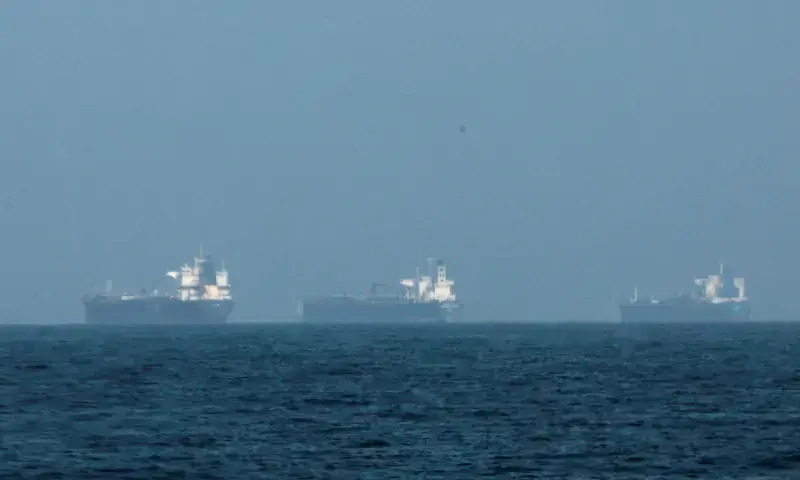
AS the confrontation between the US-Israel combine and Iran escalates across the Middle East, increasing regional instability is no longer a mere geopolitical concern for Pakistan; it now has tangible implications for its fragile economy.
With all signs pointing to a prolonged conflict, the prospects of sustained regional instability threaten to strip away the veneer of economic recovery that the government frequently touts as its key achievement.
Islamabad does appear to be preparing contingency plans for energy procurement, but the real test will be fiscal resilience and external account stability if the conflict drags on. While ensuring uninterrupted energy supplies is critical, Pakistan’s vulnerability stems even more from a sharp surge in global energy prices. Benchmark Brent crude has spiked by 17pc, while LNG prices have climbed by 68pc over the past week, intensifying pressure on the import bill and current account.
The surge in energy prices has revived fears of a repeat of the nightmare that followed Russia’s invasion of Ukraine four years ago, when soaring oil costs battered Pakistan’s economy. Every $10 increase in oil prices translates into roughly $1.5-2bn in additional annual import costs, sharply widening external financing gaps. Higher energy prices are also likely to ripple through food and other commodity imports, intensifying pressure on the country’s meagre international reserves and stoking inflation, which had already climbed to 7pc even before the US-Israel strikes on Iran.
A potential disruption in remittances poses yet another major risk. These inflows have long financed Pakistan’s burgeoning import bill amid stagnating exports, and any prolonged conflict that undermines them will further strain an already fragile balance-of-payments position.
Last but not least, the conflict has serious implications for exports to the region. Now facing mounting risks from the escalating conflict in the region, the need to adopt a comprehensive economic contingency framework has never been more urgent for a fragile economy like Pakistan. While Islamabad can do little to prevent the economic spill-over of the war in the region, a contingency plan can still help mitigate the risks.
Ultimately, the Iran-linked instability highlights the fact that Pakistan’s macroeconomic resilience remains fragile. Energy import dependence, a narrow export base and reliance on remittances leave the economy exposed to shocks originating far beyond its borders.
Published in Dawn, March 5th, 2026