The Kurds are one of the biggest ethnic groups in the world without their own nation. Numbering between 30 and 40 million worldwide, most live amid the peaks and valleys straddling the borders of Armenia, Iraq, Iran, Syria and Turkey.
Though they link their history to that of the Medes, an ancient Middle Eastern people, the Kurds were left stateless a century ago when the borders of the modern Middle East emerged from the collapsing Ottoman empire. Repeatedly caught in the bloody political competition of a volatile region and often forced to rely on their homegrown militia, the peshmerga, for defence, the Kurds say their tough and often bloody history has taught them that they have “no friends but the mountains”.
Despite significant diversity, the Kurds have their own distinct culture, with a language related to Persian that has many dialects, traditional dress, music, cuisine and identity. Their nationalism has its roots in the late 19th century but dreams of a homeland have been repeatedly dashed, and promises made across a century or more by imperial powers such as Britain and then the US to support their national ambitions have gone unfulfilled. Most are Sunni Muslim but there are significant religious minorities.
Since the second world war, a series of authoritarian regimes, rulers and governments in the region have brutally repressed Kurds, displacing and killing entire communities. Outside powers have sought to exploit the Kurds to gain leverage, sowing damaging dissension and rivalry. Such interventions frequently brought disastrous results for Kurdish communities.
In Turkey, a long conflict between security forces and the PKK, a leftist group that first fought for an independent Kurdish state and then autonomy, has killed more than 40,000 people and displaced many more in the country’s south-east.
In Iraq, Saddam Hussein used chemical weapons against Kurds in the north, though after the Gulf war of 1991 they were able to carve out a semi-autonomous zone that they have governed ever since.
Iran’s Kurdish regions have a historical record of resistance to central authority that goes back to the revolution of 1979. More recently they were a major flashpoint during a large wave of domestic unrest in 2022, when nationwide protests were triggered by the death in custody of Mahsa Amini, who was Iranian-Kurdish, and again following anti-government protests that began in late December 2025 and led to thousands of people being killed in January 2026.
In Syria, efforts during the last decade’s civil strife to build an enclave there ultimately failed, despite the Kurds’ key role as ground fighters in the successful campaign waged by the US-led coalition to defeat Islamic State there and also in Iraq.
A key factor was a US decision to privilege the consolidation of a new Syrian state and relations with Ankara over Kurdish aspirations.
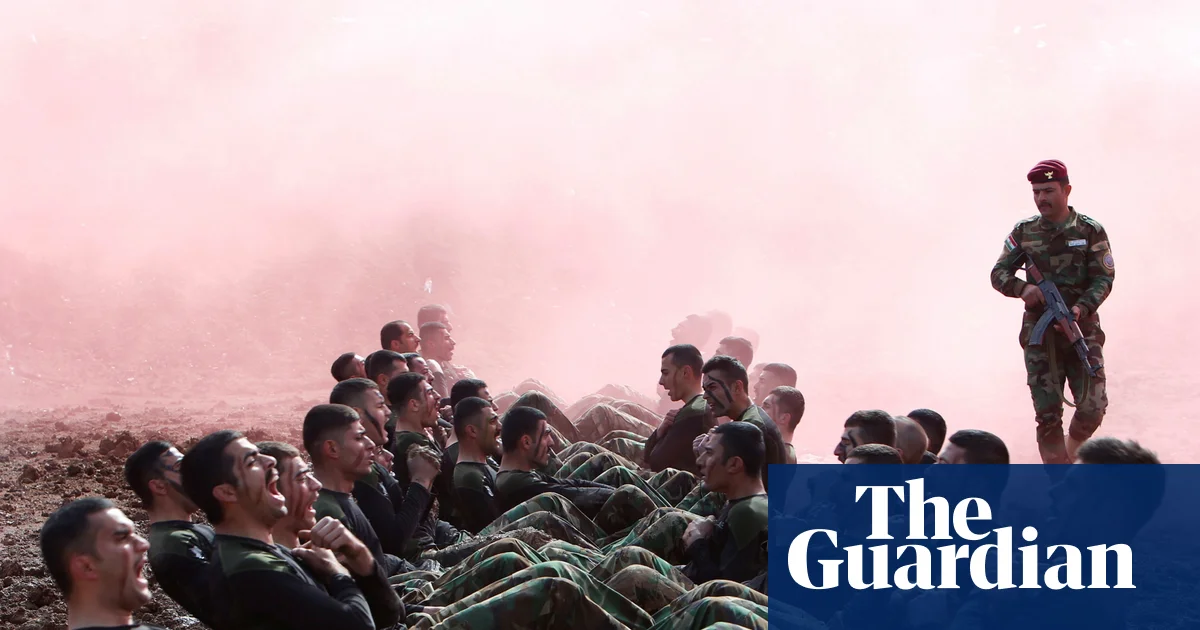
That effort, which cost many Kurdish lives, consolidated the reputation of the peshmerga – the name means those who seek death – as effective fighters whose knowledge of terrain, mobility and motivation compensate for their light weaponry even against tough enemies. It also built connections with US officials and military personnel, and refined tactics that could be deployed in coming weeks if, as reported, the Trump administration seeks to use fighters from Iranian-Kurdish opposition groups to undermine current rulers in Tehran.
With air support and US military advisers on the ground, the peshmerga could seize and hold territory in Kurdish-dominated areas in Iran but any suggestion they could advance much past the frontier is unrealistic, analysts say.
Instead the aim would be to force Iranian military commanders to divert precious troops and resources to marginal border battlefields while possibly inspiring other ethnic communities within Iran to launch their own campaigns – also potentially with US assistance.
But there are multiple potential pitfalls – as their leaders know well. For the moment, mainstream Iraqi-Kurdish leaders in northern Iraq are insisting they will stay neutral. This is understandable. When wars come the Kurds have often been caught in the crossfire, underlining once again their only true protectors are the peaks around them.