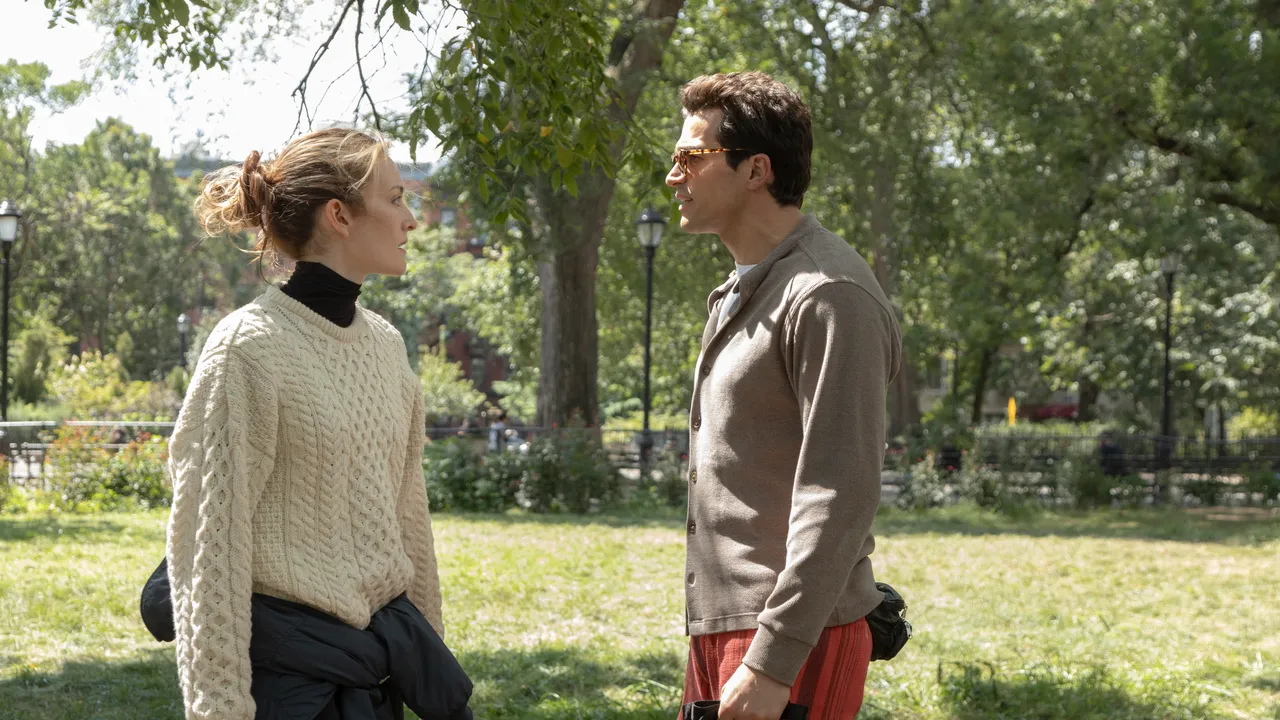
Have the ’90s ever been hotter? The perennially nostalgia-inducing decade has reached new levels of covetousness since Love Story, a television series charting the turbulent romance of JFK, Jr. and Carolyn Bessette, premiered a few weeks ago on FX. Created by Connor Hines and taking place predominantly in 1990s New York City, the show was actually shot entirely in the Empire State. It captures the electricity of an era marked by late cigarette-filled nights at Indochine and The Roxy, small sunglasses, and perfect Calvin Klein fit after perfect Calvin Klein fit. It chronicles the love story between Kennedy and Bessette, from their first meeting in 1992 up until their unfortunate and untimely demise in 1999. It’s based on Elizabeth Beller’s best selling book, Once Upon a Time: The Captivating Life of Carolyn Bessette-Kennedy and stars Sarah Pidgeon as Bessette and Paul Anthony Kelly as John F. Kennedy Jr. Bessette, who has never really left the zeitgeist not just for her relationship but also for her consummate style, remains a subject of fascination. We sat down with seasoned production designer Alex DiGerlando to discuss how he helped bring the time period to life through shooting on location and recreating sets to reflect ’90s New York.
How did you approach the production design? Since Love Story is based on a true story, was it different than say something like Black Rabbit, that you also worked on, that was entirely fictional?
I come from a research background so there’s always a lot of research involved, whether it’s photographs or books. Love Story was based on Elizabeth Beller’s book Once Upon a Time, which was helpful, but in a lot of ways Black Rabbit was more “real” than Love Story. There’s a grittiness to Black Rabbit that’s more true to current day New York than what we did with Love Story, which is more stylized, a more romantic fairy tale of the city. We really were looking for a specific lens with which to look at New York City through, which was the ’90s minimalism. This was a conversation Ryan Murphy and I had early on. The city has been sanitized since the era in a way, but our kind of romanticized rose-colored glasses version of New York at that time put a little sheen on it. The idea was to feel more like a classic Hollywood love story than true, gritty ’90s New York.
Was there a need to be accurate when recreating sets to reflect their real life equivalents?