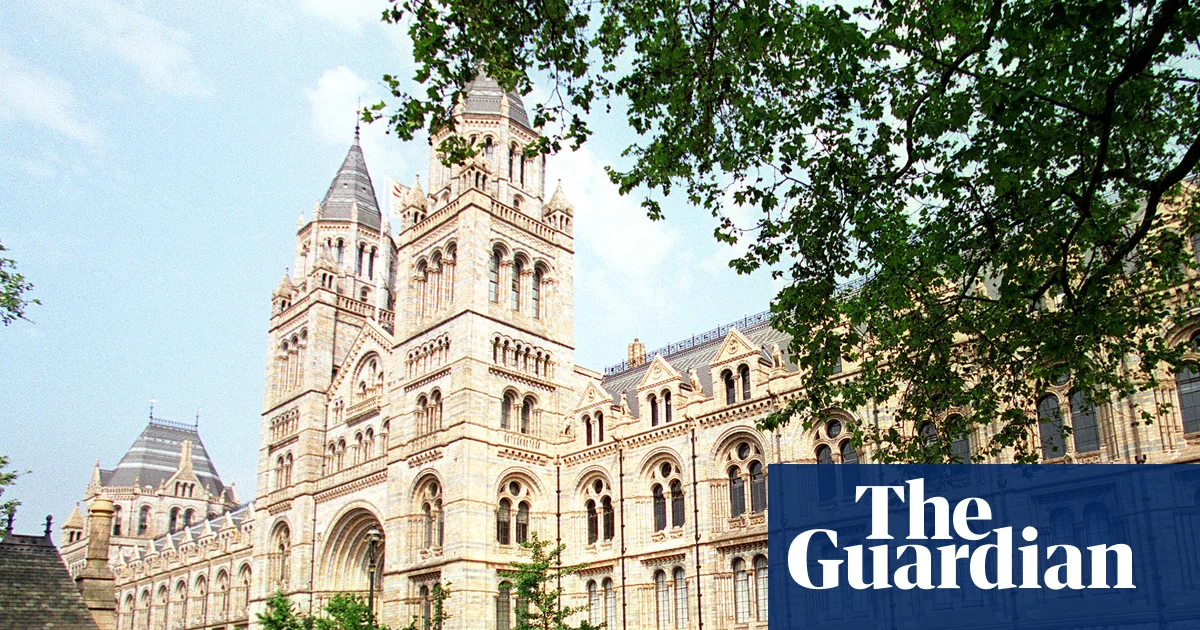
Descendants of freedom fighters executed and beheaded in southern Africa by colonial British forces have called on the Natural History Museum in London and the University of Cambridge to help them find their ancestors’ looted skulls.
Zimbabwean descendants of the first chimurenga heroes, who led an uprising against British colonisers in the 1890s, have long believed the museum and university hold several of the skulls.
Eight of the descendants have now formally asked the institutions to collaborate in locating six of their ancestors’ remains. They have also offered to provide DNA samples to assist with the research.
The museum and university said in 2022 that they had not identified any remains in their collections as belonging to the colonial resistance fighters, prompting dismay and disbelief among their descendants and Zimbabwean officials.
In letters sent to the institutions this month, the descendants said questions over the skulls’ provenance could only be resolved by establishing a taskforce of experts from Zimbabwe and the UK to examine the contested remains and archives in the countries.
“This is not only about the past,” the letters state. “It is about whether institutions today are willing to confront colonial violence honestly and repair its enduring harms. Until the remains of our ancestors are accounted for and returned, the suffering continues.”
One of letter’s signatories is a descendant of Chief Chingaira Makoni, who opposed British settlers seizing land for farming and mining in what is now Manicaland province in north-eastern Zimbabwe. After engaging the forces of Cecil Rhodes’ British South Africa Company at the battles of Gwindingwi in 1896, Makoni was captured, executed by firing squad and beheaded. His skull is believed to be among those of the chimurenga heroes later taken to England.
His descendant and the current Chief Makoni, Cogen Simbayi Gwasira, said: “We are very aggrieved as the descendants of those ancestors for the dehumanisation that took place during that period. We feel that the British, and especially the museums in England, should be honest and return those things that they took.
“If those remains are not part of us, the notion of subjugation remains in our minds. Because we feel if we are united with our ancestors, then that chapter of colonialism is closed.”
The call comes after a freedom of information investigation by the Guardian revealed that UK universities, museums and councils hold at least 11,856 items of human remains from Africa. The University of Cambridge holds most with at least 6,223 items, and the Natural History Museum has the second largest collection with at least 3,375.
Robert Mugabe, then the president of Zimbabwe, demanded a decade ago that the Natural History Museum return the resistance heroes’ skulls.
The museum’s trustees made a formal decision in November 2022 to repatriate all Zimbabwean human remains, but in a letter sent in support of the descendants last week to the culture secretary, Lisa Nandy, the all-party parliamentary group for Afrikan reparations said “no discernible progress has been made in the three years since that decision”.
Dr Rudo Sithole, a former executive director of the International Council of African Museums, said Zimbabwean experts did not believe the museum or the University of Cambridge had conducted enough research to determine whether the skulls they held from the country include those of the first chimurenga heroes.
“Because people long believed that all the chimurenga heroes’ remains were in the UK, we are now very worried that not even a single one has been acknowledged to be there,” she said.
Gwasira said his people were still suffering as a result of the colonial theft of his ancestor’s remains. He said that in the Zimbabwean Shona tradition, ancestral spirits known as vadzimu were the spiritual conduit for prayers to Mwari, or God.
“Some of our very important ancestors who held the traditional responsibility for taking our grievances to the Lord were killed, murdered, their heads were taken,” he said. “We are suffering because until those ancestors return to us then we have no access to the Lord.”
Other leaders of the more than 20 first chimurenga included the spirit mediums Mbuya Nehanda and Sekuru Kaguvi, who were hanged from a tree in 1898.
Sithole, also a former director of the Natural History Museum of Zimbabwe, said the UK lagged behind other European countries, such as France and Germany, which had funded research into the provenance of human remains taken from their former African colonies.
A spokesperson for the Natural History Museum in London said it was committed to repatriating the 11 individuals from Zimbabwe in its collections, and was awaiting confirmation from the Zimbabwean government as to their desired next steps.
“After extensive research we found no evidence to suggest that the remains are those of named individuals or are associated with particular historical episodes,” they said. “There are no other known or suspected ancestral remains from Zimbabwe held at the museum.”
A University of Cambridge spokesperson said: “The vice has written to the families and descendants to acknowledge their profound grief and the enduring uncertainty they have expressed.”
They added that the vice-chancellor had assured the descendants that the Duckworth Collection, which holds the university’s largest collection of human remains, did not hold those of any of the first chimurenga heroes.
The DCMS declined to comment.
A 2024 report said Cambridge’s governing council had approved a claim to repatriate the remains of the only Zimbabwean individual identified in its African collections. It added that the university was awaiting a response from the Zimbabwe government.