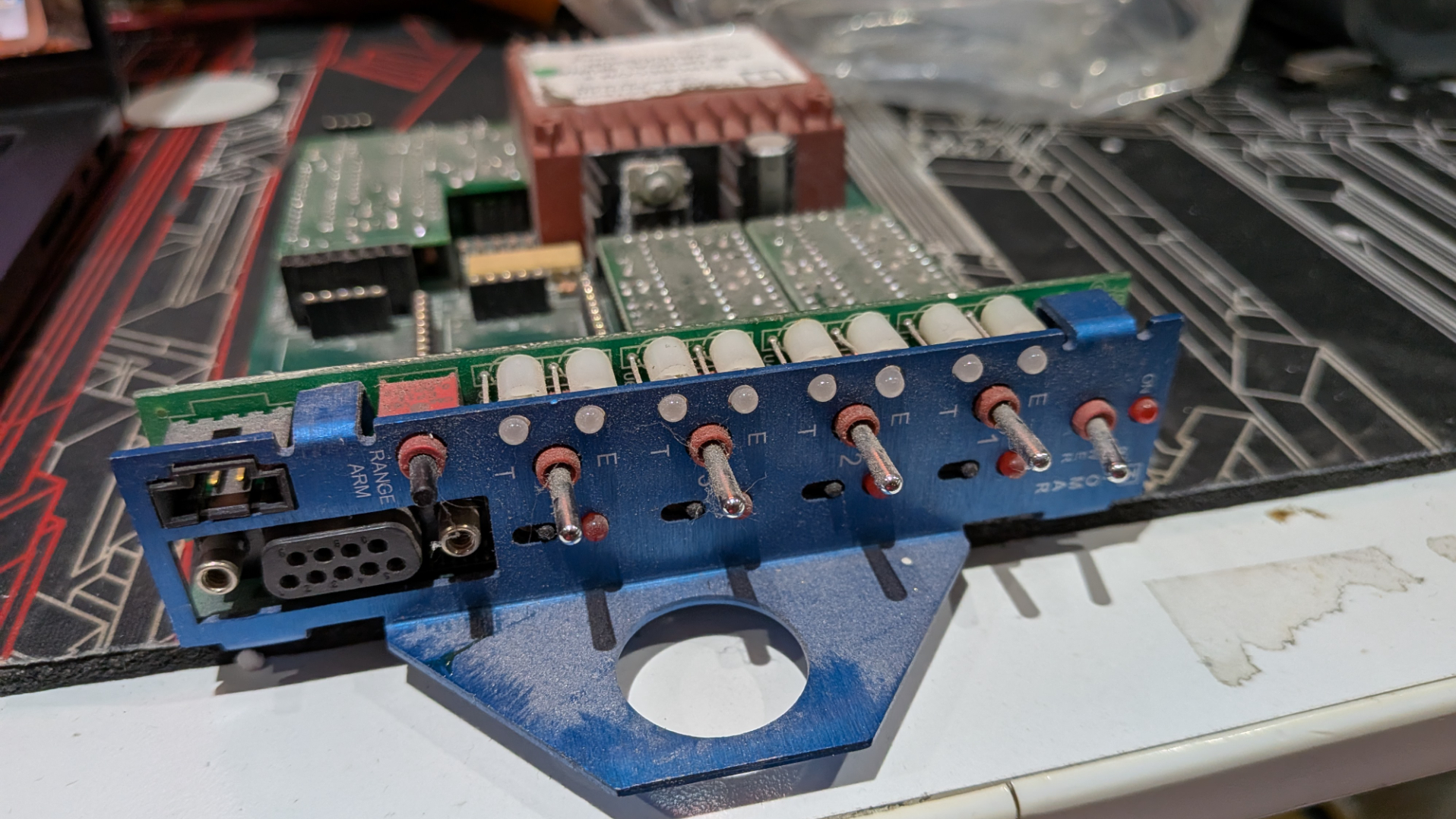
There’s a well-known movie trope in which a hacker takes control of the traffic lights in a city, causing general mayhem or creating a clear getaway path. Unlike many Hollywood representations of hacking, this is actually possible in principle; many cities install Emergency Vehicle Preemption (EVP) systems in their traffic signals to turn them green when an emergency vehicle is approaching. To see what it would actually take to control one of these, [xssfox] reverse-engineered a Strobecom II EVP system.
Most EVP systems, particularly older ones, use a strobing infrared light to alert a traffic signal to an approaching emergency vehicle. To avoid misuse, vehicles often encode a vehicle ID in the infrared signal. There have been some claims that a Flipper Zero can trigger these systems, but none that were well-verified, and probably with good reason; anyone actually trying this against a live system is courting serious legal trouble. To see whether this was actually possible [xssfox] obtained real hardware and tried to reverse-engineer the infrared protocol.
There are two main manufacturers for optical EVP systems: GTT Opticom and Tomar Strobecom. [xssfox] managed to buy a Tomar power supply which handled the processing for signal transmission, and which worked with Opticom systems. Looking at the output of this revealed that it encoded data by skipping pulses, which should be simple enough for Flipper Zero to replicate.
To reverse-engineer the Strobecom protocol, [xssfox] managed to buy a Strobecom optical signal processor, which would normally detect an emergency signal. This worked by modulating the length of infrared pulses. After some brute-forcing, a transmitter using an Arduino Nano and an infrared LED managed to activate the preemption signal, and even to transmit a vehicle ID. It seems that Strobecom systems, at least, are fairly demanding in terms of the signals they accept; signals had to be precisely timed, and in at least some systems, a valid vehicle ID would be needed to change the light.
If you’d like to learn more, we’ve gone into the technology of North American traffic signals before.