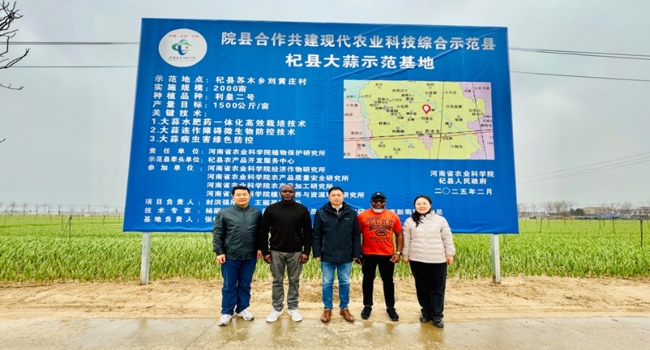
For decades, the world has looked at Africa and seen a continent that needs to be fed. But after my recent journey through the heart of China’s agricultural engine, I see a different future.
I see a future where African farmers are not just feeding themselves but are the key partners in China’s next great economic chapter: the 15th Five-Year Plan 2026-2030.
This plan isn’t just a set of rules for China; it is a roadmap for how the world will grow food in an age of climate change. My visits to Henan Province showed me exactly how Africa can fit into this map.
My first stop was Qixian County in Kaifeng City, Henan Province. To stand in Qixian is to stand at the centre of the world’s flavour. Henan and Shandong together sustain over 70 per cent of the global garlic supply.
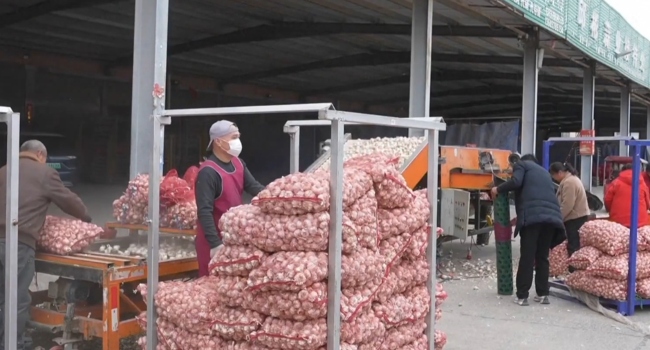
I met farmers there who treated garlic not just as a vegetable but as a high-tech product. I saw rows upon rows of garlic being processed with incredible speed.
“We don’t just grow garlic; we manage a global supply chain,” one farmer told me.
The lesson for me is that in many African countries, we grow excellent garlic and onions, but much of it rots because we lack adequate storage. China’s 15th Five-Year Plan focuses on digital trade and cold chain logistics. If Africa adopts these Chinese systems, for example, using solar-powered cooling hubs, our farmers could move from selling at local markets to supplying the entire globe.
Next, I travelled to Weishi County, also in Kaifeng. If Qixian is about flavour, Weishi is about survival. This is the land of wheat. As I walked through the ‘golden’ fields, I saw drones hovering overhead and sensors tucked into the soil.
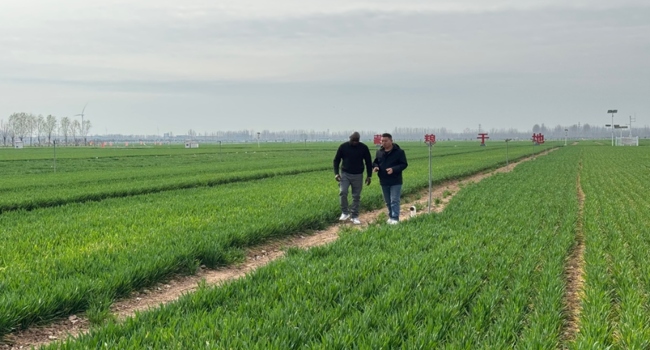
China’s 15th Five-Year Plan places a massive emphasis on seed sovereignty and smart farming. In Weishi, they use 5G technology to tell a farmer exactly how much water a single wheat stalk needs.
Now Africa is believed to have the most uncultivated arable land in the world. As China moves toward even higher technology, it needs stable, green partners to grow the raw materials for a growing global population. By learning from Weishi’s smart farming, African farmers can increase their wheat yields by three or four times using the same amount of land.
You might ask, ‘Why does China’s plan matter to a farmer in Nigeria, Namibia, Malawi, or Zambia?’ The answer is simple: China is currently moving its low-end manufacturing and heavy processing out of its cities to make room for high-tech growth. This creates a huge opportunity for Africa to become the new global processing hub.
Under the 15th Five-Year Plan, China is looking to share technology, sending the same drones and sensors I saw in Weishi to African cooperatives. This will make it easier for African speciality crops like our coffee, avocados, and, yes, garlic to enter Chinese supermarkets.
It will also help African farmers build resilience by making use of Chinese climate science to survive the droughts we are seeing today in places like Somalia and Northern Kenya.
My time in Henan showed me that farming is no longer about toiling in the dirt; it is about data, technology, and good global friendships. If we can bring the Qixian speed and the Weishi Tech back to our home soil, the next global food capital won’t just be in China; it will be right here in Africa.