
Monday, March 9, 2026
Home Business / FinanceBlackRock CEO Larry Fink warned of ‘very elevated inflation’ from tariffs last year. Here’s how 2026 is shaping up

BlackRock CEO Larry Fink warned of ‘very elevated inflation’ from tariffs last year. Here’s how 2026 is shaping up

by admin7
0 comments


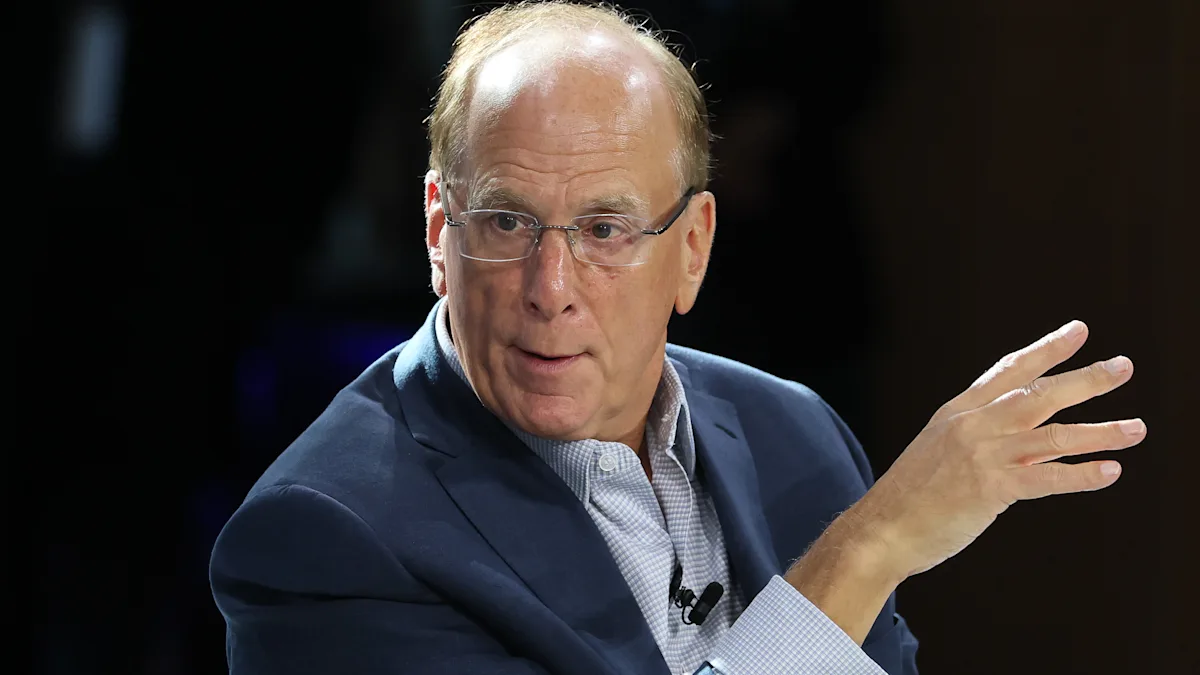
Michael M. Santiago/Getty Images

Moneywise and Yahoo Finance LLC may earn commission or revenue through links in the content below.

As far as sage billionaires go, BlackRock chairman and CEO Larry Fink belongs in the same bucket as Warren Buffett.

Fink’s firm hit a record $14 trillion in assets under management at the end of 2025 (1), so when he shares economic wisdom, it usually pays to listen — whether it’s good news or bad.

And in June 2025, when President Donald Trump’s tariff measures began to ramp up, he issued a stark warning at the Forbes Iconoclast Summit.

“If the tariffs are instituted over the next five months, I think we’re going to see very elevated inflation,” Fink said, as reported by The Wall Street Journal (2).

It’s already looking like he was right on the money.

Trump’s tariffs drove an average tax increase of $1,000 per U.S. household in 2025, according to the Tax Foundation (3). And while the Supreme Court struck down the President’s legal authority to implement many of those tariffs in February 2026, Trump has since implemented more import taxes (4).

What’s worse, the impact of those tariffs is still being felt in 2026. For example, the Tax Foundation estimates Trump’s remaining initial tariffs will cost U.S. households $400 more in 2026, while his additional replacement tariffs will add a further $200 to $600 on top of that.

Yet, recent inflation data has been lower than estimates from Bloomberg economists were expecting (5).

While this may seem surprising amid rising prices, the Competitive Enterprise Institute (CEI) suggests this is because tariffs are one-off taxes on imported goods (6). The CEI explains that since inflation is the continuous rise of prices — not just a single price increase — tariffs aren’t necessarily reflected in the inflation data.

Beyond tariffs, inflation concerns are growing due to the ongoing conflict in the Middle East. Oil prices have skyrocketed since Iran’s supreme leader was killed in a U.S.-Israeli airstrike on Feb. 28, 2026 (7). And as energy prices increase, cost pressures will mount on American consumers.

Whether or not Fink’s inflation warnings are coming true from tariffs alone, rising prices and economic volatility are serious threats to your financial well-being. Inflation can be especially risky for retirees who have limited income.

Here’s what you can do to protect and grow your money during this new era.

Social Security is the foundation for many Americans in retirement.

In fact, the Transamerica Institute reports that more than half (53%) of retirees are planning to use these benefits as their primary source of income throughout their retirement (8).

As of January 2026, that means retired workers will be relying on an average of $2,071 per month in benefits, according to the Social Security Administration (9).

But is that enough on its own? Fink also weighed in on this question.

“Social Security is a fantastic foundation for retirement,” Fink said in a 2024 interview with Bloomberg (10). “But if that’s all you have when you retire, you’re going to be living in poverty, below the poverty line. Because it’s supplemental, but it’s not meant to be the totality of what you have in retirement.”

In other words, Social Security benefits are likely not enough on their own — they should be treated as supplemental. So, rather than relying solely on the government, one way you can keep your wealth safe is by building out your nest egg before retirement.

Just doing this will put you ahead of the 30% of Americans who don’t have any retirement savings at all, according to 2026 survey data from BlackRock (11).

Read More: I’m almost 50 years old and don’t have retirement savings. Is it too late to catch up?

Read More: Non-millionaires can now invest in this $1B private real estate fund starting at just $10

When it comes to taking Fink’s advice and planning for retirement beyond Social Security, it isn’t easy, and it’s natural to have lots of questions. You will want to get clear about how much you should save per month and how to ensure you have a healthy income after you leave your career behind.

However, it can be challenging to figure out those answers by yourself.

If you want expert advice on planning your retirement, seeking a financial advisor is a smart first step, and there’s good proof to support it. According to Northwestern Mutual’s 2025 Planning and Progress Study, 74% of American millionaires are willing to work with a financial advisor, compared to just 34% of the general population (12).

That stark gap suggests professional guidance is a key differentiator between the Americans who have built long-term wealth and those who haven’t. That may be because a professional advisor doesn’t just help you make a plan for your future — they also support you in getting to the finish line.

But it’s not always easy to find the advisor who’s the right fit for you.

Finding a financial advisor who suits your specific needs and financial goals is simple with Vanguard.

Vanguard’s hybrid advisory system combines advice from professional advisors and automated portfolio management to make sure your investments are working to achieve your financial goals.

With a minimum portfolio size of $50,000, this service is best for clients who already have a nest egg built and would like to try to grow their wealth with a variety of different investments. All you have to do is set up a consultation with a Vanguard advisor, and they will help you set a tailored plan and stick to it.

Once you’ve come up with a plan for a safe retirement with your advisor, you will want to make investments that align with your goals.

The fact is, Social Security likely won’t come close to covering your needs in retirement. In order to live the retirement you want, you’ll need to save up a separate source of funds to supplement your benefits. One way to achieve that is by consistently contributing to a retirement account.

With rising market volatility, those near retirement may be worried about putting their hard-earned dollars into stocks. This is where alternative assets can offer inflation-hedging benefits to protect your retirement fund.

A traditional hedge against inflation is gold. Unlike fiat currencies, precious metals can’t be printed in unlimited quantities by central banks. And because its value isn’t tied to any one currency or economy, gold could provide protection during periods of economic uncertainty.

This unique characteristic has earned it the reputation of being a “safe haven” asset. In uncertain times, investors flock to it.

Considering the current geopolitical instability, it is perhaps no surprise that gold has soared over the last year, up by nearly 80% — sitting around $5,100 per ounce, as of March 9, 2026 (13).

One way to invest in gold for your retirement that also provides significant tax advantages is to open a gold IRA with the help of Thor Metals.

Gold IRAs allow investors to hold physical gold or gold-related assets within a retirement account, which combines the tax advantages of an IRA with the protective benefits of investing in gold, making it an attractive option for those looking to potentially hedge their retirement funds against economic uncertainties.

To learn more, you can get a free information guide that includes details on how to get up to $20,000 in free metals on qualifying purchases.

While it might be tempting to stow your money away in savings during periods of economic instability rather than invest it in opportunities that carry any risk, Fink says people are at risk of saving too much.

In a 2023 shareholder letter, he noted that stashing cash rather than investing it is part of the “silent crisis” facing retirees (14).

“If they are keeping their money in the bank rather than investing in the market,” Fink wrote, “they won’t generate the returns necessary to retire with dignity.”

While tariff inflation continues to affect the economy, being vigilant with where you put your money is important. Just make sure to take a step back to make sure you’re not missing out on opportunities.

One investment opportunity worth considering is real estate.

Many Americans consider buying investment properties for income in retirement, although the currently stagnant market — plus the work associated with finding and managing tenants — can make buying property less appealing.

Tapping into the home equity market can be another way to benefit from real estate, without the headaches of being a landlord.

With home values high and homeowners shying away from new debt, investors have a different way in.

If you’re not an accredited investor, crowdfunding platforms like Arrived allow you to enter the real estate market for as little as $100.

Arrived offers you access to shares of SEC-qualified investments in rental homes and vacation rentals that are curated and vetted for their appreciation and income potential.

Backed by world-class investors like Jeff Bezos, Arrived makes it easy to fit these properties into your investment portfolio regardless of your income level.

Their flexible investment amounts and simplified process allow accredited and non-accredited investors to take advantage of this inflation-hedging asset class without any extra work on your part.

Another avenue you could take to diversify for retirement? Multifamily real estate.

This type of investment opportunity can offer stable, reliable cash flow for your retirement. That’s because your income isn’t dependent on one tenant, so a vacancy or missed payment won’t put your income at risk like with single-family rentals. Another area to explore is industrial properties, which can offer a unique slice of the real estate vertical.

If diversifying into multifamily and industrial rentals appeals to you, you could consider investing with Lightstone DIRECT, a new investing platform from the Lightstone Group, one of the largest private real estate companies in the country with over 25,000 multifamily units in its portfolio.

Since they eliminate intermediaries — brokers and crowdfunding middlemen — accredited investors with a minimum investment of $100,000 can gain direct access to institutional-quality multifamily opportunities. This streamlined model can help reduce fees while enhancing transparency and control.

And with Lightstone DIRECT, you invest in single-asset multifamily deals alongside Lightstone — a true partner — as Lightstone puts at least 20% of its own capital into every offering. All of Lightstone’s investment opportunities undergo a rigorous, multi-stage review before being approved by Lightstone’s Principals, including Founder David Lichtenstein.

How it works is simple: Just sign up with your email, and you can schedule a call with a capital formation expert to assess your investment opportunities. From here, all you have to do is verify your details to begin investing.

Founded in 1986, Lightstone has a proven track record of delivering strong risk-adjusted returns across market cycles with a 27.6% historical net IRR and 2.54x historical net equity multiple on realized investments since 2004. All told, Lightstone has $12 billion in assets under management — including in industrial and commercial real estate.

As such, even if multifamily rentals don’t appeal to you, Lightstone could still serve you well as an investment vehicle for other real estate verticals.

Get started today with Lightstone DIRECT and invest alongside experienced professionals with skin in the game.

Join 250,000+ readers and get Moneywise’s best stories and exclusive interviews first — clear insights curated and delivered weekly. Subscribe now.

We rely only on vetted sources and credible third-party reporting. For details, see our editorial ethics and guidelines.

BlackRock (1), (11), (14); The Wall Street Journal (2); Tax Foundation (3); The White House (4); Bloomberg (5); Competitive Enterprise Institute (6); The New York Times (7); Transamerica Institute (8); Social Security Administration (9); @markets (10); Northwestern Mutual (12); GoldPrice (13)

This article provides information only and should not be construed as advice. It is provided without warranty of any kind.


Source link

You may also like

Leave a Comment