Iranian leadership seems to betting that a strategy of controlled attrition will eventually erode the coalition’s appetite for prolonged conflict, while Washington could be believing that its campaign is approaching its military objectives and could end sooner.
On the eleventh day of the war, the conflict in the Middle East is shifting into a phase of sustained attrition — one in which Iran appears determined to exploit endurance, lower operational costs and employ a network of proxies to offset the technological and financial advantages of the United States and Israel.
Though the kinetic activity across the main theatre has remained comparatively limited during the past 24 hours, the effects of the operations continue to be strategically significant.
Until now, Iran’s striking of Israel’s Haifa refinery complex a couple of days ago with Shahed-136 drones, in retaliation for Israeli attacks on oil depots around Tehran, remains the most consequential single event shaping current Israeli strategic calculus.
Firefighting crews have now reportedly contained roughly 95 per cent of the blaze at Haifa, but several primary storage tanks have suffered structural damage and operations at the facility are expected to remain suspended for at least two weeks.
On the other side of the battlefield, fires triggered by earlier coalition strikes on oil depots in the Tehran and Alborz region are still burning, sending toxic black carbon plumes into the atmosphere and intensifying a growing environmental crisis in the Iranian capital.
Follow-up coalition attacks targeted additional Iranian oil storage facilities but did not produce the same degree of strategic disruption that Iran achieved with the Haifa strike.
Adjustment in strategy rather than a lull in hostilities
The reduced frequency of exchange of fire reflects an adjustment in strategy rather than a lull in hostilities. It appears both sides are conserving higher-value assets while consolidating the damage already inflicted.
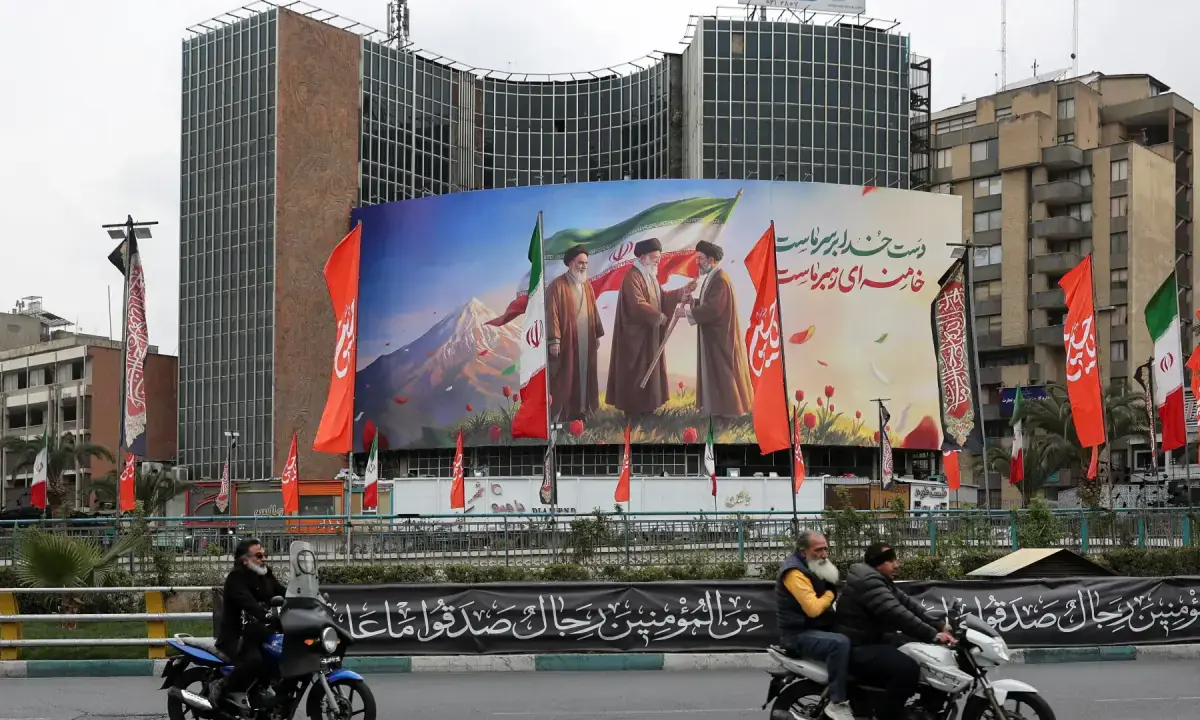
Within Tehran, new Supreme Leader Mojtaba Khamenei has consolidated his authority through rapid internal stabilisation, and continuation of war operations is widely interpreted as the first major signal that the strategic line of resistance and retaliation will continue under the new command structure.
The evolving battlefield tactics reveal how the ground situation, economic pressures and resource constraints are shaping decision-making on both sides.
Iranian forces are increasingly relying on a radar baiting approach combined with repeated waves of low-cost drones, which has proven effective in stretching and degrading the air defence networks deployed by the US and Israel. Several advanced radar assets linked to Terminal High Altitude Area Defence (THAAD) and Patriot batteries in the Gulf region have reportedly been damaged or disabled in earlier engagements, reducing warning times for incoming threats and complicating interception efforts.
For Israel, the pressure is becoming visible in operational priorities. The Israeli Air Force is now estimated to be devoting the overwhelming majority of its sorties to operations linked directly to Iran, leaving little capacity for large-scale ground operations in Lebanon.
Hezbollah appears to be exploiting this constraint by maintaining steady rocket and anti-tank fire along the northern front, enough to pin Israeli forces and force continued deployment without crossing the threshold into full-scale escalation.
Economic pressures the most powerful restraint
Economic pressures have, meanwhile, emerged as the most powerful restraint on the pace of operations. Initial estimates suggest that the Haifa refinery strike alone will cost between $1.4-$1.7 billion dollars in immediate damage and lost output, forcing Israel to tap strategic fuel reserves while accelerating imports through the Ashkelon corridor.
Across the Gulf, the war is beginning to affect energy production and commercial stability. Saudi Aramco has reportedly reduced output at two fields as a precaution while Bahrain’s Bapco energy company has declared force majeure following earlier strikes on fuel infrastructure.
The broader economic consequences extend well beyond the region. Oil markets remain volatile, and insurance costs for shipping near the Strait of Hormuz have risen sharply.
Technology companies have also begun shifting sensitive digital infrastructure away from Gulf-based data centres, with major cloud operators redirecting workloads toward India and Singapore as a precaution against potential disruption.
Importantly, military logistics are getting increasingly strained. The pace of missile interceptions during the first days of the war has placed significant pressure on coalition ammunition stocks, particularly interceptor missiles used in air defence systems. Resupply timelines and the loss of several radar systems have limited the ability to sustain a very high tempo of defensive operations, a vulnerability that Iranian planners appear to be exploiting by relying on repeated waves of relatively inexpensive but increasingly precise drones designed to exhaust opposing defences.
Domestic sentiment
Domestic sentiment inside the warring countries is also shaping strategic choices. In Iran, the leadership transition has been accompanied by large public rallies celebrating the appointment of Mojtaba Khamenei, projecting an image of national cohesion and defiance. In Israel, by contrast, the prolonged period of shelter alerts and the economic impact of the Haifa incident are producing visible fatigue among the public even as official censorship limits the reporting of casualties and damage.
Together, these factors are nudging the conflict toward a calibrated war of endurance rather than a decisive military confrontation.
The strategies
Iranian strategists seem to be pursuing a strategy designed to impose steady economic and psychological costs on their adversaries, gradually eroding the early sense of momentum that accompanied the coalition’s opening strikes while rebuilding deterrence through sustained retaliation.
The US is presenting a different interpretation of the situation. President Donald Trump stated publicly that the coalition campaign is far ahead of its original timeline and suggested that the mission is already largely complete. The claim looks to be based on the rapid elimination of several senior Iranian leaders and significant damage inflicted on strategic facilities. At the same time, he warned that Iran would face massive escalation if it attempted to disrupt oil exports through the Strait of Hormuz.
The message appears designed to signal confidence while keeping the door open for a relatively rapid conclusion to the campaign. In Washington and Tel Aviv, there is growing discussion about whether the conflict should be wound down before it evolves into a prolonged regional war with escalating economic consequences.
Within Israeli strategic circles, some analysts and former officials have begun to argue more openly that the widening economic and human costs should prompt serious consideration of a de-escalation path. Yet the political leadership there has not formally embraced any such initiative, and no active back-channel negotiations have been confirmed.
Tehran, for its part, has made clear that it is not prepared to accept an unconditional ceasefire. Officials close to the new leadership have emphasised that Iran is ready for a long conflict if necessary and will only consider negotiations that produce guarantees preventing similar attacks in the future. The consolidation of power around Ayatollah Mojtaba Khamenei appears to have strengthened this position rather than softened it.
Beyond the main theatre, the network of proxy fronts continues to function as an important force multiplier for Tehran. Hezbollah has intensified its steady pattern of rocket and anti-tank attacks along the Lebanese border, keeping Israeli forces tied down and reducing the likelihood of a major ground offensive. Sporadic clashes have also been reported near the Syrian frontier, where the conflict is beginning to draw in Joulani’s Syria.
In Iraq, armed factions aligned with Iran have sustained pressure on facilities linked to US logistics, including drone attacks near Basra and reported strikes on bases associated with coalition operations. The US has also been targeting the resistance groups in Iraq.
The Houthis in Yemen has so far kept their long-range capabilities in reserve but continue to signal that the Red Sea theatre could become active if the conflict escalates further.
Among the Gulf states, Bahrain remains the most exposed to the political fallout of the war. The partial evacuation of US facilities on the island is continuing as public sentiment in Bahrain has grown increasingly tense following earlier attacks on energy infrastructure and rising economic uncertainty linked to the Bapco disruption.
When the strategies of the two sides are compared, it becomes obvious that Iranian leadership is betting that a strategy of controlled attrition will eventually erode the coalition’s appetite for prolonged conflict while restoring a measure of strategic deterrence. Washington, on the other hand, could be believing that the campaign is approaching its military objectives and could end sooner rather than later.
Yet, the signals coming from Tehran suggest that the conflict will not conclude on terms that leave the underlying strategic balance unchanged. For now, the war continues at a slower but steadier rhythm, one in which endurance rather than speed may prove decisive.
Header image: A banner of Iran’s new supreme leader Mojtaba Khamenei with late supreme leader Ayatollah Ali Khamenei and late supreme leader Ayatollah Ruhollah Khomeini on a building, amid the US-Israeli conflict with Iran, in Tehran, Iran, March 10, 2026. — Reuters/ File