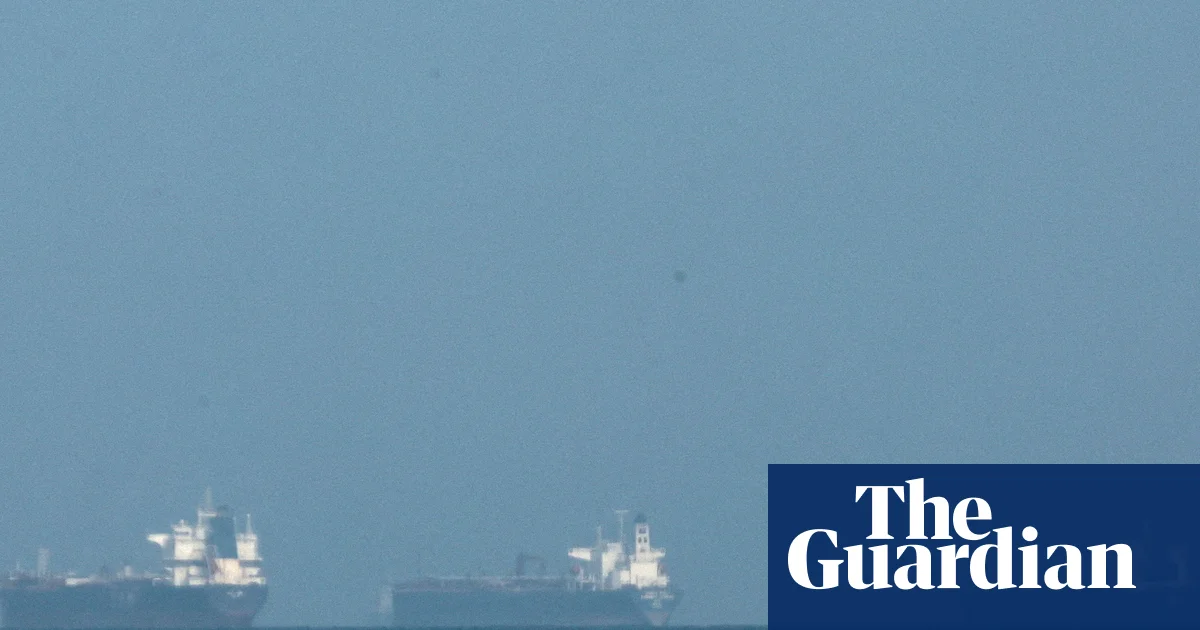
Saudi Arabia’s state oil company has warned of “catastrophic consequences” for the world’s oil markets if the US-Israeli war with Iran continues to block shipping in the strait of Hormuz.
The world’s biggest oil company expects to be able to export about 70% of its usual crude output despite the stranglehold on the vital trade artery, but its chief executive warned that there would still be “drastic” consequences for the world economy if the disruption continues.
Oil shipments from the Middle East have been blocked from passing through the narrow waterway since the US strikes on Iran 11 days ago, erasing about 20m barrels of oil from the global market every day.
Amin Nasser, the chief executive of Aramco, said: “While we have faced disruptions in the past, this one by far is the biggest crisis the region’s oil and gas industry has faced.”
Aramco has been unable to ship crude cargoes out of the Gulf due to the disruption, but it hopes to meet customer demands by flowing crude through the east-west pipeline to the Red Sea port of Yanbu where it could be shipped to buyers.
The company plans to ramp up shipments through the pipeline to reach its full capacity of 7m barrels a day in the next couple of days, it said. About 2m barrels a day will be sent to Saudi Arabia’s refineries in the west of the country, leaving 5m barrels a day for the global crude market. This represents about 70% of the kingdom’s usual exports.
Typically about 100 tankers a day pass through the narrow waterway lying south of Iran, but the number has dwindled to single digits after the Islamic Revolutionary Guard Corps threatened to “set ablaze” any vessel using the trade route, which carries a fifth of the world’s oil and liquefied natural gas.
Aramco said that it is now meeting most of its customers’ needs partly by tapping crude held in storage outside the Gulf region. He said these stores could not be used for “an extended period of time, but for the time being, we are capitalising on it”.
The disruption caused global oil market prices to surge to highs of in $119 a barrel this week, the highest price since 2022 when Russia invaded Ukraine, raising fears for the global economy. Brent crude was trading at about $91 on Tuesday.
Nasser said: “There would be catastrophic consequences for the world’s oil markets, and the longer the disruption goes on … the more drastic the consequences for the global economy.”
G7 finance ministers met on Monday to discuss plans to release the emergency stocks of crude held by global governments to help temper rising oil prices. However, there was no agreement to move forward with the release, which has happened on only five occasions in the history of the market.