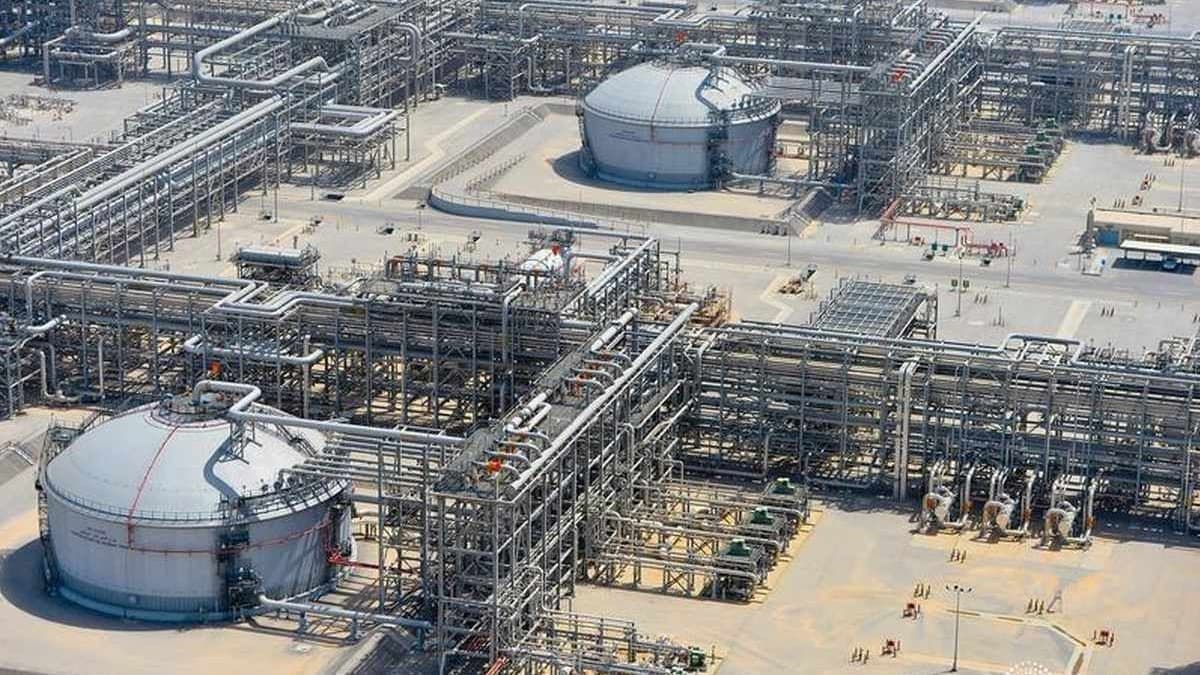
Saudi Arabia was regarded for decades as the ‘global swing oil producer’, able to quickly decrease or increase its oil flows to respectively raise or lower world oil prices. Riyadh has long perpetuated this idea, with grandiose claims about the Kingdom’s crude oil reserves and resultant spare capacity. After two of its key oil installations were hit by rockets from the Iran-backed Houthis back in 2019, it also highlighted that its capacity to recover from such shocks was also extremely quick. So, with the world facing continued spikes in oil prices the longer the current U.S./Israel-Iran conflict persists, what can this global oil powerhouse really do to help keep them subdued?
Given Iran’s targeting last week of Saudi Arabia’s Ras Tanura refinery — the Kingdom’s largest, with crude refining capacity of around 550,000 barrels per day (bpd) — the immediate question is how quickly the country could respond to a successful attack on its key oil infrastructure, as it saw back in 2019? In the recent strikes on Ras Tanura, most of the drones were intercepted, although the refinery was shut temporarily as a precaution, but this and other refineries will almost certainly be in Iran’s sights for further attacks. At the time of the Houthi attacks in 2019 on Saudi Arabia’s Abqaiq and Khurais oil processing units, as analysed in full in my latest book on the new global oil market order, the two facilities together represented around 50% of Saudi Arabia’s oil production, or about 5% of global oil supply. Following the rocket strikes on them, global oil prices spiked by up to 20%.
Related: Little-Known US Company Lands Important Pentagon Contract in Rare Earth Race
The lessons of the immediate aftermath of those 2019 attacks were startling, in several respects for oil traders and analysts alike. Firstly, Saudi Arabia’s new oil minister at that time (and currently still in position), Prince Abdulaziz bin Salman stated that the Kingdom planned to restore its “production capacity” to 11 million bpd by the end of September and recover its “full capacity” of 12 million bpd two months later. As one senior London-based oil industry analyst exclusively told OilPrice.com at the time: “The Saudi statements may not contain any direct falsehoods as such but nor are they being entirely fulsome with the truth.” He added: “It is extremely telling that he speaks of ‘capacity’ and later of ‘supply to the market’, as these are terms that Saudi tends to use in order to avoid talking about actual production, as capacity and supply are not the same thing at all as actual production at the wellheads.” He concluded: “What Saudi Arabia is trying to do by not revealing the true picture is to protect its reputation as a reliable oil supplier, especially to its target clientele in Asia, so we have to take all of these comments with a hefty pinch of salt.”