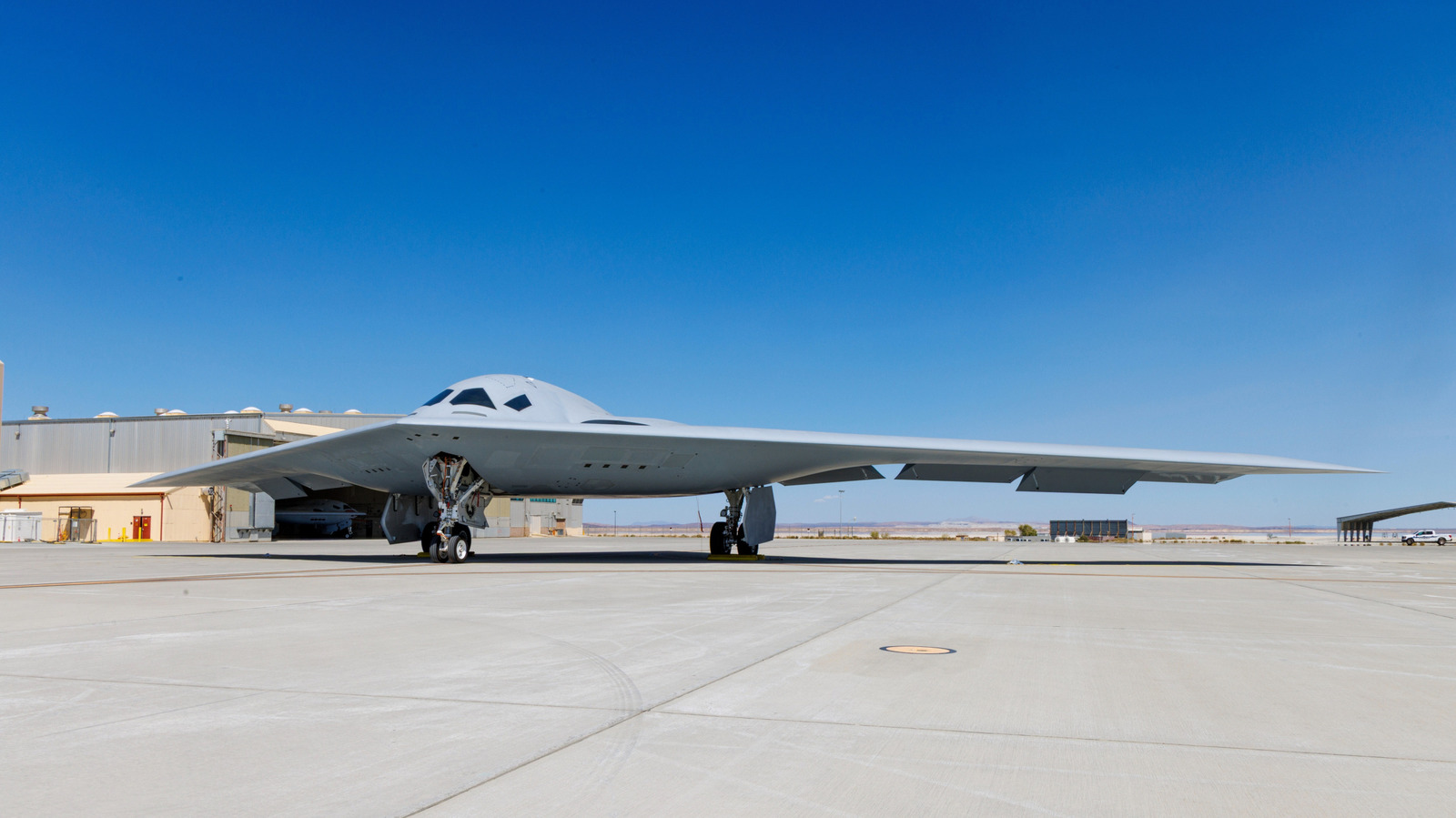
For close to three decades, the Northrop Grumman B-2 “Spirit” carried the mantle of being the only stealth bomber in the U.S. Air Force arsenal. Alongside the Lockheed Martin F-117 Nighthawk stealth attack aircraft, the B-2 is one of the most advanced stealth planes ever made. It continues to be one of the mainstays of the U.S. nuclear triad, even in 2026. While the aircraft remains operational, there is no denying the B-2s are slowly approaching retirement age and will need to be replaced by an equally capable — or even better — stealth bomber in the years to come.
As it turns out, the U.S. Air Force already has that successor in sight. A small number of next-generation stealth bombers have begun entering the USAF inventory, with at least two test aircraft delivered so far. Known as the Northrop Grumman B-21 Raider, this new platform is expected to gradually take over the B-2’s role in the decades to come. While visually similar to the aging B2 bombers, the new B-21 features several changes from the B2, including fewer engines and smaller dimensions.
The B-21 bomber should greatly enhance the U.S. Air Force’s strike-anywhere capabilities. To that end, the Department of the Air Force signed a new agreement with Northrop Grumman, essentially directing the manufacturer to speed up production of the aircraft. The U.S. Air Force is slated to receive at least two more B-21 test aircraft in FY2026, and the new agreement means that the U.S. Air Force now expects to start fielding B-21s in 2027.
The USAF needs B-21s, and it needs them fast
The signing of the new agreement between Northrop Grumman and the U.S. Air Force to enhance the B-21’s production capacity was publicly announced in February 2026. As per the revised terms, the manufacturer will increase the annual production rate of the B-21 by around 25%. According to the U.S. Air Force, this increase in production rate will allow it to acquire B-21s faster than originally anticipated. This move will also ensure that more B-21s will be combat-ready for any future conflicts. In addition, the compressed delivery schedule should ensure that the program doesn’t massively exceed the projected budget, as more aircraft would be delivered in a shorter timespan.
This move requires some serious money. The U.S. Air Force will spend an additional $4.5 billion as part of this move, which had already been authorized and appropriated under the FY2025 Reconciliation Act (also known as the One Big Beautiful Bill). It is pertinent to note that, unlike several other crucial U.S. military projects that are running way behind schedule – like the heavily delayed USS Enterprise — or have been plagued by cost overruns, the B-21 program has largely stuck to its schedule. It will be interesting to see whether the accelerated delivery requirements change anything in this regard.