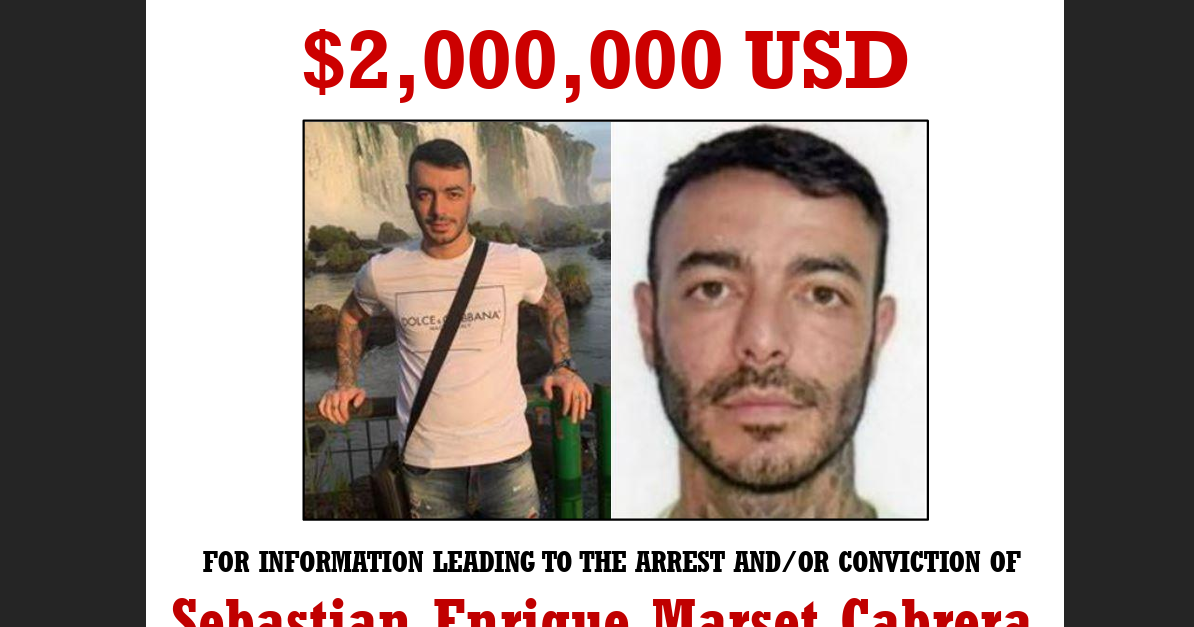
Notorious Latin American narco trafficker Sebastian Marset, who eluded police for years, was handed over to U.S. authorities after his arrest Friday in Bolivia.
Marset, a Uruguayan national who was on the U.S.’ most-wanted fugitives list, was passed to agents of the U.S. Drug Enforcement Administration at Santa Cruz airport, then put on a U.S. airplane, state television showed.
“The arrest and deportation were carried out pursuant to a court order issued by the U.S. justice system,” Marco Antonio Oviedo, a senior minister, told reporters.
The kingpin was arrested in an upscale neighborhood of Santa Cruz, Bolivia’s economic capital, in an operation that mobilized hundreds of police officers, an AFP journalist witnessed.
Four other people were arrested in the raids, which come days after Bolivia and 16 other countries joined an anti-cartel military alliance launched by President Trump.
Marset, who is the most notorious drug baron in the southern part of South America, had a $2 million U.S. bounty on his head for alleged money laundering. An indictment unsealed in the Eastern District of Virginia, alleges Marset “leads a large-scale drug trafficking organization that is believed to be responsible for moving ton quantities of cocaine from South America to Europe, while generating tens of millions in cash and proceeds,” according to the DEA.
DEA 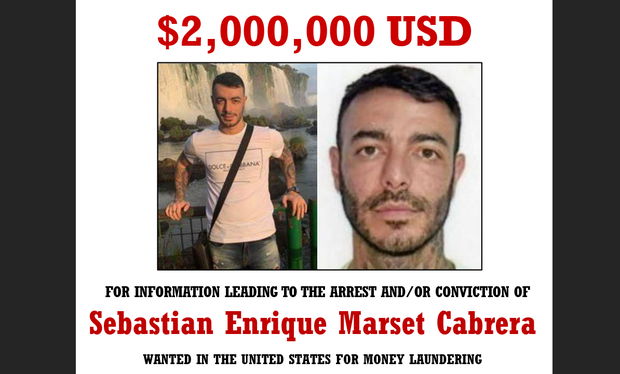
The soccer-loving 34-year-old laundered the proceeds of his drug enterprise by purchasing and sponsoring lower-level professional soccer teams across Latin America and Europe and even put himself in the starting lineups.
He was imprisoned in his native Uruguay for drug trafficking between 2013 and 2018 and later moved around South America, living for a time in Bolivia and also Paraguay.
Both those countries had also issued warrants for his arrest.
The United States issued a reward for his capture last year after what it called “the largest and most consequential organized crime investigation against cocaine trafficking in Paraguayan history.”
Marset is accused of leading a criminal network that imported more than 16 tons of cocaine into Europe.
The Paraguayan investigation reportedly revealed him asking advice in text messages on how to disappear the bodies of murdered enemies.
Imitating soccer stars
A Washington Post profile from 2024 said Marset paid $10,000 in cash to wear the number 10 jersey worn by football icons Pele, Maradona and Messi during his teams’ games.
He stamped his drug shipments “The King of the South,” the Post added, and gave orders for cocaine to be stashed in shipments of cookies and soybeans.
He had been on the run since July 2023, when fled his home in Santa Cruz, on the eve of a massive police operation to capture him.
Bolivia’s center-right President Rodrigo Paz thanked “international organizations from various neighboring countries and the continent” on Friday for their cooperation in his capture.
Ipa Ibanez/REUTERS 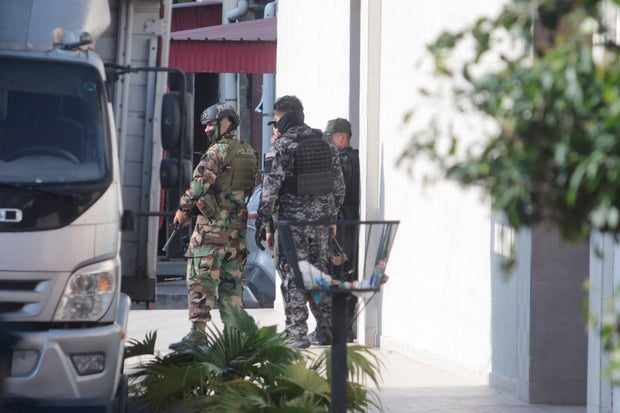
Paz has sought to boost ties with the United States since winning office last year in elections that ended two decades of socialist rule begun under Indigenous coca farmer Evo Morales.
Bolivia’s is the world’s third largest producer of cocaine, which is made from coca leaves.
Marset is the second Latin American narco boss to be killed or captured in under a month.
U.S. intelligence contributed to his capture.
The arrest comes just weeks after notorious cartel leader Nemesio Rubén Oseguera Cervantes, also known as “El Mencho,” was killed during an operation in the western state of Jalisco. He had a $15 million U.S. bounty on his head and was killed in a military shootout.