Iran seems to be widening the theatre of conflict faster than Washington can translate military pressure into political leverage.
On the sixteenth day of the US–Israel war on Iran, the conflict continued to rage across multiple theatres as Tehran and its regional allies sustained pressure through missile strikes, proxy attacks and maritime disruption. Meanwhile, the US and Israeli campaign showed limited progress in compelling Iran to reopen the Strait of Hormuz, which now appears to be their immediate objective.
The overall pattern of the war now points to a steady widening of the battlefield. While US and Israeli forces retain clear superiority in the air and continue to conduct deep strikes inside Iran and across Lebanon, Iranian retaliation has not diminished, and the network of allied groups aligned with Tehran is gradually drawing additional fronts into the confrontation.
During the past 24 hours, American and Israeli forces carried out further missile and air strikes against targets in central and western Iran, including industrial facilities, an airbase associated with the Islamic Revolutionary Guard Corps (IRGC) and infrastructure linked to intelligence and satellite mapping. These strikes were meant to degrade Iran’s military and logistical capacity.
Hormuz, now the casus belli
With President Trump increasingly framing the reopening of the Strait of Hormuz as the central casus belli of the war, he is seeking to broaden the coalition around that objective by urging US allies and major trading partners to contribute naval assets for securing the waterway.
He has publicly called on countries such as the United Kingdom, France, Japan, South Korea and others to deploy warships or logistical support for escorting commercial traffic through the Strait, arguing that the disruption now threatens global energy supplies rather than merely American interests.
The response so far, however, has been cautious, with several partners reluctant to be drawn directly into the confrontation and some governments limiting their role to defensive preparations or consultations rather than committing forces to the mission.
Strikes continue
At the same time, Israeli air operations continued against Hezbollah positions in Lebanon, striking command facilities in Beirut’s southern suburbs and launch sites in the south of the country. The Lebanese health ministry has said that more than 800 people have lost their lives since hostilities expanded in late February, while displacement inside Lebanon has crossed 800,000.
Israeli military planners are also reported to be examining options for a possible ground operation toward the Litani River if rocket and drone attacks continue.
Despite these strikes, Iran’s missile and drone campaign has shown little sign of slowing. Israeli sources estimate that roughly 400 ballistic missiles have been launched toward Israeli territory since the war began. Fresh waves on the sixteenth day struck areas around central Israel and Eilat, causing structural damage and injuries, while Iranian media claimed that a strike had hit facilities linked to Israel’s secretive Institute for Biological Research in Ness Ziona.
Iranian barrages have also increasingly targeted the Gulf region. Over the past 24 hours, a combination of ballistic missiles and drones was reported across Saudi Arabia, the United Arab Emirates, Bahrain, Kuwait and Qatar.
Kuwaiti authorities said radar installations at Kuwait airport had been damaged while in Dubai, a strike was reported near a major financial district building in what Iranian sources described as retaliation for actions against Iranian banking interests earlier in the conflict.
Tehran has denied responsibility for some of these attacks saying that some malign actor was using clones of its Shahed drones, called Lucas, to carry out attacks in neighbouring countries for heightening regional tensions. Iran said that its set of targets was declared and it accepts responsibility for those strikes.
Iranian commanders earlier explicitly warned that ports, energy facilities and industrial sites connected to US operations across the Gulf will be considered legitimate targets if the war continues.
The United Arab Emirates has emerged as a particular focus of this pressure. The Fujairah oil terminal, a key export hub designed to bypass the Strait of Hormuz, was already damaged over the past few days by a drone strike that caused fires and halted loading operations. Iranian officials have since warned that further attacks on Gulf energy infrastructure could follow if strikes against Iranian territory persist.
The proxy front
Parallel pressure is also building through allied groups operating in neighbouring countries. Iraq has become the most active proxy front, with militia groups carrying out repeated attacks on American installations. These incidents have heightened political tensions inside Iraq. Some Iraqi leaders have criticised the presence of foreign forces and warned that continued attacks risk drawing the country further into the regional confrontation.
Hezbollah has simultaneously maintained sustained rocket and drone fire into northern Israel. The pace of launches has increased in recent days, forcing Israel to keep substantial air defence and ground forces along the Lebanese frontier even as the broader war with Iran has intensified.
Another potential escalation point lies in Yemen. The Houthi movement has signalled that it has formally aligned militarily with Iran and could soon announce what it calls “Hour Zero”, referring to coordinated operations in support of Tehran. Analysts believe this could involve renewed attacks on shipping in the Red Sea or attempts to disrupt the Bab al Mandab Strait, a chokepoint linking the Red Sea with the Gulf of Aden.
Such a development could stretch US and allied naval forces across two major maritime corridors simultaneously and further disrupt global shipping flows already affected by the crisis in the Strait of Hormuz.
Evolving naval deployments
Naval deployments in the region also continue to evolve. The amphibious assault ship USS Tripoli, carrying the 31st Marine Expeditionary Unit, is en route from Japan and is expected to arrive within the next seven to ten days. The deployment would roughly add 2,500 Marines along with F-35B aircraft and helicopter assets to the forces already operating in the region.
The precise role of this force remains unclear. Some analysts view it primarily as reinforcement for maritime security operations around the Strait of Hormuz, while others believe it could form part of contingency planning for a possible operation to seize Kharg Island should the confrontation escalate further.
Another development that attracted attention was the quiet withdrawal of the aircraft carrier USS Abraham Lincoln from the operational zone. It was operating in waters between the Gulf of Oman and the northern Arabian Sea, which positioned it just outside the Strait of Hormuz. Iranian military officials claimed that the carrier had been forced to retreat after being attacked by IRGC Navy, describing it as a historic setback for US. Although there has been no independent confirmation of such claims, the absence of a denial by US military has left the precise circumstances unclear.
Meanwhile, where the disruption to shipping routes through the Gulf pushed oil prices above the $100 per barrel threshold, it is also beginning to affect broader supply chains linked to fertilisers, petrochemicals and industrial gases produced in the region.
These developments suggest that Iran is widening the theatre of conflict faster than Washington can translate military pressure into political leverage.
The most plausible trajectory of the conflict is further escalation lasting several weeks before mounting political and economic pressures begin pushing the parties toward a narrow diplomatic off-ramp. That calculation, however, could change quickly if a major trigger emerges, such as a ground operation around Kharg Island or the formal entry of Yemeni forces into the maritime confrontation.
In the immediate term, attention is focused on the next 48 hours. Military observers are closely watching the movement of the Marine expeditionary unit toward the Gulf, the size and frequency of new Iranian missile salvos and any indications that Israel may signal readiness to escalate toward more extreme options if the missile campaign continues.
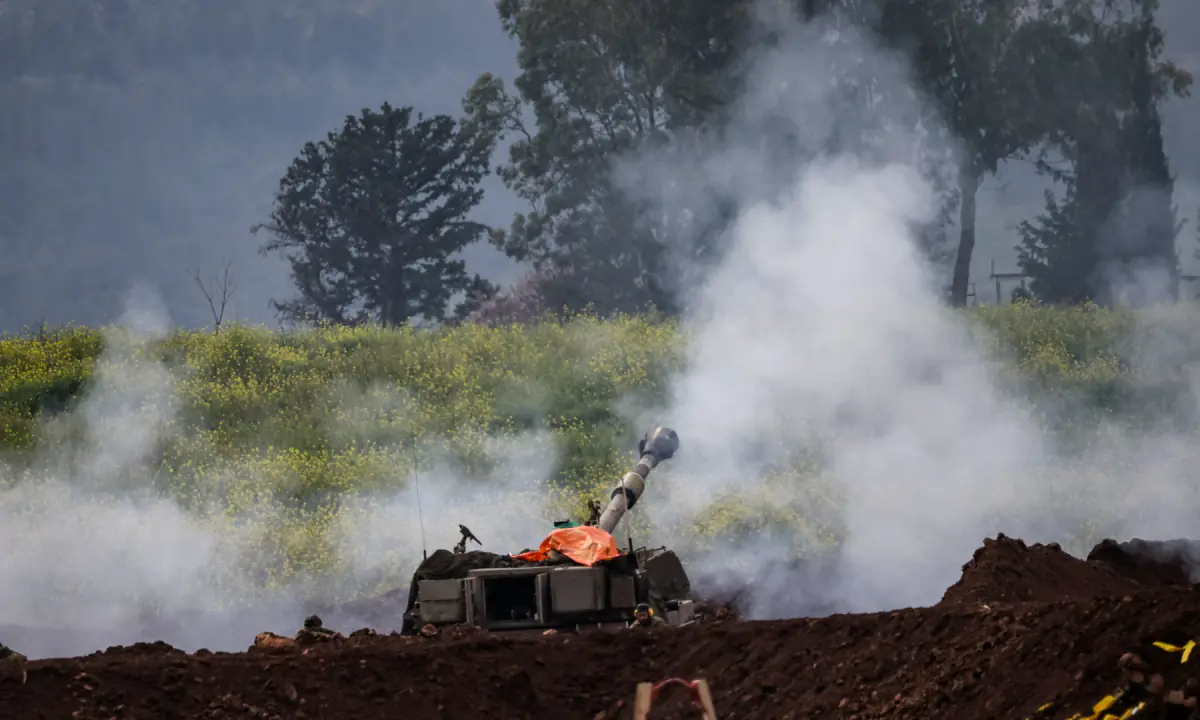
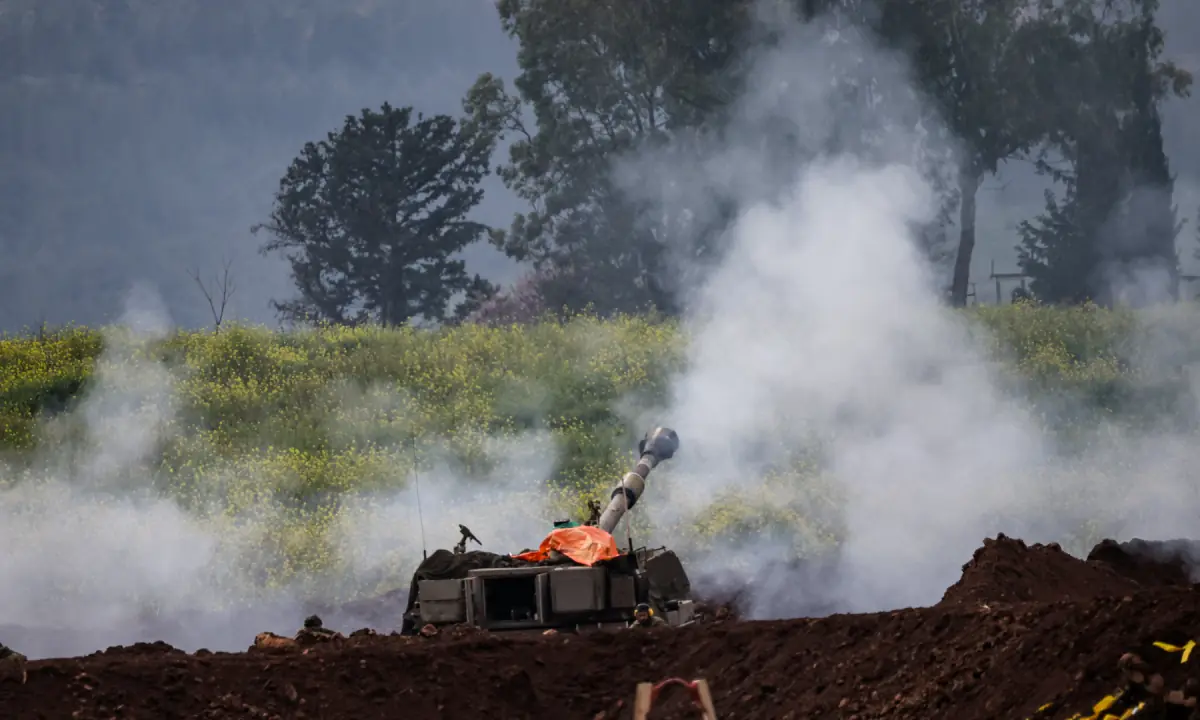
Header image: Israeli soldiers use an artillery unit on the Israeli side of the Israel-Lebanon border on March 15, 2026. — Reuters