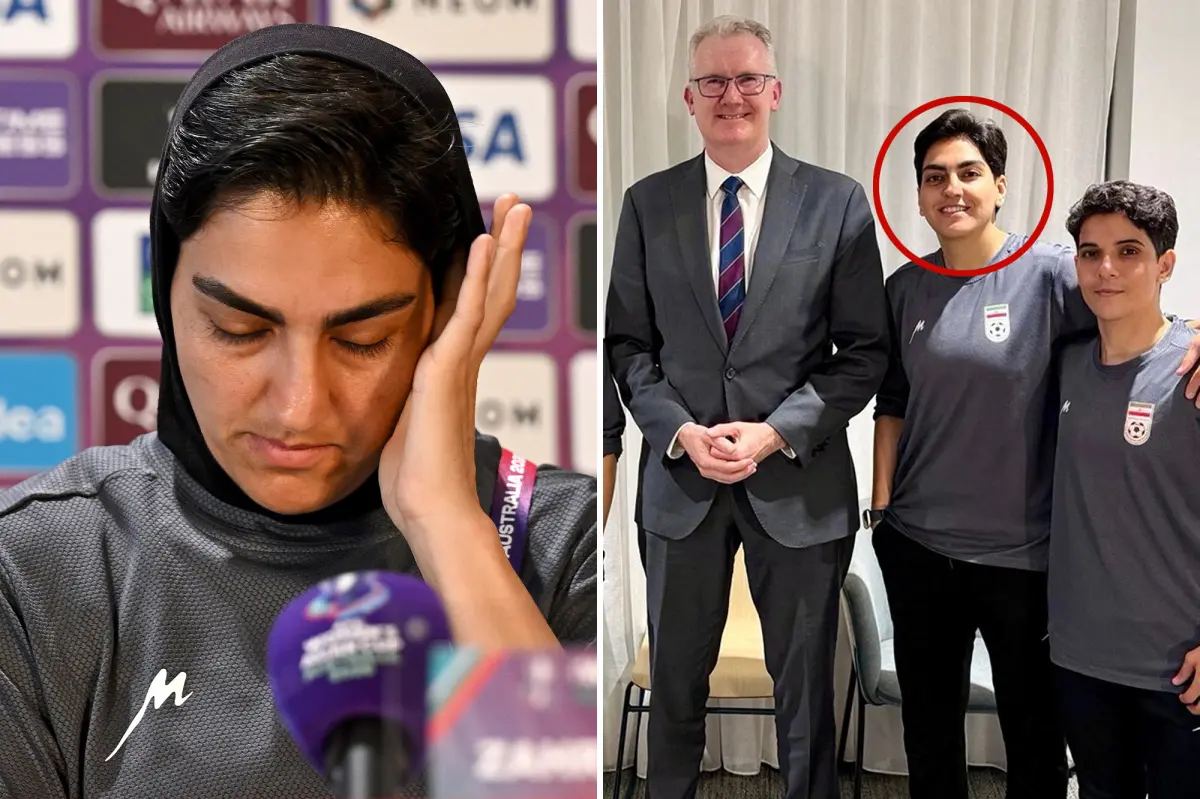
The captain of Iran’s women’s soccer team has withdrawn her bid for asylum in Australia, making her the latest member to do so as fears grow that the players’ families are in danger if they don’t return home.
Zahra Ghanbari, 34, is “returning to the embrace of the homeland” after withdrawing her asylum bid Sunday, Iran’s IRNA news agency reported.
Shiva Amini, an exiled Iranian former soccer player, claimed the players chose to go home following “intense and systemic pressure on the players’ families” from Iran’s Football Federation.
“Several of the players decided to go back because the threats against their families became unbearable and the intimidation was relentless,” she wrote on X on Sunday.
Seven members of the national Iranian team who took part in the Women’s Asian Cup made headlines last week when they sought sanctuary in Australia amid backlash over their refusal to sing their national anthem at the tournament.
The women’s display of defiance occurred just as the US and Israel launched air strikes on Iran, killing the Islamic Republic’s longtime Supreme Leader Ayatollah Ali Khamenei.
The women were branded “traitors” in Iran, with their safety put into question should they return home in the wake of Tehran’s brutal crackdown on dissent that killed thousands in January. Their families also are feared to be in the crosshairs of Iran’s brutal leaders over their stand.
After the defecting players caused an international uproar over their situation, with President Trump even offering to have the US take in the women if Australia didn’t grant them asylum, five of the seven women now have opted to return home to the Islamic republic.
The players were “given repeated chances to talk about their options” but ultimately faced “incredibly difficult decisions,” Australia Home Affairs Minister Tony Burke said in a statement Saturday.
Tina Kordrostami, a councilor for the Australian city of Ryde, claimed the players were being ” heavily intimidated” by Tehran, suggesting their families were being used as leverage to get them back home.
“I know families have even been detained. I know family members are missing,” Kordrostami told Fox News’ “Fox Report With Jon Scott.”
“One thing I really would like for people in the West to understand is that Iranians within the country have in many ways given up on the West, and they are only relying on one another to survive this regime,” she added.
“We are very worried about them. We know for a fact that they will not be safe,” she said, referencing claims that the women face severe consequences once they return back home.
The situation harkens back to the 2020 execution of champion wrestler Navid Afkari, who was convicted of killing an Iranian security guard during a 2018 protest.
Afkari maintained that he had been tortured and forced to confess to the crime, with opposition groups pointing to his execution as a message being sent to Iranians at the time.
The same year Afkari was executed, Iran sentenced boxing champ Mohammad Javad Vafaei Sani, 30, to death for allegedly taking part in anti-regime protests in 2019.
Sani has been on death row since his sentencing, with Iran’s Supreme Court upholding the conviction late last year.
It remains unclear if Sani has been executed yet, as nationwide protests and internet blackouts engulfed Iran shortly after his family was granted after what would have been their final visit Dec. 15, The Guardian reported.