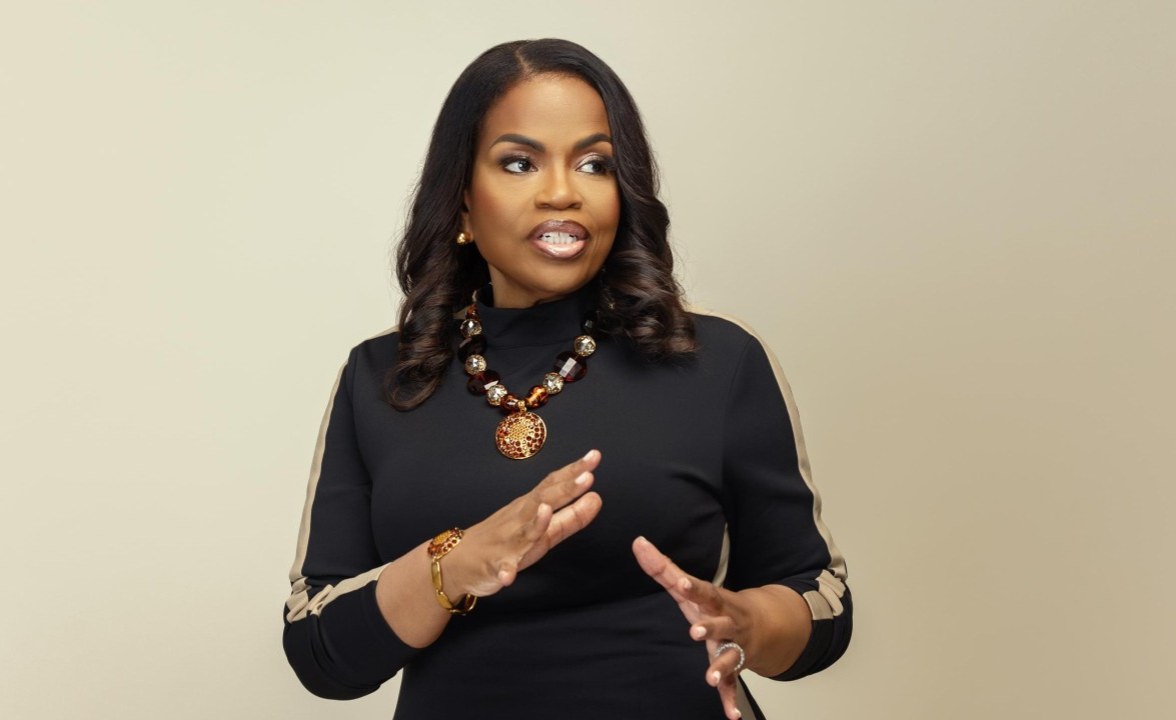
Accra — After nearly three decades of active engagement with the African Growth and Opportunity Act (AGOA), I recently informed my distinguished Co-Chair of the AGOA Alliance, The Hon. Chris Stewart, the Alliance’s hardworking Secretariat — Tim Stewart of The Bennett Consulting Group and James Link of The Cormac Group — and my remarkable team at The Whitaker Group of my decision to step down from the AGOA Alliance, where I have been honored to serve as Co-Chair.
It was a timely decision made after much prayer and reflection.
Follow us on WhatsApp | LinkedIn for the latest headlines
My AGOA journey began long before the Act became law. Together, with the late Hon. Jack Kemp and Mike Williams, we helped establish the then AGOA Coalition, collaborating with African Ambassadors, Members of the United States Congress and congressional staff, the African Union and others, before the legislation was passed. The AGOA Coalition, now The AGOA Alliance, stands even today as an unstoppable bipartisan advocacy force dedicated to advancing U.S.–Africa trade.
Much of the work over the years — advocacy, organizing, and strategy — was driven by conviction rather than funding. With only modest financial support from a few partners, many of us self-financed and volunteered our time because we believed deeply in what AGOA could mean for both Africa and the United States.
Serving as one of the hands-on architects of AGOA in the U.S. Congress under the leadership of my mentor, the legendary late Congressman Charlie Rangel, remains one of the greatest honors of my life.
Rangel was among the finest legislators of our time. He taught me the art of disagreeing without being disagreeable, the discipline of compromise, and the importance of holding firm when fundamental principles were at stake — especially when the destinies of vulnerable people were involved.
Those lessons became our North Star in building AGOA.
And building AGOA was not easy.
It required bringing together Republicans and Democrats across the political spectrum, leaders from every Sub-Saharan African country and the African Union, and a coalition of business leaders, think tanks, trade associations, and civil society organizations from both sides of the Atlantic.
At times the process was brutal. But it proved something important:
A determined coalition — guided by faith, strategy, and perseverance — can move even the most difficult policy forward.
I am grateful that this chapter ends with a meaningful milestone: the recent one-year extension of AGOA with retroactive benefits, enacted in an extraordinarily challenging policy and geopolitical environment.
While we hoped for more time, the extension was still a major achievement. In fact, it represents the first U.S. trade bill enacted since the USMCA in 2019.
People often ask how and why I stayed the course for so long.
My answer is simple: I think in 30-year intervals.
AGOA’s impact has validated that long view:
- Over $500 billion in African exports have entered the United States duty-free under AGOA.
- AGOA has supported more than one million jobs across Africa, many held by women.
- It has helped sustain 460,000 American jobs and expand U.S. exports to Africa to more than $18 billion annually.
- It institutionalized high-level U.S.–Africa engagement, legally mandating cabinet-level dialogues that are now routine but were once extremely difficult for African leaders to secure.
I also stayed the course because a new generation of leaders was watching — many of whom I later had the privilege to mentor, employ, or inspire.
At the beginning of the AGOA battle, I told them something I still believe today:
“There is no person or group in Washington that cannot be rolled if they are wrong — and if you are right and more determined.”
Today, a new generation of leaders is ready to carry AGOA forward.
The next chapter must focus on building a longer, more predictable, and more modern AGOA, aligned with the African Continental Free Trade Area and capable of deepening trade and investment between our continents.
Encouragingly, the AGOA Alliance, while it will close its doors as well, has already developed a draft blueprint for this next phase that is available for all AGOA champions.
Advocates should not be discouraged by today’s political climate. Washington has always been turbulent. But progress is still possible when the cause is right and the coalition is strong.
While I step away from AGOA advocacy, I will never step away from Africa.
I am proud that The Whitaker Group, now more than twenty years old, has never been stronger in fulfilling its founding mission:
Advancing business in Africa that drives prosperity, innovation, and transformation.
We continue to actively bring investments and technologies and build companies — transforming landscapes across the continent.
I am also continuing my service on the boards of African Export-Import Bank (Afreximbank)‘s Fund for Export Development in Africa (FEDA) and the U.S. Chamber of Commerce, and remain deeply committed to mentoring the next generation of African women leaders.
To everyone who made AGOA possible — across the U.S. and African governments, businesses, civil society, and diplomacy — thank you. You know who you are.
And to the next generation of AGOA champions: the baton is now yours.
As Nelson Mandela reminded us: “It always seems impossible until it is done.”
The journey continues.
African Export-Import Bank (Afreximbank); Kendra Gaither; U.S. Chamber of Commerce; Melvin Foote, Constituency for Africa; The AfroChampions Initiative; Stephen Lande; Manchester Trade LTD; Skip Richmond, DTRT Apparel Group; Chris Stewart; Tim Stewart; James Link, Corporate Council on Africa; Florie Liser, john solomon / Just the News, Reed Kramer / AllAfrica Global Media, Denise Rolark Barnes; Eden Harris; Julian Pecquet; The Africa Report; Brett Fortnam; Jason Asenso / Inside Washington Publishers.
#AGOA #GlobalAfrica #AfricaRising #TradePolicy #EconomicDevelopment #USAfricaRelations #GlobalTrade #AfricaTrade #InvestmentInAfrica #TradeAndDevelopment