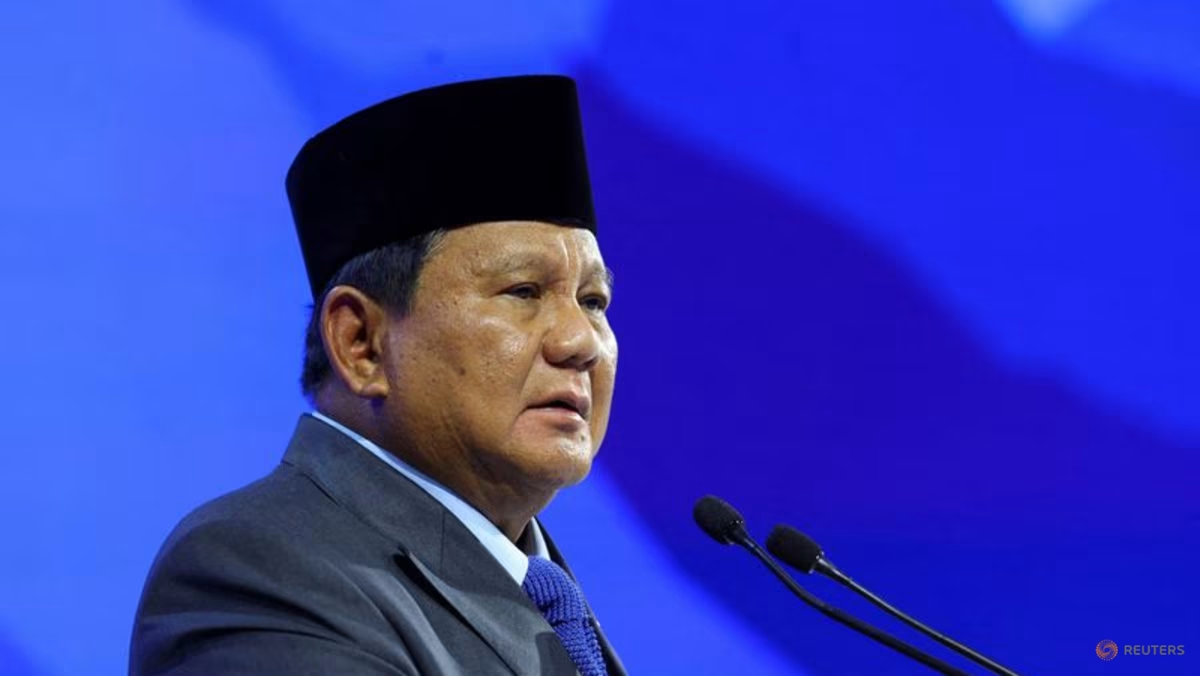
JAKARTA: Price pressures fuelled by the Middle East war may push Indonesia’s government to reconsider its dogged defence of energy subsidies and a costly meals scheme close to the heart of President Prabowo Subianto, analysts say.
Unlike many of its neighbours, Southeast Asia’s biggest economy has not seen long fuel queues as global oil prices have soared, nor have its citizens been subjected to pandemic-style work-from-home measures.
But that may change.
As Prabowo seeks to raise the economic growth rate from 5.1 per cent last year to 8 per cent by 2029, powered by high public spending, Jakarta has limited options for offsetting the impact of rising oil prices, according to experts.
It can either cut fuel subsidies and risk political upheaval, slash spending on Prabowo’s signature school meals programme, or overshoot the fiscal deficit that is capped by law at 3 per cent of GDP.
“We are already in a critical situation,” with fuel and natural gas supplies at about three weeks’ worth – the maximum storage capacity – and a dearth of new suppliers to offset the Middle East blockage, said Yose Rizal Damuri, executive director of Indonesia’s Centre for Strategic and International Studies.
He said the government may have no choice but to cut its fuel subsidy, which covers about 30 to 40 per cent of the cost for consumers and represents around 15 per cent of the budget.
“The government can also consider making fiscal space by reducing … the free meal programme,” Yose told AFP.
The scheme, which consumes nearly a tenth of the annual budget, aims to feed millions of Indonesian schoolchildren and pregnant women in a bid to reduce stunting and boost the nation’s human capital, but has been criticised for logistical inefficiencies and food safety concerns.
The meals programme was Prabowo’s most popular campaign promise, and he has repeatedly vowed to keep it in place.
Yose said the government could save as much as 100 trillion rupiah (US$5.9 billion) by restricting the scheme to areas of the country where it is needed most.