Many commentators claim that Islam does not pose a threat of violence in the United States. Influencers such as Tucker Carlson often repeat this argument. Others, including then-President Joe Biden and FBI Director Christopher Wray, have argued that white supremacists represent the primary domestic threat.
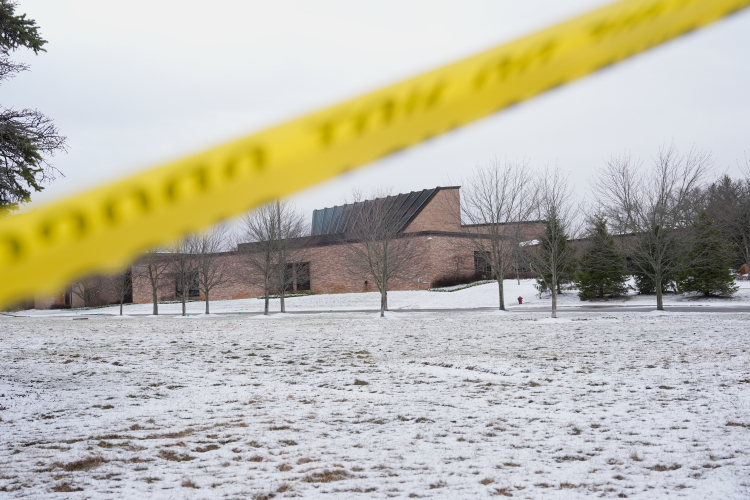
Yet March alone saw multiple terrorist attacks carried out by Muslims. In Austin, a terrorist wore a sweatshirt reading “Property of Allah” during an attack. In New York City, bomb throwers shouted “Allahu Akbar” while throwing a homemade shrapnel bomb. At Old Dominion University, a shooter also yelled “Allahu Akbar” and had previously been convicted of supporting ISIS. Another attacker, whose brother was a Hezbollah terrorist commander, targeted Temple Israel in Michigan, and yet another attack, involving three men of Iraqi origin, targeted the U.S. embassy in Norway. The Austin, Old Dominion, and New York City bombers and the Michigan synagogue attackers were also all foreign-born individuals who were naturalized U.S. citizens.
Terrorist attacks take many forms. For example, the January 2025 truck attack in New Orleans, with an ISIS flag on the truck, left 14 people dead and 47 injured. But let’s focus the discussion on one type of attack that has been extensively studied: mass public shootings. Researchers define a mass public shooting as an attack in which a perpetrator kills four or more people at one time in a public place, excluding crimes such as gang fights or robberies.
Looking at all mass public shootings from 1998 through 2025 reveals several patterns. Muslims commit these crimes at a disproportionate rate. White males commit them at a rate below their share of the population. And most shooters express no clear political ideology.
From January 1998 to December 2025, the United States experienced 108 mass public shootings by 111 shooters. Eight of those shooters were Muslim – 7.2% of the total. During that same period, Muslims averaged about 0.4% of the U.S. population. In other words, their share of attacks was 18 times their share of the population.
The attacks included those carried out by Sulejman Talovic in Salt Lake City in 2007; Nidal Malik Hasan at Fort Hood in 2009; Mohammod Youssuf Abdulazeez in Chattanooga in 2015; Omar Mateen in Orlando in 2016; Arcan Cetin in Burlington, Washington, in 2016; Ahmad Al Aliwi Alissa in Boulder, Colorado, in 2021; and Syed Rizwan Farook and Tashfeen Malik in San Bernardino, California, in 2015.
By contrast, seven attackers – 6.5% of the total – expressed white supremacist, neo-Nazi, or anti-immigrant views.
Some attackers described as anti-immigrant also expressed environmentalist motivations. For example, the murderers in El Paso, Texas; Dayton, Ohio; and Buffalo, New York wrote about concerns that population growth – particularly among minorities – was harming the environment. The El Paso killer wrote in his manifesto: “The decimation of the environment is creating a massive burden for future generations … The next logical step is to decrease the number of people in America using resources. If we can get rid of enough people, then our way of life can become more sustainable.” Similarly, the Buffalo killer wrote: “There is no Green future with never ending population growth.” The Dayton murderer was also an environmentalist, a registered Democrat, who described himself on Twitter as a “leftist,” and was very upset that Ohio’s Republican senator didn’t support the gun control he thought necessary.
These attackers also described themselves as anti-capitalist, anti-conservative, and supportive of worker ownership of the means of production. Despite those claims, news media outlets consistently label them broadly as right-wing extremists or white supremacists.
The media widely repeats the Anti-Defamation League’s claim that all extremist violence from 2022 to 2024 came from right-wing perpetrators. Yet the ADL labels the 2022 Buffalo mass murderer right-wing simply because he expressed racist views and excludes other attackers. Those omitted include Audrey Elizabeth Hale, who attacked the Covenant School in Nashville in 2023 after denouncing “white privilege” and threatening to “kill all you little crackers,” as well as Robert Crimo, who killed seven people in Highland Park in 2022 and expressed hostility toward Trump, and Connor Sturgeon, who killed five in Louisville after praising the 2020 Black Lives Matter protests and criticizing police violence and Trump.
Overall, non-Middle Eastern whites make up about 64% of the U.S. population but account for roughly 55% of mass public shooters. Seven attacks involved individuals of Middle Eastern origin – 6.4% of attackers – about 16 times their share of the population. That makes Middle Easterners the most disproportionate ethnic or racial group involved in mass public shootings during this period. Blacks, Asians, and American Indians commit these attacks at slightly higher rates than their shares of the population, while Hispanics commit them at substantially lower rates – about 9% below their share of the population.
Even before this month’s attacks, the evidence showed that Muslims in the United States commit terrorism at a greatly disproportionate rate, though that doesn’t mean that all or even most Muslims are a danger. The data also contradict claims that whites or right-wing white supremacists pose the primary terrorist threat. Honest discussion requires acknowledging the data on who commits these attacks rather than filtering it through political narratives about which threats are acceptable to discuss. If policymakers and the public want effective prevention, they must start with a clear-eyed assessment of the risks rather than with wishful thinking.