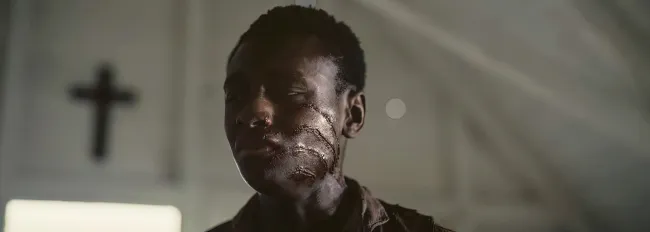
It was a banner year for horror at the 2026 Academy Awards, but still no cigar when it came time to award Best Picture. “Sinners,” the most nominated film of the night, lost the top prize to “One Battle After Another” but took home four other Oscars — including Best Actor for Michael B. Jordan, Best Original Screenplay for director Ryan Coogler, Best Cinematography for Autumn Durald Arkapaw, and Best Original Score for Ludwig Göransson.
Meanwhile, “Weapons” earned a Best Supporting Actress win for Amy Madigan, and Guillermo del Toro’s “Frankenstein” scored nominations for Best Picture and Best Adapted Screenplay. On paper, that’s the kind of success that suggests the Academy has finally accepted horror as a creative force here to stay. But for the better part of a century, the Oscars have consistently celebrated pieces of horror — acting, writing, cinematography, score — while snubbing the collaborative effort as a complete work of art.

The genre’s Best Picture drought has become so familiar that its only true winner remains 1992’s “The Silence of the Lambs.” Even then, that victory is often reframed as a crime thriller in awards history. That’s why “Sinners,” and to a lesser extent “Frankenstein,” losing Best Picture still matters in an otherwise strong year.
The Academy clearly admires artists who specialize in onscreen terror. But there’s a reason Hollywood still resists embracing fear as a language of fine art. Even as the industry leans into horror at the box office and in the press, its upper echelon shows an equally strong urge to use the genre’s intensity as an excuse to look away from the nightmares that most need illuminating.
The Historical Ceiling for Horror
The Academy Awards have never been completely hostile to horror. In 1932, Fredric March won Best Actor for “Dr. Jekyll and Mr. Hyde,” and in the decades since, genre films have continued to rack up acting and craft accolades. The Best Makeup category was created in part because of “An American Werewolf in London,” while production and costume design wins often skew scary.

Looking at Best Picture, however, horror’s track record is stark. Only a handful of films have cracked the category: “The Exorcist,” “Jaws,” “The Sixth Sense,” “Black Swan,” and “Get Out,” among them. All were treated as exceptions to an unspoken anti-horror rule. These films are welcomed into the room and applauded for their craftsmanship, but they’re rarely offered a true seat at the head of the table. As Madigan put it backstage this year, horror is like “sitting with the little kids at Thanksgiving.”
The irony is that these films often demand the most sophisticated filmmaking techniques available. Heavily stylized visuals, elaborate practical effects, heightened performances, and precise editing are horror’s lifeblood — and yet that same intensity is often used to dismiss the genre as cheap or banal.

The Genre of Modern Political Dissent
That underdog status has been exacerbated by the serious themes many modern horror films explore. Movies like “Get Out” and “The Substance” use genre storytelling to tackle racism, gender politics, and bodily autonomy in ways traditional dramas cannot. “Sinners” proudly continues that tradition and faced similar headwinds.
Set in Jim Crow Mississippi, the film blends blues folklore and vampire mythology into an immersive story about racial exploitation and cultural survival. It’s both wildly entertaining and rooted in historical trauma, a dichotomy Oscar-winner Coogler acknowledged backstage when he spoke about drawing on stories from his uncle.
That fusion of spectacle and lived experience is what makes “Sinners” so powerful, and perhaps why some voters remain uncomfortable with horror. Hollywood has long rewarded films about racism when presented through familiar dramatic frameworks. But reimagining American history — particularly Black American history — through dark fantasy externalizes systemic violence. And monsters, even metaphorical ones, tend to destabilize humans with something to hide.

Scary Craft Recognition Without the Crown
If the Academy struggles with horror as a complete artistic statement, it has no trouble recognizing the people behind it. Durald Arkapaw made history with her Best Cinematography win, reflecting backstage, “A lot of little girls that look like me will sleep well tonight because they’ll want to become cinematographers.”
Playing two roles in “Sinners,” Jordan’s Best Actor win was equally notable. Only eight actors in Oscar history have won for horror performances, making this year responsible for a quarter of that total between Jordan and Madigan. Those wins matter, but they also reinforce a pattern of bias that has sidelined plenty of legendary performances, notably including Toni Collette for “Hereditary” in 2018.
The Academy seems comfortable celebrating individual excellence within horror while hesitating to crown its films as definitive achievements. It’s a contradiction that suggests if the acting, writing, craft, and design are all award-worthy, then something larger is disqualifying the film itself.

Is Popularity < Prestige?
That wild card may be the genre’s relationship with audiences. “Sinners” wasn’t just critically acclaimed. It was a box office juggernaut, earning nearly $370 million worldwide. Its Best Picture rival performed well but reached a smaller audience, and that disparity can work against a film late in awards season.
Popularity doesn’t automatically disqualify a film; just look at the musical fantasy “Wicked” (or Part One anyway, as Part Two was entirely shut out of this year’s Oscars perhaps because of its ubiquity) But because genre storytelling already has to fight to be recognized as art, that perception can tip the scales in a close race. When the film also centers marginalized perspectives, that divide becomes even more complicated for voters.
That dynamic played out with Coogler’s “Black Panther,” the first superhero film nominated for Best Picture. It ultimately lost, becoming a case study in how mass-audience enthusiasm doesn’t always translate into institutional validation and can even work against it.

The Horror Renaissance Is Still Young
None of this is to say the Academy hasn’t made progress. The past decade has ushered in a modern horror renaissance, with a new wave of filmmakers treating the genre as both entertainment and social commentary.
But that shift is still recent, and decades of cultural baggage — from sexist slasher stereotypes to schlocky late-night programming — continue to shape perception. Many voters didn’t grow up thinking of horror as serious cinema, and that mindset doesn’t change quickly. Awards institutions rarely do.
Still, the prominence of fear at this year’s Oscars says something about the world. 2026 feels difficult to process through conventional storytelling, and as IndieWire’s Marcus Jones noted in his post-ceremony analysis, something felt “off” at the Dolby this year. Political instability, systemic injustice, and social anxiety have become defining features of modern life, and horror is uniquely suited to confront them.
That’s part of what makes the genre so resonant. Films like “Sinners” and last year’s “The Substance” don’t pretend everything will be OK. They give form to our innermost fears and let us confront them cathartically. It’s almost ironic to sideline a form of expression precisely because it feels essential.

For Now, the Oscar Goes to… Normalcy?
If “Sinners” had won Best Picture, it would have signaled something larger than a single victory. It would suggest the Academy fully recognizes horror as one of the defining cinematic languages of our time, especially when rooted in marginalized histories. Perhaps it’s not the content, but instead that possibility, that feels too powerful.
Films like “Sinners” and “One Battle After Another” ultimately arrive at a similar conclusion: The systems we’ve trusted for generations are deeply flawed. Recognizing horror at the Oscars’ highest level would mean acknowledging that those systems, cultural institutions included, may need to change. Until then, horror will remain celebrated and admired, but kept at a distance. After all, the best monsters — and the most important movies — are often the ones we have to fight to see.