In 1241, the Mongol army marched into Hungary, creating indescribable chaos. Most of the country’s religious dignitaries were slaughtered. The pillaging, massacres and famine the foreign invaders left in their wake imprinted an undeniable trace on the Hungarian psyche.
Centuries later, as Hungary braces for crucial parliamentary elections in April, Prime Minister Viktor Orban is tapping into the demons of Hungary’s past, claiming the country is once again under threat.
Fidesz, Orban’s far-right party, is focusing on a new foreign menace – the danger it claims is posed by Ukraine. As part of its re-election strategy, the Hungarian government has sought to escalate tensions with Kyiv.
“Orban has repeatedly opposed European funding and military support for Ukraine’s fight,” said Michael Ignatieff, a former Canadian opposition leader and historian, who was rector of the Central European University in Budapest when Orban’s government forced it to relocate abroad in 2017.
“What’s new in the campaign is the personal vilification of Ukrainian President Volodymyr Zelensky and the claim that Zelensky will drag Hungary into the war and Hungarian soldiers will die,” Ignatieff added.
The threat of imminent war
Richard Demény, a foreign policy analyst at Political Capital, a research institute in Budapest, says Fidesz initially campaigned on “domestic policy narratives focused on the Orban regime’s achievements over the past 16 years.”
Yet the messaging has done little to win over digruntled voters who want more from the government in areas like public education and healthcare. “To distract from these shortcomings and to shape the public agenda, Fidesz has employed fear-based narratives to exacerbate anxiety in segments of society susceptible to the threat of an imminent war,” said Demény.
Orban’s party has been trailing in the polls since last year, while the centre-right Tisza party, led by Peter Magyar, is picking up speed. Magyar’s supporters hope to end Orban’s 16-year rule.
In reponse to his rival’s lead in the polls, Orban has stepped up his attacks on Ukraine. In one campaign video released by the ruling party in February, a young Hungarian girl asks about her father. The video then cuts to footage of a blindfolded soldier in a Hungarian uniform being shot in the head and falling into the muddy ground. A caption reads: “This is only a nightmare now, but Brussels is preparing to make it a reality. Fidesz is the safe choice!”
Fidesz has framed the 2026 elections as a choice between war and peace, and the video implies that a Tisza victory would force Hungarians to go to war.
“For the first time, Orban is straightforwardly alleging the existence of political coordination and collusion between the Ukrainian administration, EU institutions, and the Hungarian opposition to remove him from power and establish a pro-Ukraine government in Hungary,” said Daniel Hegedüs, deputy director at The Institute for European Politics.
From the cosmopolitan streets of Budapest to small villages in the countryside, large campaign billboards are being used to try to sway “segments of society susceptible to the threat of an imminent war”, said Demény.
“They themselves are the risk,” read a caption of a pro-government billboard featuring a combined photo of European Commission President Ursula von der Leyen, Zelensky and Magyar.

‘No oil, no money’
At the core of Hungary’s escalating tensions with Ukraine is what Orban called “the Ukrainian oil blockade” in a March 17 video posted on X.
Ukraine and Hungary have been locked in an escalating feud since Russian oil deliveries to Hungary and Slovakia were halted in January due to damage to the pipeline, which crosses Ukrainian territory. Ukrainian officials have blamed the damage on Russian drone attacks.
Orban has accused Zelensky of deliberately holding up oil supplies – claims that Zelensky denies. In retaliation, Orban has vetoed a major €90 billion EU loan to cover Ukraine’s military and economic needs for two years.
“If President Zelensky wants to receive his money from Brussels, then he must reopen the friendship oil pipeline,” said Orban in the video.
Orban has even accused Ukraine of plotting to attack him and his family, releasing a video in March purporting to show him speaking to his daughters over the phone and warning them of the threat.
Read more’Ready to govern’ Hungary: Former ally Magyar challenges Orban with Europe gun
“Orban’s basic political method is to create enemies. First Brussels, then George Soros, and now Peter Magyar, all portrayed as malign alien forces conspiring to harm Hungary. Orban then portrays himself as the plucky, heroic defender of the Hungarian nation,” said Ignatieff.
Yet Orban may have met his match in a man like Magyar, added Ignatieff, who is “ex-Fidesz himself, and far too clever a politician to cede the nationalist ground to Orban.”
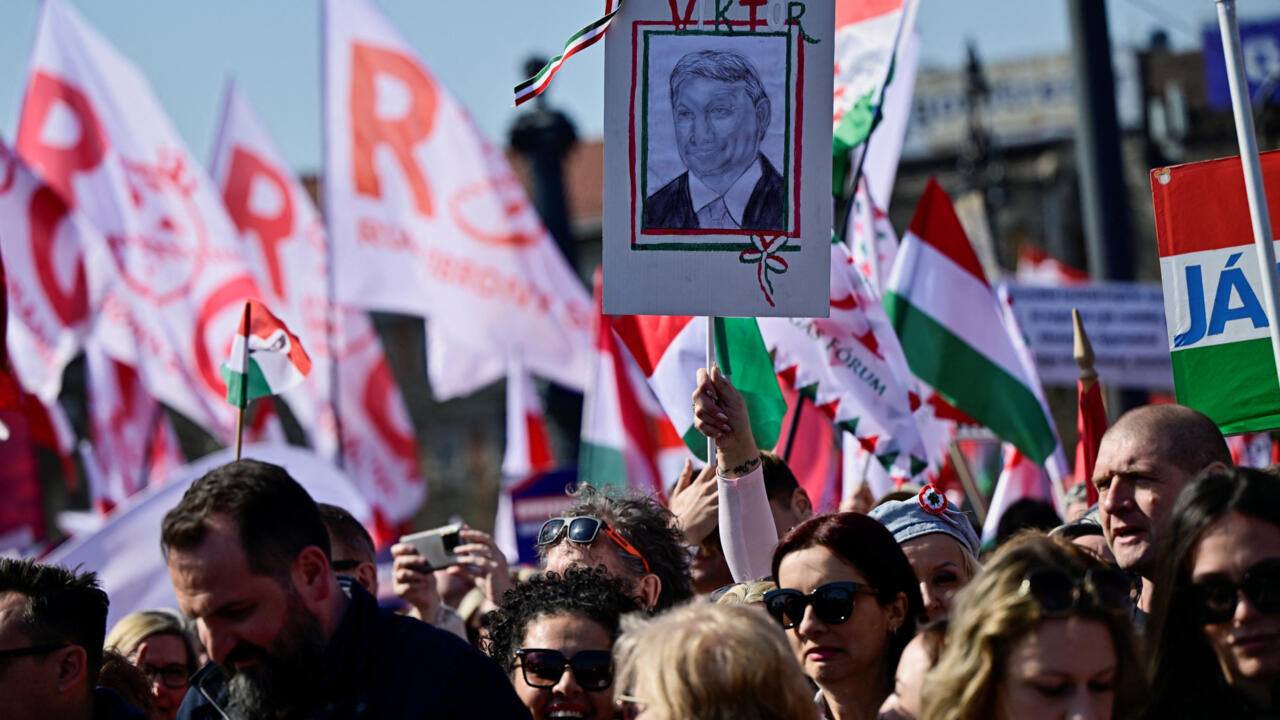
“Magyar tours the countryside, sings patriotic folk songs with his supporters, waves the national flag, quotes Hungary’s great poets and is competing effectively with Orban in the battle for the nationalist vote.”
Orban’s strategy could still work. In his book “Hungarians”, the historian Paul Ledvai wrote that the most important psychological consequence of the Mongol invasion was the inference that “We Hungarians are alone”.
The mistrust of foreigners, even when they were urgently needed as allies in times of acute danger, “could be effective at keeping Fidesz and undecided voters focused on an existential threat,” said Demény.
(With AP)