There’s no shortage of fantastic sci-fi TV series out there, but not all of them are easily accessible. The Expanse is one of the best space epics ever made, but it’s cordoned off behind the Prime Video paywall. Andor is the boldest thing to come out of the Star Wars universe in decades, but you need a Disney+ subscription to see it. And then there’s Apple TV+, an underrated streaming service which specializes in great sci-fi shows.
Basically, if you want to get people’s attention, it helps to be on a broadly popular platform like Netflix. Back in September of 2025, Netflix got all five seasons of Orphan Black, a sci-fi show that originally aired on Space and BBC America between 2013 and 2017. Whether you’ve never seen this series or are just looking for an excuse to rewatch it, now is the perfect time.
Orphan Black is a perfectly paced sci-fi show
No clones about it
Orphan Black revolves around Sarah (Tatiana Maslany), a con artist living in Toronto, Canada. One night she sees a woman who looks exactly like her, Beth, jump in front of a train. Sarah decides to assume Beth’s identity, figuring she can use Beth’s money to fix some problems in her life. That sounds like it could be a setup for a very dark comedy, and Orphan Black does have its lighter moments, but ultimately Sarah stumbles on something much stranger.
It ends up that Sarah and Beth don’t just happen to look alike: they’re both clones engineered by a biotechnology company called the Dyad Institute, and they’re not the only ones. Alison is a suburban mom, Cosima is a scientist, and Helena is a mysterious assassin raised by a sect of religious extremists; she’s one of the few clones from “Project Leda” who grew up knowing her true origins. What’s more, the Dyad Institute has been keeping tabs on the clones their whole lives, and some of their “handlers” are people who they are very close to.
How many clones are there? Why were they made? And how can each individual clone go on living their lives after discovering this insane secret about themselves? Those questions drive the dramatic engine of Orphan Black, which starts with a bang and never lets up throughout all 50 episodes. There are always new secrets to uncover, new clones to meet, and new plot twists around the corner. Orphan Black may not be a Netflix original, but it stands toe to toe with any of the streamer’s best outings.
Orphan Black will impress you, thrill you, and make you think
It’s sci-fi with a heart
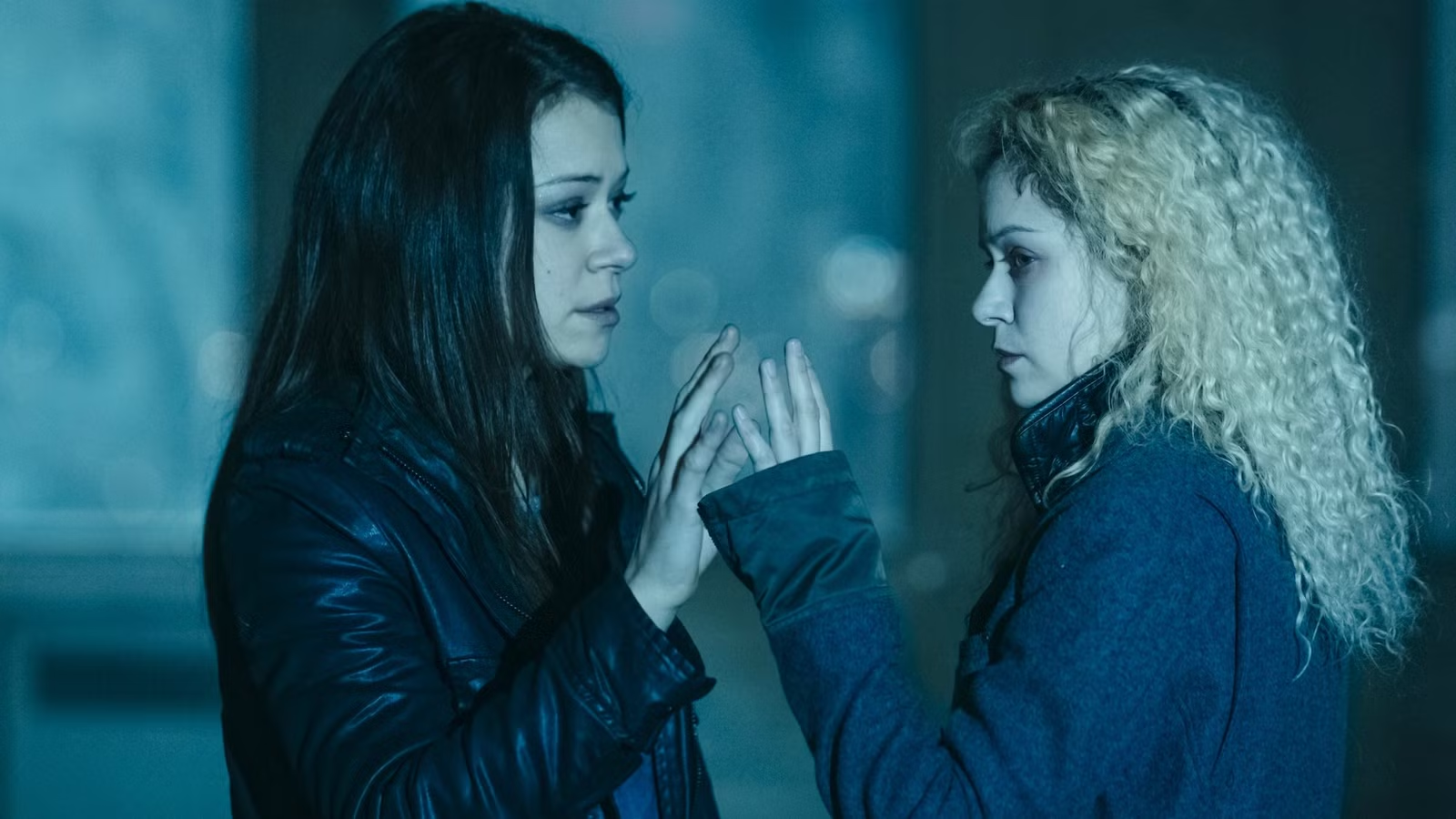
There are a lot of things to praise about Orphan Black. The first and most obvious is Tatiana Maslany, who plays 17 different clone characters and manages to give each of them completely distinct personalities. Even when they’re in the same room together, which is often, Maslany is so good that you almost never think about the fact that they’re all played by the same person. Maslany even won an Emmy for her performance, which is worth noting because awards bodies are often loathe to recognize sci-fi. But her performance was so undeniable they had no choice.
But a bravura performance wouldn’t be enough to turn Orphan Black into a modern cult classic. We aren’t just impressed by the various clone characters, we care about them and their personal dramas. Alison reacts especially badly to finding out that she’s a clone, and considers cooperating with the Dyad Institute so long as she can continue to pretend her life is normal. Sarah has a daughter named Kira (Skyler Wexler) in whom Dyad is particularly interested, since the clones were designed to be sterile and Kira represents a new opportunity for study. Obviously, Sarah is not alright with this.
The theme of bodily autonomy runs throughout the series. Pretty early on, Cosima discovers that each clone has a tag on their DNA identifying them as “restricted intellectual property.” Dyad and the people behind it only care about the clones insofar as they can advance their agenda of controlling the next stage of human evolution. They want to experiment on the clones, they build in genetic abnormalities that manifest as diseases, but they don’t treat them as people.
The experience is very dehumanizing, and there’s a lot of power in watching the clones try to develop or hold onto their own identities in the face of a massive organization that wants to reduce them to test subjects. And the story may resonate even more today than it did when the show was on, as companies like Neuralink develop ways to enhance the human body with proprietary technology and companies like OpenAI contemplate turning intelligence into a utility, like electricity, something you pay for but which isn’t native to you.
Orphans unite
With a bonus sequel series
Under those circumstances, the clones have little choice but to come together and push back, and audiences loved them for it. Most people may not be part of a shady cloning experiment, but a lot of them have felt on the outside at some point in their lives, felt different, felt unequal to the challenges of modern life, and then found comfort in a group of like-minded people. Orphan Black taps into that feeling. That’s part of why it inspired such a passionate fanbase which is still active today.
Orphan Black got a sequel series called Orphan Black: Echoes that ran for only one season before getting canceled. It wasn’t as good as the original, but all 10 episodes are also on Netflix if you want to sample it.
5 sci‑fi thrillers that unravel one episode at a time
Prepare for a thrilling journey through time and space as these expertly crafted sci-fi series build tension with every episode, leading to jaw-dropping revelations.
Stick to the original
But mostly, there’s no need. Orphan Black stands very tall on its own as a great example of imaginative modern sci-fi that actually has something to say about the world and our place in it, and that does it in a very entertaining way. And since you probably have access to Netflix already, there’s no reason not to find out what makes this show so good.

- Release Date
-
2013 – 2017
- Network
-
Space, BBC America
- Showrunner
-
Graeme Manson
- Directors
-
Ken Girotti, T.J. Scott, David Wellington, Grant Harvey, Helen Shaver, Aaron Morton, Brett Sullivan, Chris Grismer, Peter Stebbings
- Writers
-
Aubrey Nealon, Karen Walton, Tony Elliott, Peter Mohan, Sherry White, Jeremy Boxen, Kate Miles Melville, Greg Nelson, Jenn Engels, Nikolijne Troubetzkoy