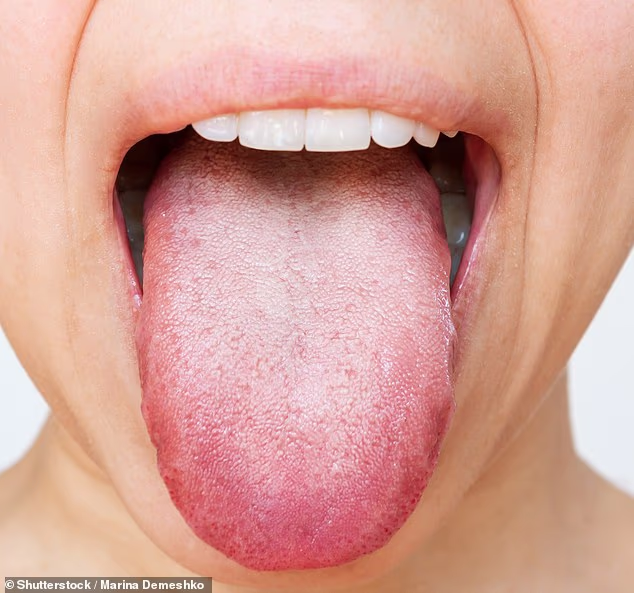
I am 46 and have suddenly started to suffer from a tingling tongue. It’s not painful, but it’s really distracting and almost constant – I can’t work out what is causing it. Do you have any advice?
Dr Philippa Kaye answers: The most likely cause of this kind of symptom is a mild food allergy. However, sometimes it can be a sign of a dangerous health condition.
Many patients unknowingly suffer from a condition called oral allergy syndrome, also known as pollen food syndrome.
It’s usually triggered by eating raw fruit, vegetables and nuts.
The syndrome occurs when the immune system confuses the proteins found in certain raw foods for a threat – in the same way that hay fever sufferers experience an allergic reaction to pollen.
Oral allergy syndrome is also more common in people with hay fever. It can occur at any point in life.
The good news is that the condition is rarely serious. Most patients will experience nothing more than a tingling sensation, as well as some itching inside the mouth and, occasionally, mild swelling.
However, this means that many patients do not realise their tingling tongue is caused by a food allergy. Triggers differ by patient, but the most common are apples, plums, peaches, kiwi, carrots, tomatoes and hazelnuts.
Unexplained tingling, known to doctors as paresthesia, is often only temporary and harmless. But it can, occasionally, be a symptom of an underlying condition
There are steps that patients can take to combat the issue.
The first is to keep a food diary, noting down everything eaten and the time that any symptoms begin. This should help patients work out which food exactly is causing the problem. Once identified, this particular food can be cut out.
Another step is to take an antihistamine tablet, which should help combat allergy symptoms. These can be bought over the counter from most pharmacists. If the symptoms lessen after taking an antihistamine, this would suggest the tingling is caused by an allergy.
Patients do not necessarily need to cut out foods entirely. Instead, cooking these allergy-triggering ingredients can break down the proteins that set off the symptoms.
However, an allergy is not the only possible cause of a tingling tongue. There are other triggers, including regularly eating spicy or acidic foods.
Certain toothpastes can also trigger a tingling tongue. Usually, this is due to an ingredient found in many popular toothpaste brands called sodium lauryl sulfate, or SLS.

GP, author and broadcaster Dr Philippa Kaye
SLS can irritate the lining of the mouth and tongue, triggering pain, ulcers or tingling.
Anyone with a tingling tongue should consider switching to an SLS-free toothpaste to see if this helps with the symptom.
A vitamin B12 deficiency can also cause the issue. Vitamin B12 is a nutrient found in animal products like meat and dairy.
For this reason, a B12 deficiency is more often seen in vegetarians and vegans.
The vitamin is vital for nerve health and, without it, the tongue can become inflamed, leading to tingling.
An iron deficiency can also lead to a tingling tongue. This is because iron, which helps transport oxygen around the body, is also crucial for the healthy functioning of the nerves in the mouth and tongue.
Iron-rich foods include red meat, liver, beans, lentils, dried fruits, nuts and leafy vegetables. Iron supplements are also available at most pharmacies.
A GP can diagnose a B12 or iron deficiency via a blood test. Treating the deficiency should resolve the tingling tongue sensation.
There are also a number of prescription medicines that can trigger this issue. These include blood pressure medicines as well as antibiotics. Never stop taking a prescription medication without first speaking to a GP.
A tingling tongue can sometimes be due to a condition called burning mouth syndrome. For some patients, the sensation can be severe and felt throughout the mouth. For others, it may cause little more than a tingling sensation.

According to the NHS, the ‘painful and complex’ burning mouth syndrome has one distinct symptom: patients all described a burning, scalding or tingling feeling in the mouth
Burning mouth syndrome is notoriously hard to treat because it is still unclear what causes it – though we know it is more common in women going through the menopause.
For this reason, hormone replacement therapy, or HRT, can sometimes help female patients. A nerve pain drug called amitriptyline can also sometimes ease the symptom, though not always.
For others, taking steps to reduce stress – such as talking therapy – can help ease burning mouth syndrome.
In rare cases, a tingling tongue can be a sign of multiple sclerosis (MS) – a condition in which the immune system mistakenly attacks the protective coating, known as myelin, around the nerves in the brain and spinal cord.
This disrupts the normal flow of electrical signals, leading to a wide range of neurological symptoms.
MS affects everyone differently, but over time it can cause significant and sometimes permanent disability.
Around a third of patients will develop more serious, progressive symptoms that affect mobility and independence.
Early signs can be subtle and easy to overlook. These include problems with vision – such as blurred or double vision – as well as balance issues, dizziness, fatigue and unusual sensations such as numbness or tingling in different parts of the body, including the face or tongue.
Some people also experience muscle weakness, difficulty walking, or problems with coordination. Symptoms may come and go at first, a pattern known as relapsing-remitting MS.
While a tingling tongue on its own is unlikely to be caused by MS, it becomes more concerning if it occurs alongside other neurological symptoms or persists without an obvious explanation.
Anyone who is worried about possible MS symptoms should see their GP. They can carry out an initial assessment and, if needed, refer patients for further tests such as MRI scans to look for changes in the brain and spinal cord.
- Write to Dr Philippa Kaye at Health, Daily Mail, 9 Derry Street, London, W8 5HY or email: health@mailonsunday.co.uk – include contact details. Dr Kaye cannot enter into personal correspondence. Replies should be taken in a general context. Consult your own GP with any health worries.