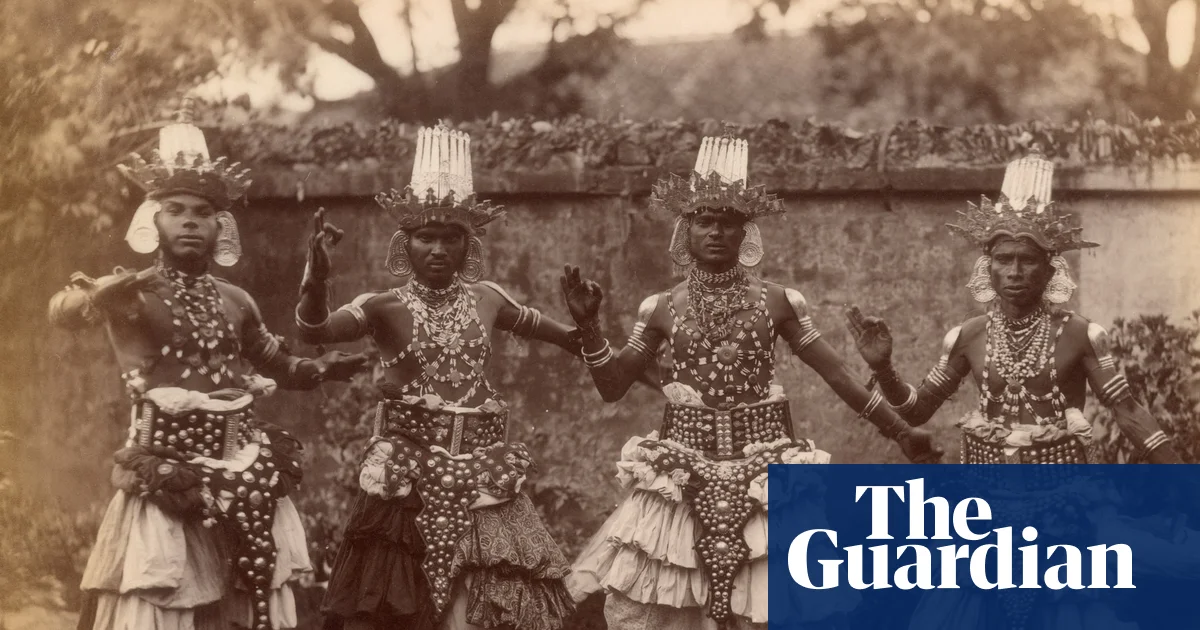
At first, and without the context, someone looking at this collection of 150-year-old photographs of Indian men and women might think they were looking at compelling portraits. The faces are of individuals with piercing eyes and a striking presence.
But context changes everything. The images were taken by British colonialists as part of a great project of photographic ethnography, intended to classify and categorise their subjects.
They are the opposite of celebrating individuals. And Indians visiting an exhibition at Delhi art gallery (DAG), that accompanied the release of the book Typecasting: Photographing the Peoples of India 1855-1920, are able to see how the British enlisted photography as a tool to further the imperial project.
Even before photography came along, surviving records of censuses and surveys show how zealous the British had been about the documentation and classification of the people in the countries they occupied.
But with the advent of photography In the subcontinent, they undertook a large-scale project called the People of India 1868-1875 took this to another level. Its intention, argues the book, was to classify its subjects as “generic types”, the better to understand their motivations, personality traits, and customs in order to more effectively exert control.
The project included the work of British photographers such as Benjamin Simpson and James Waterhouse, along with Indian commercial photographers.
More than 160 of the surviving photographs which have been compiled for the book supplemented the meticulous record keeping, censuses and surveys that remain of this era of British rule.
The sitters have no names. The captions speak of “ethnic specimens”: water carriers, aboriginals, manure dryers, “coolies”, snake charmers, dancing girls, fakirs, Brahmin girls. Even the photographs of individuals bear just their race, region and occupation.
The captions often include sweeping generalisations. Many subjects are described as morally lax and cunning; for example, a photo of the Bhogtas farming community calls the members “specimens” who were notorious as “rebels”.
The Mochis were disdained as “very unthrifty who spend what they earn in riotous intoxication”.
In some images, such as “Group of Naga Women”, you can sense the unease of the women being photographed. But in others, the sitter looks directly at the camera, unintimidated. One captioned “Lepcha man in Darjeeling” portrays a figure whose bearing suggests a refusal to be reduced to an exotic object.
-
Manure Dryers, Bombay, c1890, attributed to Edward Taurines
Indeed, one photographer noted: “There was a huge amount of native agency in the ways the sitters posed, what they showed.”
Another grumbled about the challenges of making reluctant subjects pose for the camera: “Only point a camera at a native and notwithstanding his natural grace, suppleness of limb and easy carriage and bearing, when taken unawares, from fear of being shot or converted into some uncouth animal by means of necromancy, he becomes as rigid as the camera stand or moves away altogether, or neither moves or stays.”
Waterhouse expressed his irritation at the “native agency” Indians possessed, despite a foreign ruler. Either people didn’t arrive on time or at all; or, if they did show up, refused to sit or stand the way they were asked.
The invention of photography was a tactical godsend for the Raj, as the 90-year period of British rule of the on the Indian subcontinent was known. Not only did it allow the colonial regime to classify and visually map Indians in all their diversity, but its arrival coincided with the aftermath of the 1857 rebellion against the rule of the East India Company, which left the British profoundly traumatised.
DAG curator and historian Sudeshna Guha said the ferocity of the rebellion took the British by surprise.
“Following the mutiny, with the establishment of direct rule through the crown, the colonial government began to undertake systematic surveys of the land and people with the first census taking place in 1861,” she says.
Photography was a tool of control to preempt any impending rebellion, says Guha. The “scientific objectivity” of the camera added to the value of the project.
-
Left: Brahmin Girls, c1855, William Johnson; right: Group of Young Bhutias, c1890, attributed to Fred Ahrle
Officials, army surgeons, government photographers and missionaries were packed off to take photographs across the country’s rivers, mountains, jungles and deserts, weighed down by heavy wooden boxes, lenses, metal plates and tripods.
Guha says that notwithstanding the British attempt to “codify” Indians not just by occupation and caste but by facial features, the photographs exists as proof that the opposite was true.
Even a cursory glance at India’s diversity reveals such extreme variation in skin colour and features that it’s a wonder they bothered to embark on such a futile exercise, she said.
“The photographs show that ‘generic’ types don’t exist in nature. They are a construct. Our physical bodies do not conform to a type,” says Guha.
-
Todamund and Todas, Neilgherries, c1869, Samuel Bourne. A Toda mund was a traditional village of the Toda people in the Nilgiris hills of south India