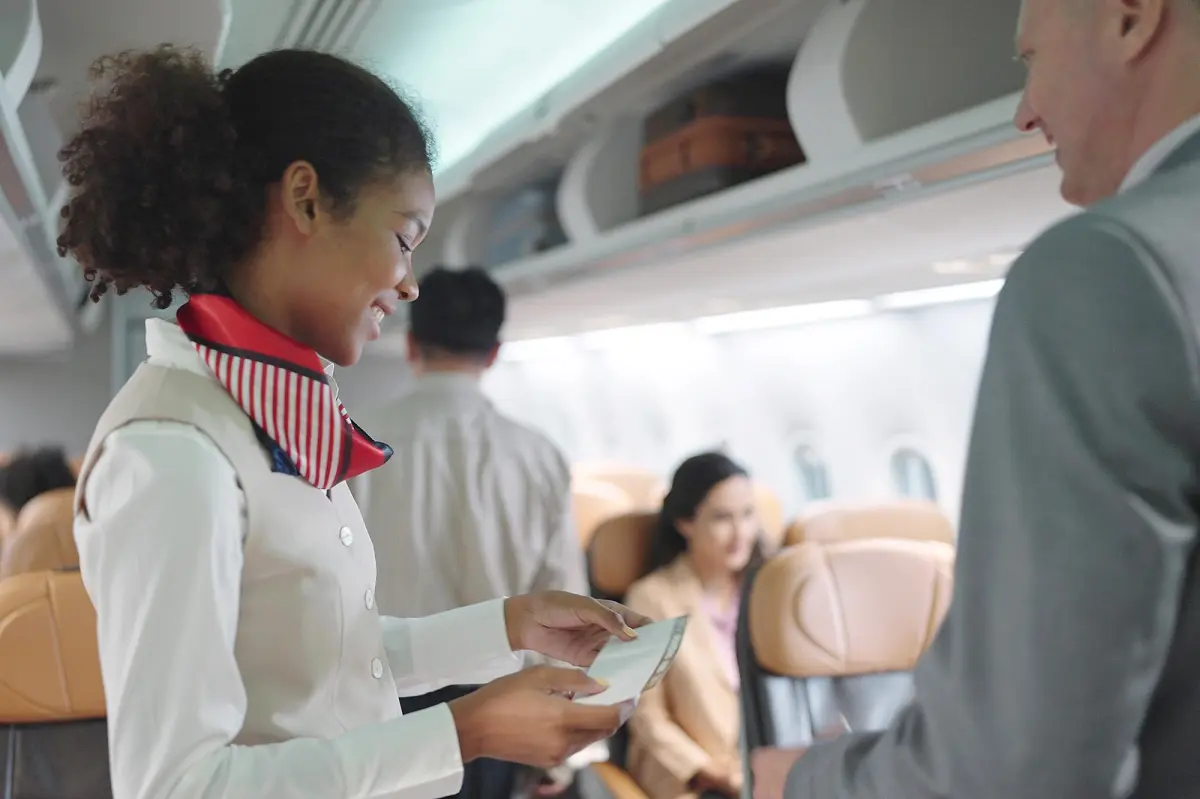
They’re staring down passengers up to no good.
When you step on a plane, there’s always a cheery flight attendant there to greet you at the door.
While part of it is about good customer service and being polite, they’re actually doing a quick assessment of the passengers they’re about to have on board to ensure safety and security.
The evaluation is conducted in mere seconds and is an early warning for them for potential safety risks, security concerns or medical needs.
“When we greet passengers at the door, it’s not just about being friendly — we’re also quietly assessing,” flight attendant Venezia Macias told Travel + Leisure. “We look for signs of intoxication, suspicious behavior, or anyone who may need extra assistance, like elderly passengers, moms with small kids, or people with disabilities.”
After takeoff, there are limited security options, so this quick check allows them to address potential concerns before there’s less access to security personnel.
Scanning for potential safety and security issues is one of the main things flight attendants are looking for.
The International Air Transport Association (IATA) provides formal security training for in-flight crews where they are trained to recognize threats and handle suspicious behavior.
Airlines use behavioral detection to identify people who may pose a threat based on their behavior, including signs of stress and fear, intoxication or unusual conduct.
The flight crew may talk to the passenger further to assess the situation. Sometimes, a traveler talking to a flight attendant could raise red flags.
Last summer, a passenger on a red-eye flight from Los Angeles to Fort Lauderdale raised eyebrows and sparked a security scare after asking what seemed to be a simple question.
As cabin service began, the man allegedly pulled aside one of the flight attendants and reportedly asked: “Hey, totally random question, but on my last couple flights I noticed the [flight attendants] did not block access to the galley when the pilot used the lavatory. Is this a new procedure for you guys?
The flight attendant reported the question to the cabin manager, who approached the passenger and informed them that they could not discuss “access procedures for the flight deck” for security purposes.
When the passenger inquired why the flight attendant couldn’t answer a security-related question, the cabin manager allegedly said, “Seriously? You know why. Don’t you remember 9/11? We cannot talk about that stuff. So thank you for letting us know what you observed on your prior flights.”

Flight attendants are also looking for people who could help in case of emergency or threat, just in case something happens.
Former flight attendant Rachel Nichols told T+L that they’re scanning passengers to see who is able-bodied and capable of assisting if needed.
Aside from security threats, they’re also identifying people who would require extra attention during a potential evaluation, such as those with mobility issues or families with young children.
They’re also dealing with practical logistics at the same time, checking tickets to help passengers know what side of the aircraft their seat is on or that carry-ons will fit in the overhead bin.
“And yes, we definitely notice how people choose to dress, too,” Macias added.