Finding NCAA tournament Cinderella candidates is becoming increasingly difficult in a college basketball landscape dominated by NIL and the transfer portal.
Since the nation’s best programs are now regularly poaching talented players from other rosters, it makes for loaded super teams at the top coupled with mid-majors often needing to replace steady starters.
It’s no secret that a double-digit seed has moved on to the second weekend in 17 consecutive NCAA tournaments. Last season the only one was No. 10 seed Arkansas. The Razorbacks certainly deserve credit for their unexpected run. But a John Calipari-led roster of former McDonald’s All-Americans finally figuring things out isn’t exactly America’s idea of an underdog story.
So where do Cinderellas stand in 2026? The 2025 tournament lacked a true Cinderella run. There were still seven first-round upsets by seeding. But with a double-digit seed making the Sweet 16 in 38 of the last 40 tournaments, odds are strong for another Cinderella to surprise the bracket.
Here’s a look at four Cinderella candidates entering the 2026 tournament. Only seeds lower than a No. 11 were considered Cinderella candidates.
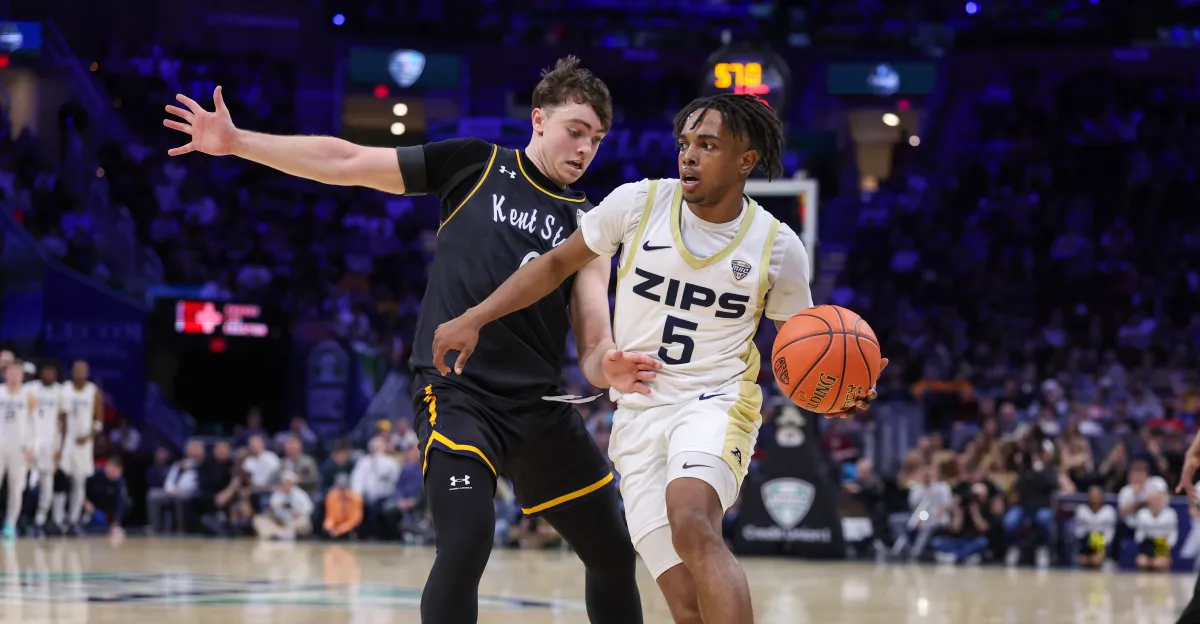
With all of the talk about Miami (Ohio) and its perfect regular season, many metrics considered Akron the stronger team out of the MAC this season. Taking care of business in the MAC conference tournament for the third straight year, the Zips are seasoned March Madness veterans playing for the fourth time in the last five seasons under head coach John Groce.
A No. 12 seed in the Midwest Region facing No. 5 seed Texas Tech, the Zips own the nation’s fifth longest active winning streak at 10 games. Akron’s experienced, senior-laden roster takes quality shots. The Zips are eighth in effective field goal percentage nationally and 14th in the nation in 3-point percentage at 38 percent. Familiarity also plays a big factor for Akron at 19th in the nation in continuity from last season — fourth among remaining tournament teams. The team’s three leading scorers, guard Tavari Johnson, forward Amani Lyles and guard Shammah Scott are all in at least their third seasons at Akron — an increasing rarity in today’s mid-major landscape.
If Akron knocks down enough perimeter looks, it can compete with the Red Raiders — who already lost star J.T. Toppin to a season-ending torn ACL in February. Texas Tech guard Christian Anderson is available for the NCAA tournament after leaving the Big 12 tournament from slipping on the LED glass court. His leg injury is a subplot to monitor. Regardless of Anderson’s status, Akron is a dangerous team filled with seniors who can knock down shots and make noise in the opening weekend.
Coming from a league like the American, South Florida wouldn’t traditionally fit the mold of a Cinderella. This is also the Bulls’ first trip to the Dance in 14 years and only the fourth time overall in program history.
Last season, the program experienced the unexpected death of head coach Amir Abdur-Rahim only weeks before the season, finishing 13-19 under interim coach Ben Fletcher. A season later, under first-year head coach Bryan Hodgson, USF went 25-8 and won the American regular season by two full games before winning the program’s first conference tournament in 36 years. It’s a turnaround that is easy to root for — and that’s before even looking at how talented the Bulls are.
A dangerous No. 11 seed against No. 6 seed Louisville in the East Regional, South Florida has won 11 straight games entering the tournament. The Bulls boast respectable offensive (No. 61) and defensive (No. 40) efficiency metrics on KenPom. And with five scorers putting up between 16.8 points and 11.1 points per game, led by guard Wes Enis and double-double threat Izaiyah Nelson, South Florida is balanced enough to compete with any program in the field.
Over 20 seasons as head coach at Northern Iowa, Ben Jacobsen has a history of upsets during March. Can the Panthers make another run as a No. 12 seed against No. 5 seed St. John’s in the East Region?
The Panthers famously made the Sweet 16 in 2010 as a No. 9 seed after dropping top-seeded Kansas in the Round of 32. Northern Iowa also won first-round games in 2015 and 2016 — including a No. 11 seed upset against Texas in the later appearance.
This season’s team is peaking at the right time after winning four games in four days at Arch Madness. The Panthers shot over 42 percent from three during three quality conference tournament wins over Illinois State, Bradley and UIC. That’s important because defense is the backbone for this UNI roster. At No. 24 in KenPom’s defensive efficiency ratings this season, Northern Iowa wants to slow the game down (No. 363 tempo) and get stops.
Facing Big East champion St. John’s, if Northern Iowa dictates tempo and knocks down early shots behind strong recent play from senior guard Trey Campbell, the Red Storm could be in for a major battle down the stretch.
A familiar name during March Madness after an iconic 2011 First Four-to-Final Four run, VCU would have been left out of the 2026 tournament as an at-large but earned its way into the Dance by winning the Atlantic 10 tournament on Selection Sunday.
First-year head coach Phil Martelli Jr. is, remarkably, the fifth different head coach to take VCU to the NCAA tournament since 2015. Similar to South Florida, the Rams don’t have a glaring weak spot among metrics. VCU is No. 46 offensively and No. 60 defensively. The Rams are also playing their best ball down the stretch, winning 16 of their last 17 games, with the only loss coming to fellow tournament team Saint Louis.
Against wounded No. 6 seed North Carolina — which lost stud freshman Caleb Wilson to a season-ending injury — the Rams are only slight underdogs and could use its aggressive guards to attack the paint and stretch the floor using 36 percent 3-point shooting. Sophomore guard Terrence Hill Jr. (14.4 ppg) is the team’s leading scorer but 6-foot-11 stretch big Lazar Djokovic (13.5 ppg, 35 percent from 3) could be a major factor in deciding VCU’s ceiling in March.