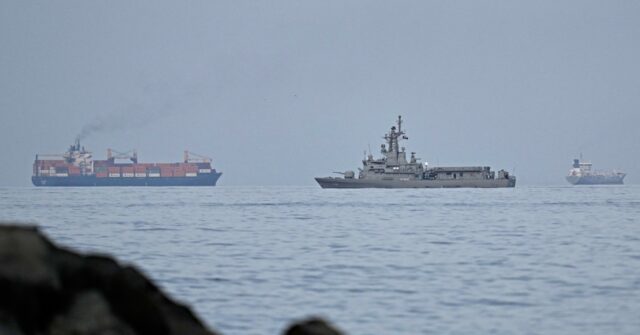
Iranian lawmaker Somayeh Rafiei told the Iranian Students’ News Agency (ISNA) on Thursday that her colleagues are considering a plan to impose tolls on ships passing through the Strait of Hormuz, which Iran has been blockading by launching wanton attacks on international shipping since the beginning of Operation Epic Fury.
“We in parliament are pursuing a plan under which countries will pay tolls and taxes to the Islamic Republic if the Strait of Hormuz is used as a secure route for transit, energy and food security,” Rafiei told ISNA.
“The security of the strait will be established with strength, authority and grandeur by the Islamic Republic of Iran, and countries must pay a tax in return,” she said.
The parliamentary piracy plan came after speaker Mohammad Bagher Ghalibaf said on Tuesday that the Strait of Hormuz “won’t return to its pre-war status.”
Iran has no right to block, or tax, international maritime traffic through the Strait of Hormuz under international law. The strait is governed by the 1982 United Nations Convention on the Law of the Sea (UNCLOS), which guarantees the right of passage for all ships and aircraft through the vital waterway, even in times of war.
RELATED: What Navy? Footage Shows Obliteration of Islamist Regime’s Ships
UNCLOS has long existed in an even more nebulous state than most of what passes for “international law,” having been accepted or signed but not ratified by various states, including both the United States and Iran. Most of the international community takes it seriously, but hostile powers like Iran have violated it before, most famously in the case of China disregarding a 2016 tribunal ruling it disagreed with and using force to claim the South China Sea.
There is no recognized international law that gives Iran the right to attack civilian ships in the Strait of Hormuz, or level taxes and tolls against them. The two nations bordering the Strait to the south, Oman and the United Arab Emirates (UAE), also have no right to control the vital waterway. Iran also has no legal right to plant mines in the Strait, as it has frequently threatened to do over the years.
Iran has made some effort to skirt around these legalities by claiming its attacks are only directed against ships belonging to its military enemies, the United States and Israel, but of course “international law” tends to become vaporous during any conflict.
The South China Morning Post (SCMP) on Friday reported that Iran is “rolling out screening processes and steep transit fees” for ships seeking safe passage through the Strait of Hormuz.
Meanwhile, the International Maritime Organization (IMO) is trying to establish a “safe maritime framework” to evacuate merchant ships trapped in the Persian Gulf by the Strait shutdown.
“I am ready to start working immediately in negotiations to establish a humanitarian corridor to evacuate all vessels and seafarers trapped,” said IMO Secretary General Arsenio Dominguez at a special session on Thursday. The Iranian delegation at the session did not respond to his plea.