King Harold’s legendary 200-mile march across England to the Battle of Hastings in 1066 is a “myth” that likely never happened, according to research published Saturday.
In arguably the most famous battle in English history, the Anglo-Saxon leader was defeated by William the Conqueror, who became the first Franco-Norman king of England, at Hastings on October 14, 1066.
In the weeks before the battle, Harold had defeated the Norwegian King Harald Hardrada and his Viking forces at the Battle of Stamford Bridge before racing south to confront the Norman invaders.
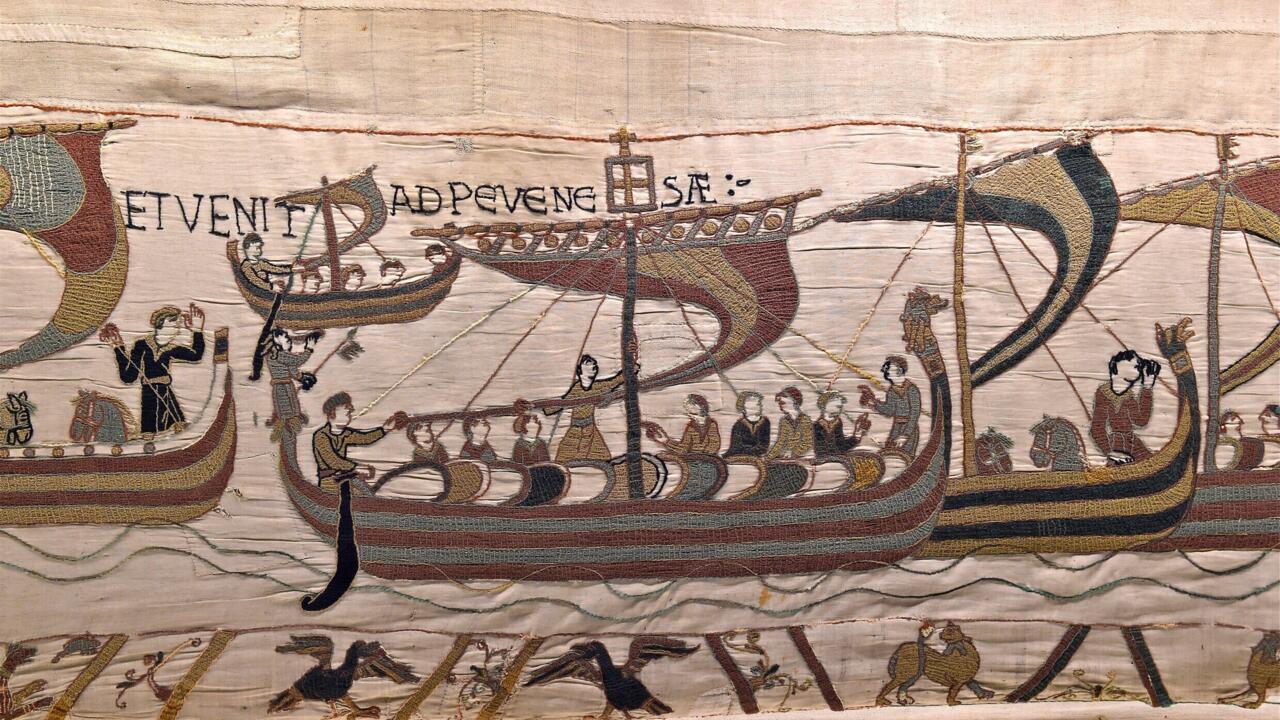
The decisive clash, which marked the start of the Norman conquest of England, is depicted in the Bayeux Tapestry, set to be brought to London from France this year.
Read moreFast facts on the Bayeux Tapestry
Ahead of the tapestry’s exhibition, starting in September 2026, new research from the University of East Anglia (UEA) revealed that the tale of Harold’s famed march to the fight was a “misunderstanding”.
The account of the march, as taught in British classrooms and museums, rests on what a British historian argues is a misinterpretation of the Anglo-Saxon Chronicle, a written record of medieval English history.
The Chronicle recounts that Harold’s ships “came home”. For at least 150 years, historians understood that to mean the king dismissed his fleet in September 1066.
That shaped the narrative that Harold and his troops were forced to march more than 200 miles (320 kilometres) from Stamford Bridge in Yorkshire in the northeast to Hastings on the south coast to ward off the Norman invasion.
But Tom Licence, a professor of medieval history and literature at UEA, found the ships returned to their home base in London and remained operational, which suggests that they were likely used by Harold during his journey and to defend against the invasion.
“I checked the evidence for him having sent the fleet home and found that it was just a misunderstanding. I went looking in the sources for evidence of a forced march and found there wasn’t any,” said Licence, who will present the findings at the University of Oxford on Tuesday.
According to Licence, the story of Harold and his men traversing the vast distance in 10 days is “implausible”.

The historian also pointed to other early accounts which describe Harold sending hundreds of ships to Hastings after William’s landing, suggesting he still had a fleet at his disposal.
“Harold’s campaign was not a desperate dash across England, it was a sophisticated land-sea operation. The idea of a heroic march is a Victorian invention that has shaped our understanding, or misunderstanding, of 1066 for far too long.”
The 68-metre-long Bayeux Tapestry, on loan from France, will be on display at the British Museum for 10 months.
(FRANCE 24 with AFP)