Economists and strategists are taking stock of what surging oil prices mean for consumer spending, inflation, and ultimately, the Federal Reserve’s path this year.
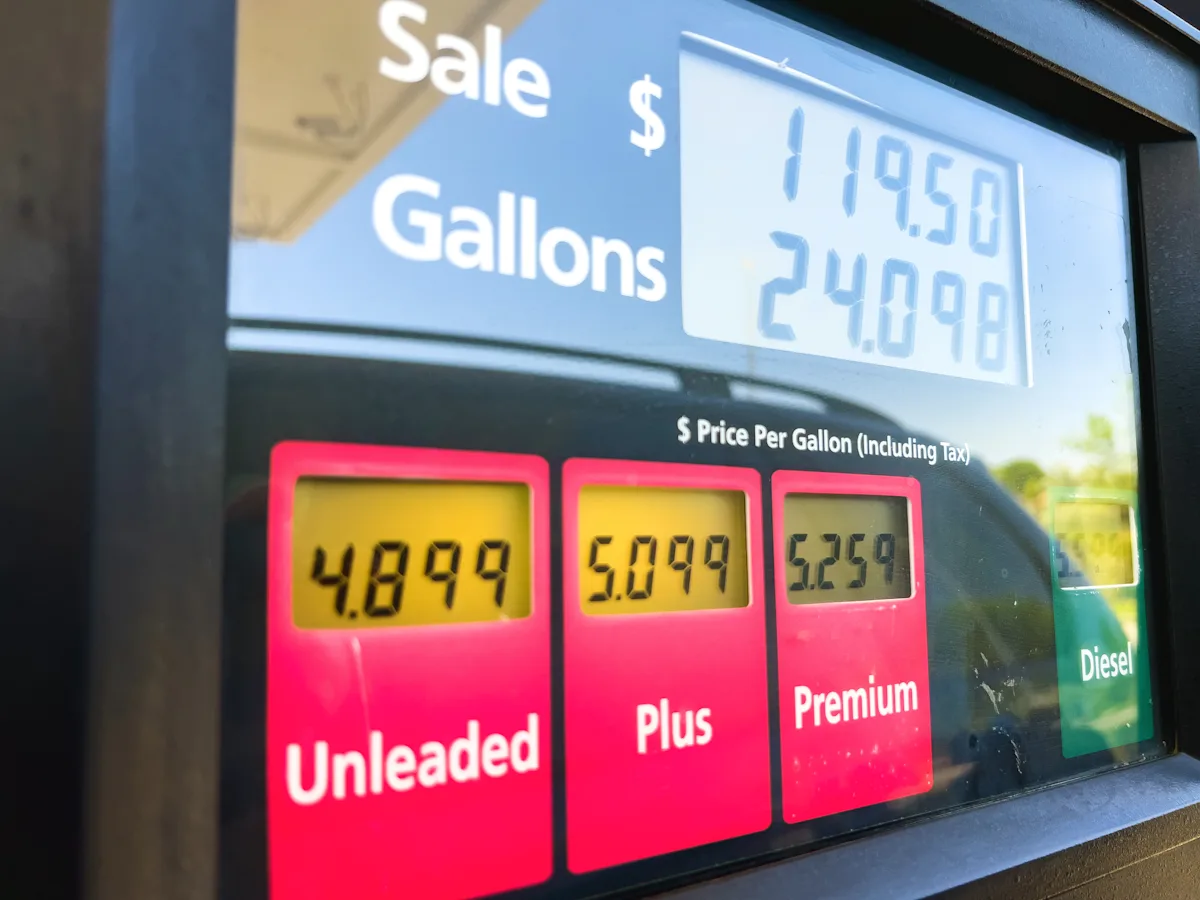
Gas prices have gone up by nearly $1 in just a month, topping $3.92 per gallon, according to AAA data. At this pace, analysts foresee $4 gasoline arriving within days.
Meanwhile, Americans are spending roughly $370 million more today on gasoline than they were a month ago, according to GasBuddy data.
“For most consumers, you can’t avoid gasoline price increases. It functions like a tax, very similar to a tariff,” said Luke Tilley, Wilmington Trust chief economist and the Philadelphia Federal Reserve’s former economic adviser.
Read more: How oil price shocks ripple through your wallet, from gas to groceries
“Because we have normal wage growth and essentially no job growth, this is going to end up weakening the consumer. They’ll pull back on services. They’ll pull back on everything other than gasoline.”
Deutsche Bank senior US economist Brett Ryan weighed in on what many call the “energy tax,” calculating that for every $10 rise in oil prices, gas jumps roughly 25 cents. With the price at the pump up nearly a dollar per gallon, Ryan estimates a surge of $115 billion in consumer spending on energy.
Although wallets will feel the pinch, the tax breaks from the Trump administration’s One Big Beautiful Bill are expected to provide some relief.
“Where it starts to overtake the benefits from the tax bill is around $140 to $150 [per barrel],” said Ryan.
On Friday, West Texas Intermediate (CL=F), the US benchmark, was trading near $97 per barrel, while Brent (BZ=F) hovered near $106 per barrel.
The key question is how rising fuel costs will affect inflation.
With diesel prices hovering at a four-year high, concerns have grown about the impact on transportation, especially since roughly 70% of goods in the US are transported by truck.
“There’s just lots of ways that oil and derivatives of oil get into the production and transportation of many, many things,” said Fed Chair Jerome Powell on Wednesday when asked about rising fuel costs. The Fed opted to keep interest rates flat in its March meeting.
Read more: How the Fed rate decision affects your bank accounts, loans, credit cards, and investments
“In the near term, higher energy prices will push up overall inflation, but it is too soon to know the scope and duration of the potential effects on the economy,” said Powell.
Fed officials have raised their inflation outlook for 2026 but do not anticipate significant further weakening in the labor market.