A new wave of ‘gentler’ shaving tools, including electric single-blade-style devices, is growing in popularity across the US amid promises they deliver a cleaner shave with fewer ingrown hairs.
Most men and women use multi-blade devices, which can scrape off the skin’s protective barrier and cut hair just below the skin level, raising the risk of bumps, redness, irritation and ingrown hairs. The blades can also collect dead skin after a single shave, raising the risk of them causing an infection.
But single-blade shavers, handheld devices that use one blade to cut wet hair on the face or body, are becoming more popular because they cut hair just above the skin, slashing the risk of unsightly and irritating ingrown hairs.
Some devices use an electrically-powered single blade to cut even further from the skin, and further reduce the risks of irritation.
Dermatologists often recommend these single-blade shavers for anyone with skin irritation, ingrown hairs or other problems linked to their routine shave.
But these devices are not without their own risks, with some saying they may be more likely to cause nicks and cuts that, in serious cases, may leave scars.
Some users are already coming forward to report irritation, nicks and discomfort from these shavers, including one individual who wrote online after using a popular electric single-blade shaver: ‘Am I the only one who has irritated skin after shaving with [a single-blade razor]?
‘I don’t have a lot of facial hair, so the shaver shouldn’t have any problems with my stubble. I shave every day… I have reddened skin on my neck and chin, and I can see light cuts.’
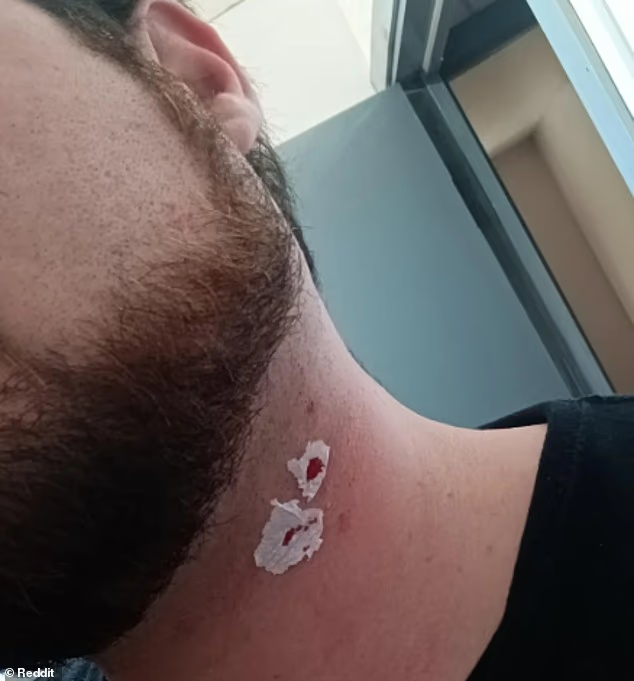
Shown above is an individual who posted on Reddit to warn that a single-blade razor had left him with cuts on his neck

The above shows marks on the neck of an individual who said they occurred while he was using a single-blade razor to shave
A second warned: ‘I started using [a single-blade] a few months ago because I always ended up with an irritated neck using regular razors. However, it gives me nicks… It always leaves some nicks.’
And a woman, who shaved her legs with a single-blade razor, added: ‘[The single-blade razor] almost took my damn leg off. Do not use this unless you are some kind of expert shaver.’
Single-blade razors have been around for centuries.
In modern years, they were largely replaced by multi-blade razors, which can deliver a closer and smoother shave, but reports suggest many are now turning back to using the single-blade design to avoid skin irritation and redness.
It is not clear what proportion of Americans use a single-blade razor compared to a multi-blade design, but it appears they are growing in popularity.
Single-blade razors cost about $30 for a single handheld reusable shaver, $40 for an electrified version, or less than $1 for a disposable device.
Single-blade razors are reusable, although customers are generally urged to swap out the blades every two to three months.

Recently, more individuals have been shifting toward using single-blade razors, reports suggest (stock image)

The above photo shows an image of a single-blade razor priced at around $30. The blade is inserted into the middle section of the razor (stock image)
With standard multiblade shavers, the devices range in price from $30 to $60, but customers are told to change the blades after every five to 15 shaves.
Using blades for longer than recommended raises the risk of skin redness and irritation due to dull blades scraping the skin. It also raises the risk of dead skin and shaving products building up in razors, which could cause an infection.
Dr Luke Maxfield, a dermatologist in Tennessee, told the Daily Mail: ‘With the single-blade, the risk of ingrown hairs is actually less, but you are also more likely to cut yourself.
‘With the multi-blade, you, in a sense, have a little less control, because the angle is predetermined based on the build, and it has features to catch you and prevent a cut if you are not paying attention.
‘This is not the case with a single-blade, which makes it a bit more of a learning curve.
‘This means you’re much more likely to be accidentally cutting yourself when you first start using the devices, although, if you are experienced, there’s nothing to say you would be more likely to cut yourself than with another razor.’
Maxfield, who uses a multi-blade razor for his face and single-blade for his neck, added that the cuts raised the risk of infection or, in severe cases, scarring on the face.
He said the risk of suffering a cut due to the razor was not strong enough for people to shy away from them if they were suffering from skin redness, ingrown hairs, and thought that the single-blade might benefit them.

The above shows bumps and redness on the skin, which the user said occurred after he used a single-blade razor
Dr Mona Foad, a dermatologist in Ohio, added to Daily Mail: ‘Even though a single blade may be gentler on the skin, it still needs to be used carefully.
‘One of the biggest things to keep in mind is to avoid repeated passes over the same area, since that can create irritation, compromise the skin barrier and increase the likelihood of razor burn.’
Both dermatologists recommended that people shave using a clean, sharp blade, and change their razor blades regularly.
They recommended shaving on well lubricated skin, such as that covered by shaving gel, which can improve the shave and lower the risk of scrapes or cuts.
They also said that shavers should not be stored in the shower or by the bath, saying this raised the risk of them rusting or picking up bacteria that could cause complications.
Razor burn is a common condition where the skin becomes temporarily red and irritated after someone shaves the hair on it.
Rhysa Phommachanh, a health and skincare expert at Landys Chemist, told Daily Mail: ‘It’s important to note that no shaving method is completely risk-free.
‘Skin irritation can occur when going over the same area multiple times.
‘As [single-blade] razors trim hair at the surface rather than below it, some users may find they need to go over certain areas more than once to achieve a closer finish, which can increase the likelihood of irritation if not done carefully.
‘It’s therefore important to shave gently and avoid applying too much pressure.’