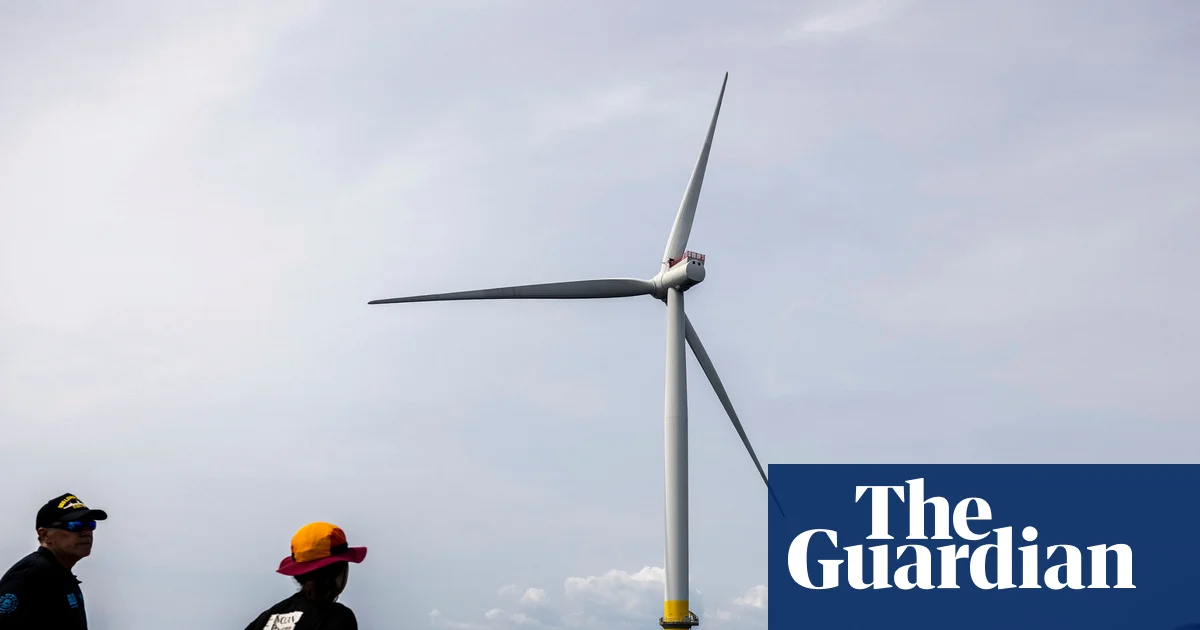
As a fuel crisis triggered by the war in Iran drives up global fossil fuel prices, the Trump administration has announced it will pay French energy major TotalEnergies $1bn to kill plans to construct wind farms off the US east coast.
The deal is the latest blow to the US offshore wind industry, which has faced repeated disruptions to multi-billion-dollar projects under Donald Trump.
The US president has said he finds wind turbines ugly, costly and inefficient, and his administration has moved to increase domestic fossil fuel production.
In the deal announced on Monday, TotalEnergies will give up two offshore leases it had purchased off New York and North Carolina. Trump’s Department of the Interior will reimburse the company the $928m it paid for the leases under Joe Biden.
TotalEnergies has pledged not to develop any new offshore wind projects in the country, a US interior department statement said, and will invest nearly $1bn this year in the development of four trains at the Rio Grande LNG plant in Texas, and the development of upstream conventional oil in the US Gulf and shale gas production, the statement said.
The deal comes as US-Israeli strikes on Iran have triggered the largest ever disruption to oil supply, according to the International Energy Agency, and as climate advocates say the conflict is highlighting the perils of a fossil fuel-based energy system.
“This is political theater meant to obscure the fact that offshore wind capacity is being pulled out of the pipeline when energy prices are skyrocketing, even as other offshore wind projects continue delivering reliable and affordable power to the grid,” Sam Salustro, a senior vice-president of pro-offshore wind group Oceantic Network, said in a statement. “Paying to remove affordable, homegrown energy out of the equation leaves American consumers struggling to pay their electricity bills.”
It also follows attempts by the Trump administration last year to end the construction of five wind farms along the east coast, each of which was already permitted. After states and developers filed lawsuits, courts ruled that each wind project should be able to proceed.
One of those offshore wind farms, the Vineyard Wind project, which sits off Massachusetts’ coast, completed construction this month. Just days before, another project located off Rhode Island’s coast, Revolution Wind, began delivering power to the New England grid.
Lena Moffitt, executive director of the climate advocacy group Evergreen Action, called the new deal “a taxpayer-funded bribe to kill homegrown clean energy and hand the money straight to oil and gas executives”.
“Trump is deliberately deepening our dependence on the same volatile fossil fuel markets his reckless war is destabilizing – while destroying the homegrown clean energy that could protect Americans from that volatility,” she said in a statement.
Xavier Boatright, deputy legislative director of the national environmental group Sierra Club, said: “Offshore wind is the clear path towards a cheaper, cleaner future, and it’s time Donald Trump governs by the facts rather than his commitment to corporate polluters.”
Total’s CEO, Patrick Pouyanné, said offshore wind was not the most affordable way to produce electricity in the US.
Pouyanne and the US secretary of the interior, Doug Burgum, announced the agreement at the CERAWeek energy conference in Houston.
Reuters contributed reporting