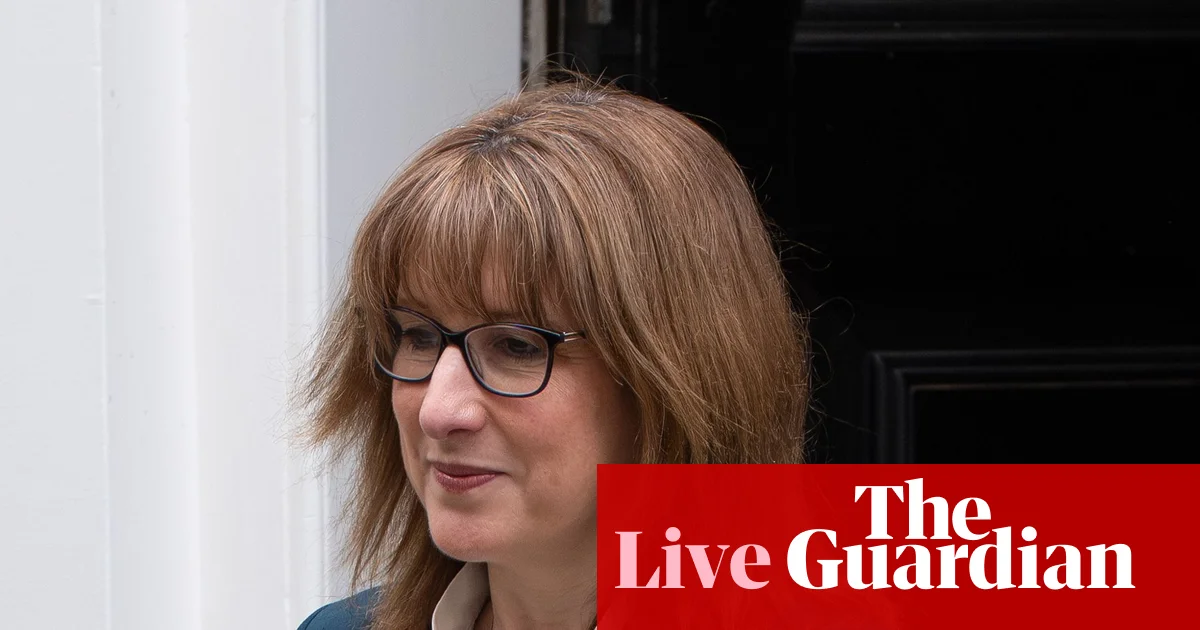
Reeves confirms contingency planning for energy support package under way, and insists it would be fairer than Tories’ version
Reeves ended her speech covering direct support for people affect by energy price rises.
Referring to action already taken, she said:
We don’t yet know what the full impact of this conflict will be. So we must be agile in responding appropriately at each moment.
We extended the five fuel duty cuts and we have pushed out the cheaper fuel finder, empowering people to avoid rip off prices and chasing down the last few filling stations to reach 100% compliance.
And when wholesale kerosene prices more than doubled overnight, we stepped in with £53m of support to those who needed it most within a matter of days, and from next week households will benefit from £150 off of their energy bills thanks to the action that I took in my budget, with a price cap giving households certainty on their bills until July.
She criticised the household support package introduced when the last Conservative government was in power (originally by Liz Truss, although it was subsequently watered down when Rishi Sunak was PM). It was a universal support scheme, and Reeves said it meant “households in the top income decile received an average of £1,350 of direct energy bill support”.
That added to high levels of national debt, Reeves said.
Implying she would take a different approaching, targeting help on the poorest, she said:
I can confirm to the house that contingency planning is taking place for every eventuality so that we can keep costs down for everyone and provide support for those who need it most, acting within our ironclad fiscal rules to keep inflation and interest rates as low as possible.
Key events
Reform UK reportedly drops Chris Parry as mayoral candidate after ‘Islamists on horseback’ comment about Jewish group

Ben Quinn
Ben Quinn is a Guardian political correspondent.
Reform UK has reportedly dropped Chris Parry as its Hampshire mayoral candidate after his comments describing a volunteer group providing security to the Jewish community as “cosplayers”. (See 10.50am.)
A Reform UK spokesperson told the Hampshire Chronicle: “He has been suspended pending an investigation and is no longer our mayoral candidate.”
Nigel Farage had already expended political capital on Parry, a former rear admiral, after he had initially refused to apologise last year for saying London-born Dvid Lammy should “go home” to the Carribbean.
However, the party has now been tipped over the edge after parry made comments on x about Shomrim, a respected group which helps to protect the orthodox Jewish community and others, in the wake of an arson attack on a Jewish ambulance charity in London
Dave Doogan (SNP) said that the £53m provided to help people with the cost of heating oil “won’t even touch the sides”. He said 5% of households used heating oil in Scotland, but none in Reeves’ Leeds West and Pudsey constituency.
Reeves said, because her constituents did not use heating oil, they were not getting any help. Help for Scotland and other parts of the UK was allocated in proportion to how many households used it, she said. And she said under the last government families using heating oil had to wait 200 days for help. This time it came within two weeks.
Dan Carden (Lab) asked for specific help for renters. He says rent controls were in place in the UK from the first world war until the end of the Thatcher government.
Reeves said the government introduced the Renters’ Rights Act to help renters.
John Glen (Con) asked what assessment Reeves had made of the impact of higher inflation on the public finances.
Reeves said, because of the impact on the public finances, she was looking at a targeted support scheme.
Rachael Maskell (Lab) asked Reeves to consider the case for a “warm homes prescription”, which would enable poor people to stay healthy by keeping their homes warm.
Reeves said the government had got rid of the two-child benefit cap, and doubled the number of people eligible for the warm homes discount.
Alistair Carmichael, the Lib Dem MP for Orkney and Shetland, said he welcomed what Reeves had to say about speeding up energy infrastracture projects because Shetland has “one of the largest onshore wind farms in the country”, but the operators are being paid millions not to generate electricity because of electricity grid capacity constraints.
Reeves says richest third of families got more than third of money under Tories’ energy support scheme
Jeremy Hunt, who was chancellor when the Rishi Sunak energy support package was implemented, urged Reeves to be less partisan in her comments. He said MPs were more likely to support her if he adopted a more neutral tone.
But he he also said he supported her decision to favour a targeted approach over a universal approach.
He asked for confirmation that any plan would be fully funded, and not paid for out of more borrowing.
In response, Reeves did pay a complement to her predecessor.
She said that, when Hunt became chancellor, he had to adopt a universal energy support package because the work had not been done to make a targeted scheme an option. She went on:
So the choice was a binary choice between blanket support or no support.
And the right honourable gentleman took the right approach then in ensuring that people’s energy bills didn’t go through the roof.
But a targeted approach would be more appropriate because the top third of families, under the previous approach, got more than a third of the benefit. That’s not right. It’s not sensible. And all it does is drive up inflation, interest rates and taxes in the future.
Edward Leigh (Con) asked why the government would not allow more extraction from the North Sea.
Reeves said that she had said she approved of “tiebacks” (allowing new deposits of oil or gas to be extracted if they can be reached from existing infrastructure). But she said the use of tiebacks for the Jackdaw and Rosebank fields were now subject to a quasi-judicial decision by the energy secretary.
Daisy Cooper, the Lib Dem deputy leader and Treasury spokesperson, urged Reeves to adopt her party’s proposal for “an energy security bank, to offer low interest loans for energy saving improvements for households and small businesses”.
In response, Reeves criticised the former Lib Dem leader Nick Clegg for opposing the roll out of more nuclear power, on the grounds it would take too long, when he was deputy PM.
UPDATE: Cooper said:
Families are fearful, will the chancellor consider zero-rating VAT on heating oil and LPG (liquefied petroleum gas)?
Will she consider introducing a price cap mechanism for off-grid fuels? Will she commit to halving energy bills over the next decade by reforming pricing structures?
And if bills rise to more than £400 a year, as some are warning, will the chancellor commit to coming back to this house and outlining a broader support package so that all struggling households, or many struggling households, don’t face a crippling hit of that scale?
And Reeves said:
When they were in government, they increased VAT on everything, so it’s a bit rich to say that they want to cut it now.”
There seems to be a sort of slight contradiction in what (Ms Cooper) is saying between whether she wants targeted support or blanket support.
And I would argue that the progressive, universal approach that we’re taking is the right one – £150 off everyone’s energy bills, but then targeted support for those who need it most.
Reeves claims she will have data available to run targeted support scheme, unlike Tories who had not prepared for that
Meg Hillier, the Labour chair of the Treasury committee, asked Reeves if the government had the data it needed to operate a successful targeted energy support programme.
Reeves said the last government had to run a universal support programme because they “hadn’t done the contingency planning”.
So they, in the end, had a choice about doing nothing or providing blanket support. And it was that blanket support that cost £78bn.
What we have been doing is working with the Department for Work and Pensions, with local government and others to ensure that we will be able to target support at those who need it most.