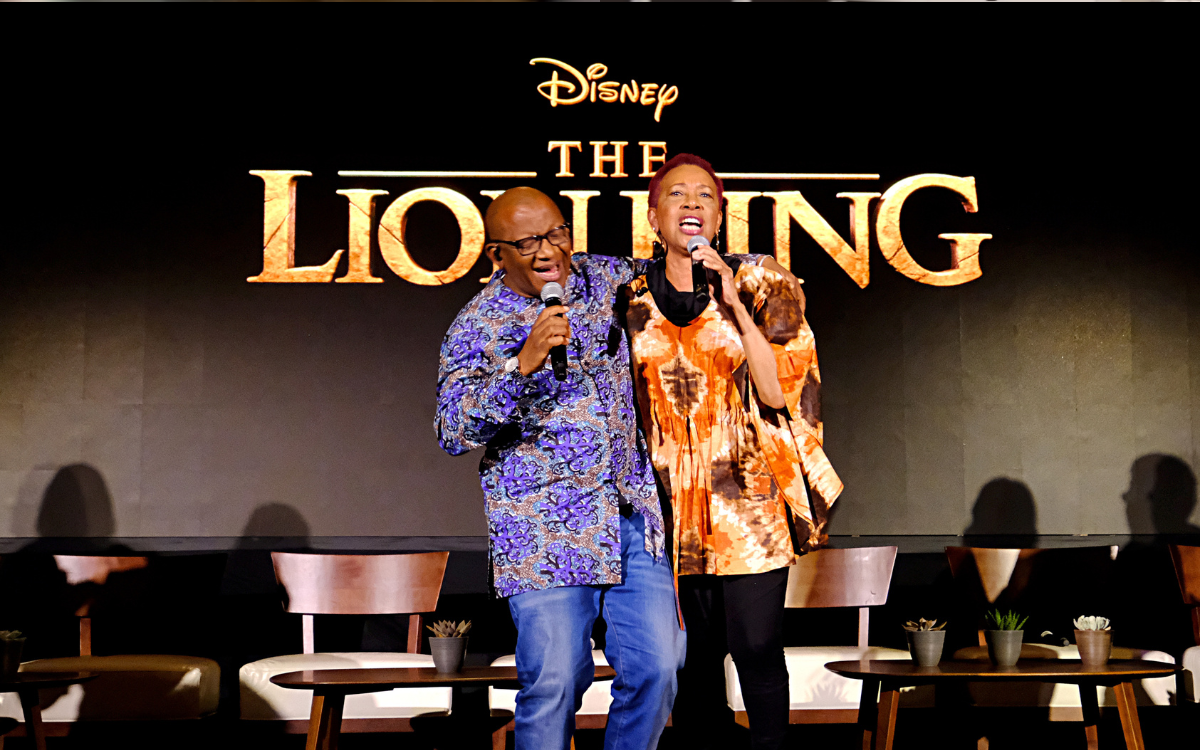
The South African composer behind the iconic opening chant in “Circle of Life” from The Lion King is suing a comedian for $27 million over alleged defamation of its meaning.
Lebohang Morake, who performs as Lebo M, wrote and performed the chant featured in the hit 1994 Disney movie and its 2019 remake. He is taking legal action against Zimbabwean comedian Learnmore Jonasi, real name Learnmore Mwanyenyeka, over what the lawsuit describes as the comedian’s intentional mocking of “the chant’s cultural significance with exaggerated imitations.”
Why It Matters
The dispute centers on the meaning of the opening line of the chant: “Nants’ingonyama bagithi Baba.” According to Morake, this translates as “All hail the king, we all bow in the presence of the king.” The next line, “Hay! baba, sizongqoba” then translates as “Through you we will emerge victoriously,” according to Morake.
However, during a recent appearance on the One54 podcast, when asked what the opening line translates to “Look, there’s a lion. Oh my god.” Jonasi’s translation is met with uproarious laughter, while footage of the explanation eventually found its way onto social media, where it went viral. Jonasi has told a similar joke during his stand-up comedy routine as part of a wider critique of The Lion King franchise.
What To Know
Earlier this month, Jonasi’s tongue-in-cheek translation was brought to the attention of Morake who responded in a video posted to his Instagram branding the comedian an “idiot” and accusing him of “misleading the world.” Morake also accused Jonasi of being “intentionally disrespectful and dismissing” of the explanation he gave for the meaning behind the chant.
“While meant as humor, it turned something deeply meaningful into a joke,” Morake wrote alongside the clip. “The truth is, these words are not random sounds. They come from language, culture, and heritage.”
In a video posted online while currently touring the U.S., Jonasi said he was a “big fan” of Morake’s work and had wanted to collaborate with the composer on a video delving further into the song’s meaning.
“Comedy always has a way of starting conversation,” he said on the Instagram video. “This is your chance to actually educate people, because now people are listening.” He ultimately changed his mind, however, when, according to Jonasi, Morake branded him “self-hating” over the course of a text exchange.
Now the dispute has become a legal one, with Morake’s lawyers filing a lawsuit this month in federal court. Though the complaint notes that “ingonyama” can literally translate to “lion,” it says that it serves as a “royal metaphor” in the song, and that Jonasi’s translation intentionally misrepresented “an African vocal proclamation grounded in South African tradition.”
The complaint argued that Jonasi presented his translation “as authoritative fact, not comedy” and, as a result, it is therefore exempt from the First Amendment protections afforded to parody and satire.
The lawsuit states that the viral video, coupled with Jonasi repeating similar jokes about the song during his U.S. tour are interfering with Morake’s business relationships with Disney and his income from royalties. The lawsuit suggests this interference has caused more than $20 million in actual damages. The lawsuit also seeks $7 million in punitive damages.
This article contains reporting by The Associated Press.
What People Are Saying
Lebohang Morake said on Instagram: “There has been a viral moment where @learnmore_jonasi @godfreycomic @one54africa spoke about the phrase “Nants’ Ingonyama “ a royal lyrical metaphor composed by Lebo M. While meant as humor, it turned something deeply meaningful into a joke. The truth is, these words are not random sounds. They come from language, culture, and heritage. ‘Nants’ Ingonyama’ carries a history and a spirit that deserves to be understood with the respect it was created in.”