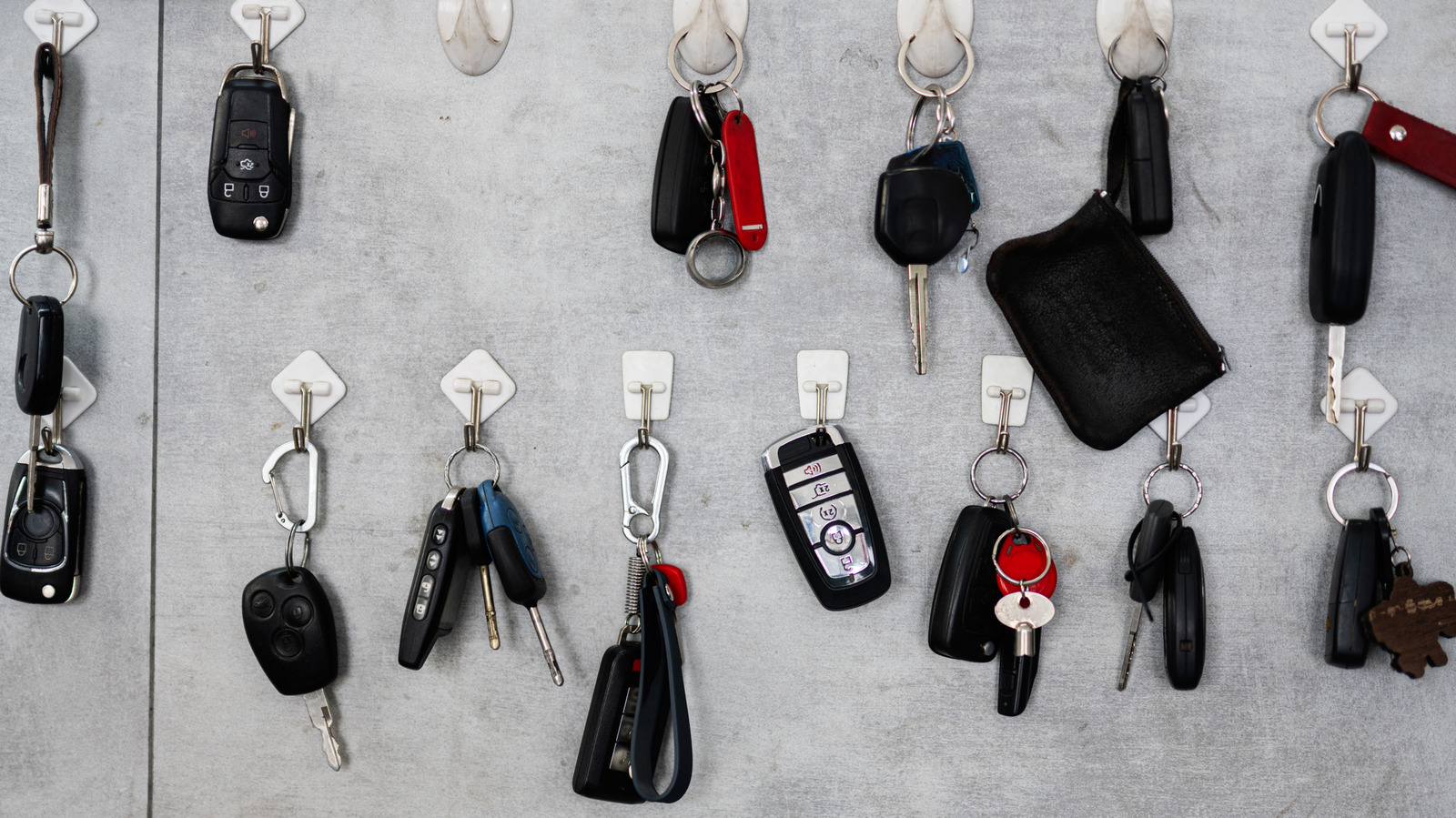
Let’s be honest, we have a love-hate relationship with our car keys. Back in the day, they were a simple piece of metal notched to match the mechanical tumblers in your vehicle’s lock cylinder. It was easy to run down to the local hardware store and get as many as you wanted cut on the spot because they didn’t contain a single diode or other electronic component. The whole process only took a few minutes of your time and a few bucks out of your wallet. Of course, those old-timey keys have a pointy end that inevitably finds a way to give you a good jab when riding along in your pocket.
God forbid you lose that sucker when you’re out and about! We’ve all felt the panic that bathes you in its sweaty embrace as you frantically backtrack every single place you’ve been. Sometimes you find them, other times … not so much. That’s where today’s high-tech keys save the day, right? While we don’t technically need physical car keys anymore, “need” is not the same as “want.” Before peeling back the many layers of that particular truth, though, let’s jump into Doc Brown’s time-traveling DeLorean and learn a bit about the history of the auto accessory we love to hate.
Keys first appeared in 1910 and were only used to control electricity to the ignition circuit. Turning the key “on” allowed electricity to flow into the circuit, while turning it “off” cut the power. Drivers still had to clamber out of the vehicle and hand-crank the engine from the front to fire it up, potentially breaking an arm in the process.
We don’t need no stinkin’ keys
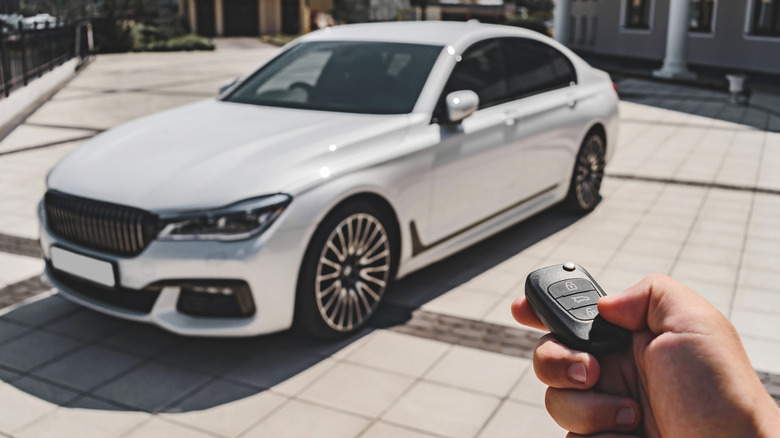
Almost four decades would pass before Chrysler made what many consider the conventional car key in 1949. It was a single-sided notched piece of metal that actually turned the vehicle’s ignition tumbler. The next evolution didn’t take place until 1965, when Ford released the double-sided key (with notches on both sides) that allowed it to slide into the ignition slot any old way.
According to Car and Driver, the 1983 AMC/Renault Alliance was the first model to feature a factory-installed remote entry that locked and unlocked the vehicle’s doors. In 1986, Chevy wanted to make it harder to steal its vaunted Corvette, so a coded resistor was embedded into the key that allowed the engine to start. This early form of vehicle anti-theft eventually made its way into most GM cars, and by the early 1990s, the keyless-entry devices we now know as the “fob” became all the rage. Believe it or not, the term “fob” isn’t an acronym for anything, but came from the German word “fobke” (or “fuppe”), meaning “small pocket.”
When Lexus dropped the LS400 in 1990, it came with one of the first laser-cut keys, adding a whole new layer of security that made it far more difficult to duplicate (to the chagrin of many a hardware store). That same year, Mercedes-Benz introduced the widely used “switchblade” fob, which had a metal key that flipped in and out like a switchblade knife. In 1993, Chevy tested an early version of a proximity-key device (passive keyless entry system) that locked and unlocked the doors on the C4 Corvette; a traditional ignition key was still required to start the vehicle.
Goodbye keys, hello smartphones
Fobs in all their iterations (standard, switchblade, smart) were glorious evolutions of the technology, but if you lose one, you can’t simply run down to your friendly neighborhood ACE Hardware and have them cut a new one for you. Replacing any “smart” device requires a dealership’s intervention, which is not only time-consuming and frustrating, but can also easily set you back hundreds of dollars.
In the technologically advanced age of the Jetsons we live in today, many car makers have moved away from keys entirely. Even those nifty fobs (with hidden features you probably didn’t know existed) are going the way of bench seats and carburetors. Ironically, in October 2025, Ford released the Truckle — an elaborate F-150 fob holder in the form of a $200 Western-style belt buckle with a notch to slide the fob into securely. This tongue-in-cheek move aside, digital “car keys” are clearly the future.
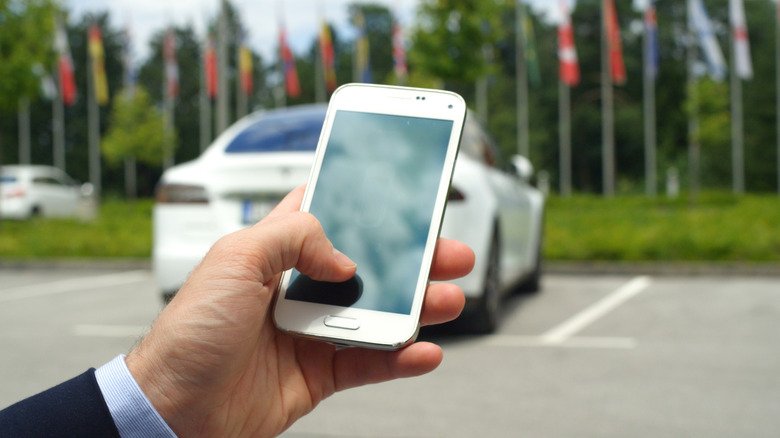
Now, we can operate cars with a few taps on our smartphones, and technologies like near-field communication (NFC), Bluetooth Low Energy (BLE), and Ultra Wideband will surely create an array of new digital key options. But all of these things present unique risks of their own, such as getting hacked, losing the cellphone (or having the battery die), and even valet parking issues. In January 2026, the Car Connectivity Consortium (CCC) reported that several brands — Audi, BMW, Genesis, Hyundai, Kia, Lotus, Mercedes-Benz, Polestar — obtained Digital Key Certification for some 115 cars in 2025. Additionally, Apple claims that by the end of 2026, other manufacturers, including Acura, Cadillac, Chevrolet, GMC, and Porsche, will also support digital car keys, signaling that widespread adoption is upon us.
Keys represent freedom

New cars no longer need keys for any facet of an automobile’s operation. Plus, getting rid of another item we must reluctantly haul around with us when we leave the house is always a good thing, right? Well, that’s certainly one side of the argument. But there’s a whole philosophical aspect to consider.
Americans have a truly unique cultural bond with their vehicles that runs deep. As a teenager in the U.S., there’s nothing more liberating than a parental unit dropping keys to your first car into your hand. It’s a singularly important life event for many who got their first real taste of “freedom.” Many people grew up in an era when two distinctly different metal keys for each car were part and parcel of everyday life — it was simply all we knew. Car enthusiasts and gearheads, who love nothing more than getting grease under their nails and prefer the smell of gasoline and motor oil to a pine-scented car freshener, will argue that having a set of physical keys is integral to the love affair we have with our cars.
But that sentiment is most definitely changing, because nothing stays the same forever. Younger generations who grew up with many of these innovations in place are wholly comfortable with the constant exponential leaps in technology, easily able to embrace digital keys (and whatever change comes next) with arms wide open. Ultimately, we will adopt whatever technology best fits our own personal vibe, regardless of age. So, while we most certainly don’t need physical car keys, sometimes what we want is more important.