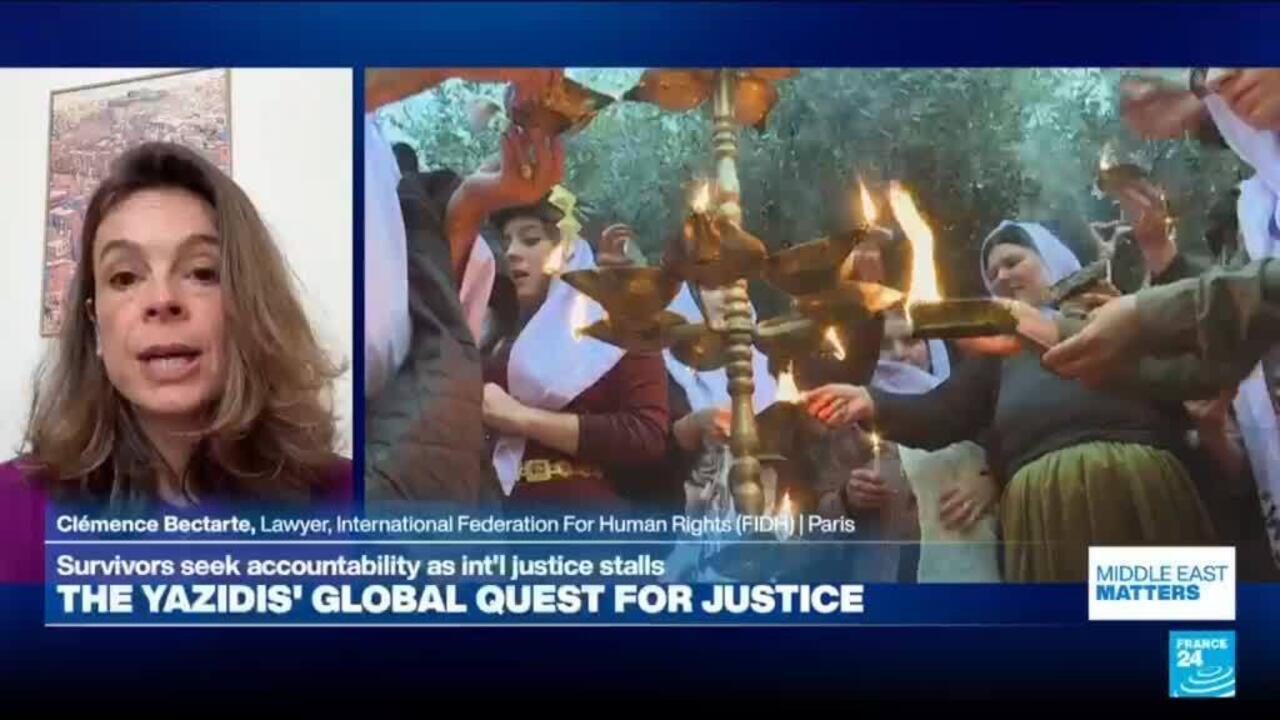
Nadia Massih is pleased to welcome Clémence Bectarte, a lawyer at the Paris Bar, specializing in international criminal law and international human rights law. She speaks from a position shaped her direct involvement, working with survivors of the Yazidi genocide, whose experiences reveal both the depth of the brutal systematic violence and the enduring struggle for recognition and basic justice. The testimonies presented in this case are not only legal evidence, but acts of resistance against erasure of a people.
What emerges is a dual reality. On one hand, these proceedings represent a meaningful, if limited, advancement in accountability, marking the extension of genocide prosecutions into new judicial spaces such as France. On the other, they underscore the profound insufficiency of current international responses, as the majority of perpetrators remain untried and the structural conditions of displacement persist.
Central to this analysis is the role of testimony, not merely as a legal instrument, but as a collective voice. Survivors speak not only for themselves, but for families, children, and an entire community whose existence has been targeted. In this sense, justice is inseparable from memory: the act of speaking becomes a safeguard against forgetting.
At the same time, the continued inability of Yazidis to return to Sinjar, the destruction of cultural and religious sites, and the absence of coordinated political support point to an ongoing crisis. The genocide is not only an event of the past but a condition with enduring consequences, threatening the continuity of identity itself.