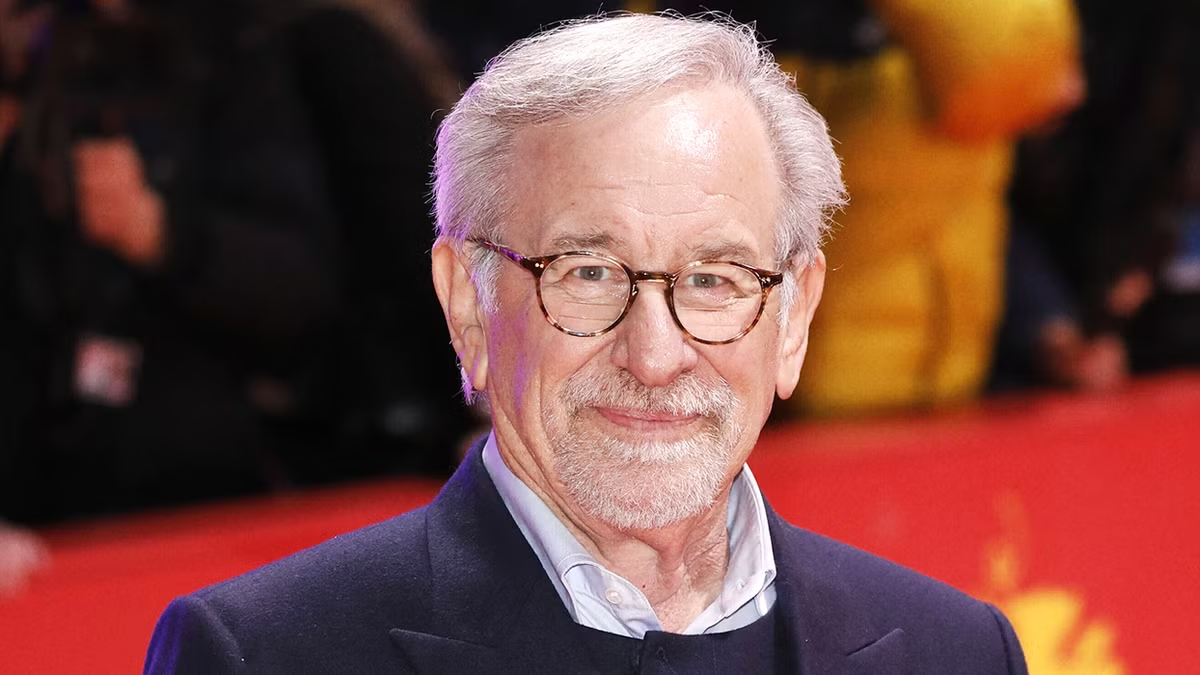
Just 17 years ago, Oscar-winning director Steven Spielberg was interviewed by Boston University ahead of receiving an honorary degree. When asked about his favorite TV shows, he named a few expected picks — series from prolific writers like David E. Kelley, John Wells, and Aaron Sorkin — along with a somewhat-surprising choice, the reality series, Deadliest Catch. But one show that stood out was the show he said he “always” watched: AMC’s Mad Men.
At first glance, Mad Men might not seem like an obvious favorite for the director of Jaws and Jurassic Park. But given Spielberg’s track record for nuanced, character-driven storytelling, it makes perfect sense. His films resonate with audiencesnot just because of their visual spectacle but alsobecause of the emotional depth and historical context that ground them, especially in his more recent work. Mad Men does exactly that, painting a stylish yet emotionally raw portrait of 1960s America through the lives of complex, often deeply flawed characters navigating Madison Avenue. It’s the kind of slow-burn, detail-rich drama that a filmmaker like Spielberg would naturally appreciate.
Steven Spielberg and ‘Mad Men’ Share a Passion for History and Humanity
Created by Matthew Weiner, Mad Men premiered in 2007 and quickly became one of the defining shows of the prestige TV era. Its 94% Rotten Tomatoes score and multiple Emmy wins only scratch the surface of its cultural impact. The show captured the complexity of the American Dream by diving deep into characters who were ambitious, fractured, and often morally ambiguous. Spielberg has long gravitated toward this kind of storytelling — character-driven, emotionally rich, and grounded in historical context — as seen in films like The Post and The Fabelmans. Like Mad Men, his work is less about glorifying the past and more about pulling back the curtain on what life was really like during pivotal cultural moments.
Mad Men never glamorizes its 1960s setting. From the moment we meet Don Draper (Jon Hamm), he’s polished and charming on the surface, but deeply conflicted underneath. He’s living a double life (in more ways than one), and the show unfolds largely through his perspective as he grapples with identity, ambition, and the cultural upheaval happening around him. Set against the high-stakes world of Madison Avenue and a fractured home life, Don’s journey reflects the era’s broader themes of reinvention and disillusionment. The meticulously crafted production design, period-accurate costumes, and carefully curated soundtrack create a world that feels both specific and timeless — much like Spielberg’s historical movies, where the setting isn’t just background, but essential to the emotional depth of the story.
Both Weiner and Spielberg clearly share an obsession with detail, using it not just for authenticity, but as a storytelling device. Every scene in Mad Men is layered with subtext, and every visual element, from color palettes to lighting choices, reflects the emotional state of its characters or the cultural tensions of the time period. It’s this kind of immersive world-building and emotional depth that aligns so clearly with Spielberg’s taste. Their work elevates storytelling into something textured, resonant, and lasting.
‘Mad Men’ Always Put Character First
At its core, Mad Men is a character study, and Don Draper remains one of television’s most compelling protagonists. He’s not traditionally likable, but Jon Hamm’s magnetic, restrained performance gives him complexity and weight. The show never excuses Don’s flaws, but it offers insight into the pain behind them — and that empathy, paired with moral ambiguity, is what gives Mad Men its emotional punch, and the same depth applies to every other character in the series.
Elisabeth Moss‘ Peggy Olson evolves from an overlooked secretary to a creative powerhouse, navigating a sexist industry without losing her integrity. Christina Hendricks brings strength and vulnerability to Joan Holloway, whose beauty masks an unshakable ambition and emotional intelligence. And then there’s Roger Sterling (John Slattery), whose charm and sharp wit initially disguise a man increasingly out of step with the changing world around him. The writing demands growth, and the performances rise to meet it, turning even moments of silence into emotional revelations.

Steven Spielberg Failed To Turn This Cursed Sci-Fi Reboot Into a Masterpiece 43 Years Ago
A behind-the-scenes tragedy ended three lives along with a Hollywood friendship.
Mad Men thrives on internal conflict. It rarely relies on cliffhangers or shock twists to drive the story forward. Instead, it builds tension through subtext, silence, and the quiet unraveling of its characters’ emotional lives. In a television landscape that often relied on heavy plot and action, Mad Men stood apart. That commitment to patient, character-first storytelling is likely what drew Spielberg to the series in the first place.
Nearly two decades after its debut, the show remains one of the most emotionally resonant dramas in television history, not just for its style, but for how deeply it understood its characters and the time they lived in. Spielberg’s admiration isn’t just a flattering nod of approval, but a reminder that the most enduring stories are the ones that stay with us long after they air. Like many of Spielberg’s best films, Mad Men endures because it never stopped being human.

- Release Date
-
2007 – 2015-00-00
- Network
-
AMC