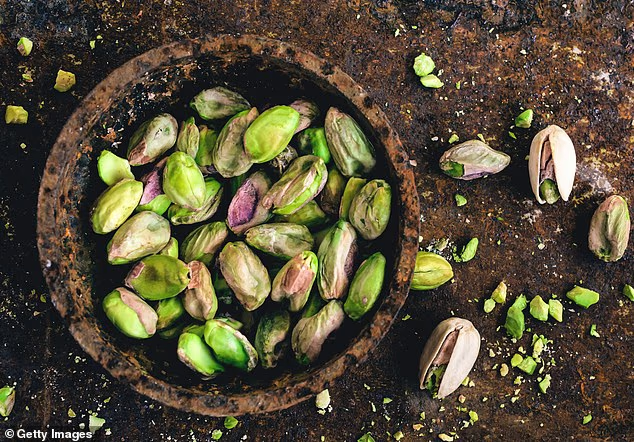
Over the past few years, pistachios have gone from a humble snack to a full-blown luxury obsession – driven in no small part by the viral rise of Dubai chocolate.
Suddenly, they’re everywhere. Pistachio-filled croissants, glossy green spreads, iced lattes, and indulgent desserts all trading on the nut’s premium feel.
But while pistachios themselves have been eaten for thousands of years, what we’re eating now often looks very different.
So are they genuinely a healthy snack – or just the latest ingredient caught up in a wellness halo?
Because the truth is, pistachios can be good for you. They’re packed with fibre, healthy fats and nutrients, and have long been linked to better heart health and appetite control.
But the mistake most people make is assuming anything labelled ‘pistachio’ carries those same benefits.
In reality, many of the products fuelling the trend – from sweet spreads to chocolate bars – are high in sugar and saturated fat, turning a healthy ingredient into something much closer to confectionery.
To help navigate this culinary minefield, we asked Rob Hobson, a registered nutritionist and author of The Low Appetite Cookbook, to answer the key questions people are asking about pistachios…
Pistachios can be good for you. They’re packed with fibre, healthy fats and nutrients, and have long been linked to better heart health and appetite control. But context matters, say experts
Are pistachios high in fibre?
Yes – and this is one of their key nutritional strengths.
‘A standard 30g handful provides around 3g of fibre which is roughly 10% of the NHS recommended 30g per day,’ Hobson says.
That is a meaningful contribution, particularly given how few people reach fibre targets.
‘That’s meaningful, particularly when you consider that only around five per cent of UK men and two per cent of women reach the fibre target.’
Like other nuts, pistachios contain a mix of fibres that help support digestion and feed beneficial gut bacteria. This can also help slow the absorption of sugars and support steadier energy levels.
Are pistachios high in fat?
Yes – but the type of fat matters.
‘A 30g portion contains around 13g of fat, with only about 1.5g coming from saturated fat,’ Hobson says.
Most of the fat in pistachios is unsaturated, which is associated with better heart health when consumed as part of a balanced diet.
‘There’s also an important nuance here in that the fat in whole nuts is trapped within plant cell walls which is what we call the food matrix,’ he adds.
‘Because we don’t fully break down every cell during digestion, a proportion of that fat isn’t absorbed. Research suggests that the metabolisable energy from whole nuts may be 10–20% lower than standard calorie calculations predict.
‘Also, regular nut consumption is not associated with weight gain in long-term studies.’
Are pistachios high in carbohydrates?
Not especially. A typical 30g handful contains around 8g of carbohydrates and only about 2g of sugars, making them relatively low compared with many processed snacks.
Much of this carbohydrate is paired with fibre, which helps slow digestion and prevents sharp spikes in blood sugar.

The World’s Largest Pistachio monument stands 30 feet tall, by the entrance of McGinn’s pistachio orchard in North Alamogordo, New Mexico

Like other nuts, pistachios contain a mix of fibres that help support digestion and feed beneficial gut bacteria. Pictured, a vintage TV advert for California Pistachios
What is a standard portion of pistachios?
Around 30g – roughly a small handful.
This provides around 160 calories, 6g of protein, 13g of fat (mostly unsaturated), 3g of fibre and around 2g of sugar.
Are pistachios fattening?
Yes – like all nuts, they are energy-dense.
‘A 30g portion provides around 160 kcal,’ Hobson says.
‘For context, average NHS guideline intakes are 2,500 kcal per day for men and 2,000 kcal for women, so a handful represents roughly 6–8% of daily energy needs.
‘However as I said above, because of the food matrix effect and their protein and fibre content, pistachios are more satiating than many calorie-equivalent snack foods and you don’t absorb all of the energy from the nut.’
Are pistachios good for weight loss?
They can be – but context matters.
‘Large cohort studies show that people who eat nuts regularly do not gain more weight and often have healthier body weights over time,’ Hobson says.
‘The combination of plant protein, fibre and unsaturated fat helps improve satiety, and in-shell pistachios can slow eating down naturally as you have to unshell them as you eat – which I guess is forced mindful eating!’
What is the best way to eat pistachios?
Keep it simple.
‘Ideally unsalted or lightly salted, and preferably in-shell if snacking,’ Hobson says. ‘As this naturally slows intake and supports portion control.’
Both raw and roasted are fine, he adds. ‘Roasting enhances flavour, but the main consideration is added salt or flavourings in some commercial products.’
What nutrients do pistachios contain?
They are nutrient-dense for their size.
‘A 30g serving gives you around 6g of plant protein, fibre, potassium, magnesium, phosphorus, vitamin B6 – which is one of the richer nut sources – and vitamin E,’ Hobson says.
‘That mix makes them a smart choice for midlife adults, where muscle maintenance, blood pressure and cholesterol management start to matter.
‘They’re also a handy snack because they naturally combine fibre, plant protein and healthy fats all in one.’
Are there antioxidants in pistachios?
Pistachios also contain several antioxidant compounds.
‘Pistachios contain several antioxidant compounds, including lutein and zeaxanthin (linked to eye health), polyphenols and vitamin E compounds,’ Hobson explains.

James Webb set a world record by cracking and eating 338 pistachios in just eight minutes at the Wonderful Pistachios Get Crackin’ Eating Championship in Los Angeles

Webb’s pistachio count smashed the previous record of 188, set at the inaugural event by defending champion Nick Wehry
‘These help protect cells from oxidative stress, although they are part of an overall dietary pattern rather than a single protective solution.’
Do pistachios fight cancer?
No single food can be described in those terms.
‘No single food ‘fights cancer,’ and it’s important not to overstate the claims,’ Hobson says.
However, they may still play a supportive role as part of a healthy diet.
‘What we can say is that diets higher in fibre are associated with lower risk of colorectal cancer and pistachios contribute to overall fibre intake.
‘Their antioxidant content also supports general cellular protection, but their benefits should be viewed as part of a balanced, fibre-rich diet rather than a standalone intervention.’
Who should avoid pistachios?
Some groups may need to be cautious.
‘Anyone with a tree nut allergy should avoid pistachios. There is recognised cross-reactivity with cashew allergy,’ Hobson says.
‘Pistachios are high FODMAP – which means they can ferment in the gut and trigger symptoms such as bloating, wind and stomach pain in sensitive individuals – so some people with IBS may need to limit portion size.’
They also contain small amounts of Vitamin K.
‘For people taking the blood thinner warfarin, consistency of Vitamin K intake is important as changes in the amount can affect the medication.
‘Pistachios don’t need to be avoided, but large changes in intake should be discussed with a healthcare professional.’
Is pistachio butter and pistachio cream healthy?
This is where things start to change.
‘Pure pistachio butter should contain 100% pistachios, sometimes with a little salt,’ Hobson says.
‘But many commercial pistachio creams, especially those used in desserts or viral ‘Dubai-style’ chocolates often contain added sugar, vegetable oils, milk powders and emulsifiers.
‘At that point, the product becomes confectionery rather than a whole-food nut product.’

Over the past few years, pistachios have gone from a humble snack to a full-blown luxury obsession – driven in no small part by the viral rise of Dubai chocolate
Does Dubai chocolate make pistachios ‘unhealthy’?
Not the pistachios themselves – but the context matters.
‘Pistachios themselves aren’t unhealthy. The issue is the context,’ Hobson says.
‘Products like pistachio-filled chocolate bars are typically high in sugar and saturated fat so the nutritional profile shifts dramatically, and it becomes an energy-dense treat.
‘You’re no longer eating a handful of whole nuts, you’re eating confectionery that contains pistachio flavour. It’s about the overall product, not the nut itself.
‘One of the problems is that pistachio flavour has become hugely popular and is mostly getting added to UPF foods like shakes, creamy or sugary coffees and chocolate.’
How should you use pistachios?
They are highly versatile.
‘You can sprinkle them over oats or yoghurt, add them to salads or grain bowls for texture or use them as a crust for fish or chicken,’ Hobson says.
‘You can also blend them into pesto, stir them into couscous, rice or roasted vegetables, or pair them with fruit for a protein-and-fibre snack.
‘For maximum nutrition, pair pistachios with berries or citrus for fibre diversity and vitamin C, or with wholegrains for sustained energy and with oily fish for complementary heart-healthy fats.
‘Or with yoghurt or kefir for protein plus gut-friendly benefits.’