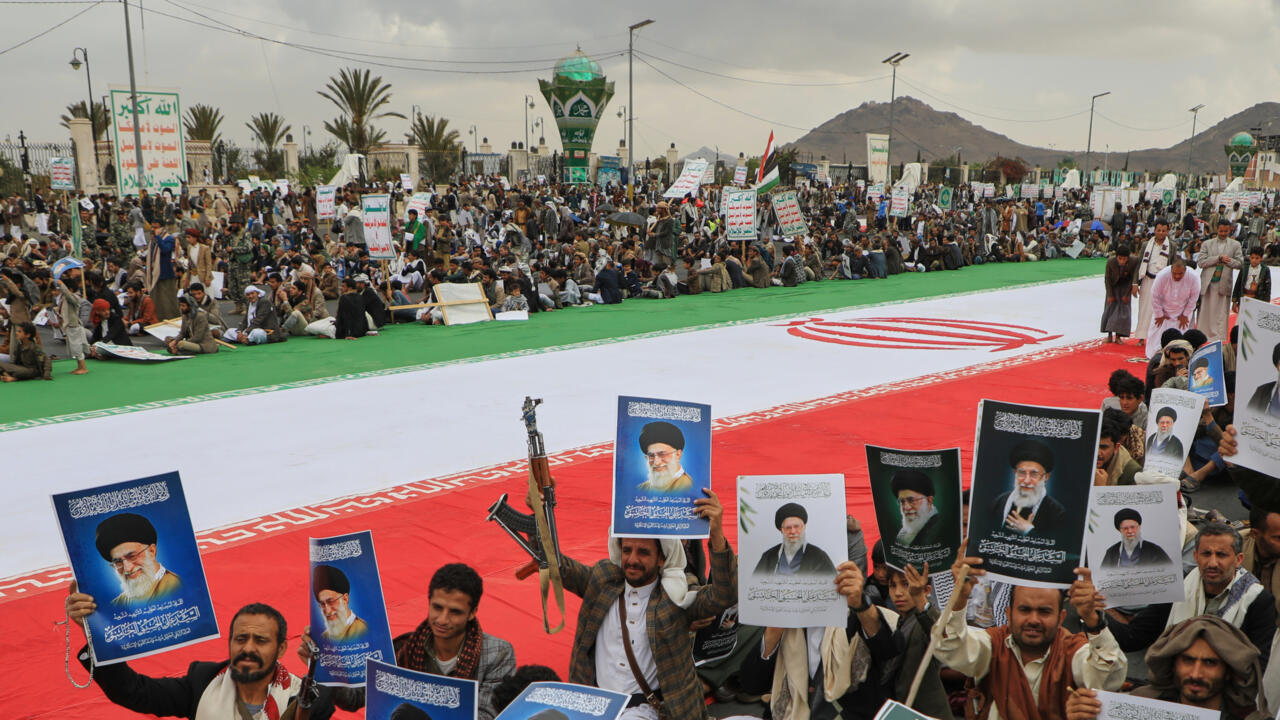
A new actor has stepped into a war already being waged on multiple fronts: Yemen‘s Iran-backed Houthi rebels, who launched their first missile in months at Israel on Saturday.
After the Middle East war broke out, the Houthis had voiced support for their ally in the face of a US-Israeli offensive, refraining from taking part while warning they had their fingers “on the trigger”.
On Saturday, they pulled it, announcing they had fired missiles and drones at Israeli military sites. Israel reported detecting a missile launch from Yemen and said it was working to intercept it.
Read moreYemen’s Houthis launch ballistic missile at Israel as Middle East conflict escalates
The group’s entry into the conflict “marks a serious and deeply concerning escalation”, said Farea Al?Muslimi, a research fellow at Chatham House.
Houthi involvement risks “widening an already volatile war, with significant implications”, especially for regional stability and global trade, he told AFP.
Here are the possible repercussions.
An expected move
Analysts had long predicted the Houthis – who have controlled large parts of Yemen, including the capital Sanaa, since 2014 – would eventually join the fray.
The rebels likely “tried their best to stay out of this war,” said Al-Muslimi, adding they knew it “won’t be good for them in any way”.
“But they had to ultimately pay back the favour to Iran,” which has backed them for years, he added.
For their first strike, they chose to target Israel – as they often did during the Gaza war – and not American interests in wealthy Gulf states.
One of your browser extensions seems to be blocking the video player from loading. To watch this content, you may need to disable it on this site.
This sends a clear message to supporters at home and allies abroad: “Their main focus is still the Palestinian cause,” the US-based risk consultancy Basha Report wrote on X.
“At the same time, they are signaling to the US and Saudi Arabia that they are not targeting them, at least for now.”
Their next step, Basha Report suggested, would be attacks on regional maritime traffic rather than strikes on US assets.
This “creates pressure without crossing a line that could trigger a direct US response”, it added.
Second strait at risk
From their mountain strongholds above the Red Sea, the Houthis can severely disrupt shipping with drones and missiles.
They proved this during the Gaza war, when the rebels targeted vessels they claimed were linked to Israel.
This discouraged passage through the Bab el-Mandeb strait, a narrow waterway at the southern tip of the Red Sea that effectively serves as the gateway to the Suez Canal from the Indian Ocean.

© Frank Ramspotti, iStock
With the Red Sea acting as a key link between Europe and Asia, the strait is one of the busiest shipping lanes in the world.
The chokepoint has become even more vital for global oil flows since Iran effectively shut the Strait of Hormuz on the opposite side of the Arabian peninsula.
The only alternative route is to sail around the Cape of Good Hope off the tip of southern Africa.
If the Bab el-Mandeb strait is also threatened, already-fragile global markets would be shaken even more. And Saudi Arabia is unlikely to sit by, experts say.
Saudi shift?
With the Strait of Hormuz effectively closed, Saudi Arabia has seen tankers diverted to its Red Sea port of Yanbu.
But this is the kingdom’s last secure outlet for its oil. If it is blocked, Riyadh may abandon its current stance of intercepting near-daily Iranian missiles and drone attacks without retaliating.
Saudi security analyst Hesham Alghannam told AFP this “careful neutrality in the war” could collapse.
Riyadh might consider retaliation, “even if limited”, he added.
Wider regional escalation
In their statements, the Houthis have hinted at possible strikes on neighbouring states.
As Al-Muslimi noted, “they are nearer and better placed” than Iran to hit Saudi infrastructure and Western bases across the Gulf.
Read moreFinancial analysts move to counter Trump’s Middle East war uncertainty with ‘TACO’ index
Such attacks could have severe consequences, he warned, including a high risk of direct confrontation between the Houthis and Saudi Arabia.
The Houthis previously fought a Saudi-led coalition supporting the internationally recognised Yemeni government in a conflict that stretched from 2015 until 2022, when a truce took hold.
And civilians could once again pay the price. If Yemen slips back into war, the humanitarian consequences for a population still deeply scarred by the previous conflict would be catastrophic.
(FRANCE 24 with AFP)