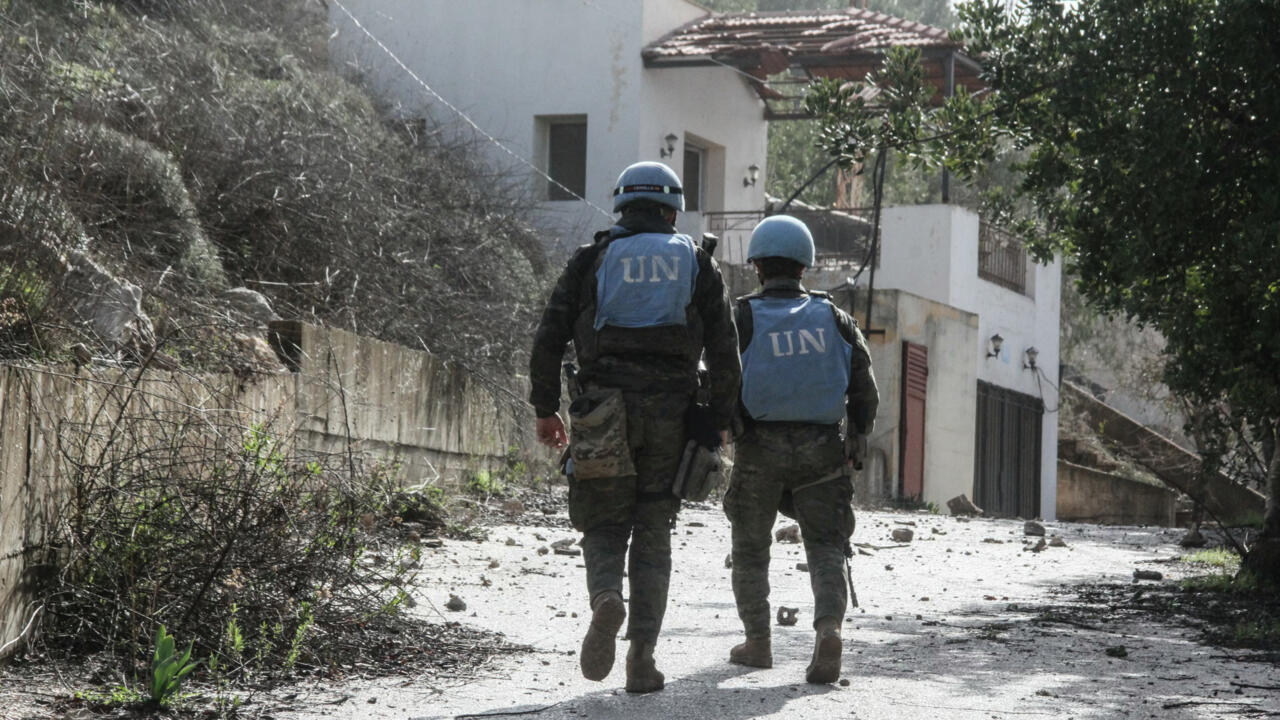
United Nations peacekeepers, who for decades have served as a buffer between Israel and Lebanon, have seen three of their comrades killed and several others wounded since the latest war erupted between Israel and Hezbollah.
The mandate for the UN force in south Lebanon expires at the end of this year
Here are the key facts about the role of Lebanon’s ‘Blue Helmets’ in the current conflict.
In the firing line
The United Nations Interim Force in Lebanon (UNIFIL) patrols the area around the country’s southern border, where Hezbollah and Israel began clashing this month after the Iran-backed group drew Lebanon into the Middle East war by firing rockets at Israel.
Israeli forces have been pushing into areas north of the frontier, and officials have announced plans to establish a buffer zone up to the Litani River, around 30 kilometres (20 miles) from Israel.
On Monday, two Indonesian peacekeepers were killed when “an explosion of unknown origin destroyed their vehicle”, wounding at least two others, the force said.*
Read moreMiddle East war live: UN says two additional peacekeepers killed in south Lebanon explosion
The day before, another Indonesian peacekeeper was killed and three others wounded when a projectile, also of undetermined origin, exploded near a UNIFIL position.
And earlier this month, three Ghanaian peacekeepers were wounded when their base was hit, with Lebanese President Joseph Aoun accusing Israel of being responsible and UNIFIL saying it would investigate.
Over the years since its mission began in 1978, the force has lost around 340 members.
Visiting UN chief Antonio Guterres this month said attacks against peacekeepers and their positions were “completely unacceptable … and may constitute war crimes“.
Ceasefire monitors
UNIFIL was set up in 1978 to monitor the withdrawal of Israeli forces after they invaded Lebanon to stem Palestinian attacks targeting northern Israel.
Israel again invaded in 1982, only withdrawing from south Lebanon in 2000.
After a 2006 war between Israel and Hezbollah, UN Security Council Resolution 1701 bolstered UNIFIL’s role and its peacekeepers were tasked with monitoring the ceasefire between the two sides.
UNIFIL patrols the Blue Line, the 120-kilometre (75-mile) de facto border between Lebanon and Israel, in coordination with the Lebanese army. It also has a maritime task force that supports Lebanon’s navy.
The mission has its headquarters south Lebanon’s Naqura, which in recent years has hosted indirect border negotiations between Lebanon and Israel.
Following a November 2024 ceasefire that sought to end more than a year of hostilities between Israel and Hezbollah over the Gaza war, UNIFIL became part of a five-member committee supervising that truce.
Under pressure from the United States and Israel, the UN Security Council voted last year to end the force’s mandate on December 31, 2026, with an “orderly and safe drawdown and withdrawal” by the end of 2027.
International force
The mission currently involves around 8,200 peacekeepers from 47 countries, according to the force’s website.
Top troop-contributing countries include Italy, Indonesia, Spain, India, Ghana, France, Nepal and Malaysia.
Italy’s Major General Diodato Abagnara has headed the mission since June 2025.
UNIFIL patrols have occasionally faced harassment, though confrontations are typically defused by the Lebanese army.
In December 2022, an Irish peacekeeper was killed and three colleagues wounded when their convoy came under fire in south Lebanon.
Border area
Resolution 1701 of 2006 called for the Lebanese army and UN peacekeepers to be the only armed forces deployed in the country’s south.
UNIFIL had been supporting the army in dismantling Hezbollah infrastructure near the border in the months before the latest hostilities erupted, in line with a Lebanese government decision to disarm the militants following the 2024 truce.
Hezbollah has long held sway over swathes of the south and has built tunnels and hideouts there, despite not having had a visible military presence in the border area since 2006.
What comes next?
Lebanese authorities want a continued international troop presence in the south after UNIFIL’s exit, and have been urging European countries to stay.
Last month, French Foreign Minister Jean-Noël Barrot said Lebanon’s army should replace the force when the peacekeepers withdraw.
Italy has said it intends to keep a military presence in Lebanon after UNIFIL leaves.
(FRANCE 24 with AFP)