Listen to this article
Estimated 3 minutes
The audio version of this article is generated by AI-based technology. Mispronunciations can occur. We are working with our partners to continually review and improve the results.
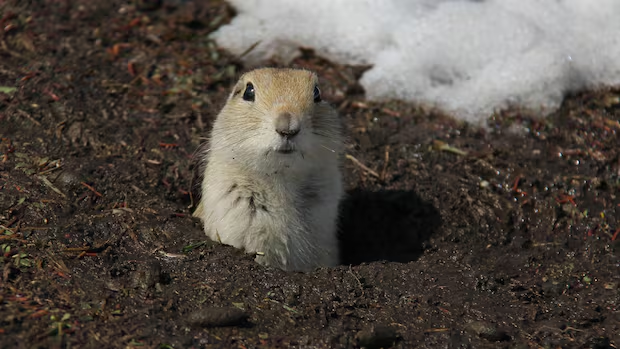
Ottawa is authorizing the controlled and time-limited emergency use of strychnine in Alberta and Saskatchewan to address millions of dollars worth of damage caused by an infestation of Richardson’s ground squirrels, known colloquially as gophers.
Alberta and Saskatchewan submitted a revised, joint emergency-use request to Health Canada last week, after an earlier proposal had been rejected by the Pest Management Regulatory Agency in February.
The agency banned the use of strychnine two years ago, arguing that the substance poses risks to other wildlife species — that could include species-at-risk such as the swift fox and burrowing owl — that consume poisoned carcasses.
The provinces’ approved request included additional restrictions and mitigations measures to lower the environmental risk of the rodent poison “to an acceptable level,” Health Canada said in a news release issued Monday.

“This is incredible news for producers across the Prairies,” RJ Sigurdson, Alberta’s minister of agriculture and irrigation, wrote in a post on X.
“This is a huge win for our agriculture industry, ensuring our producers have the tools they need to better manage their operations and continue providing high-quality products.”
Under the Pest Control Products Act, Ottawa is authorizing the two provinces to register strychnine under an emergency registration until November 2027.
Farmers across Alberta and Saskatchewan have been calling for the opportunity to use strychnine again to manage swelling populations of Richardson’s ground squirrels. The pests target a variety of crops.
Strychnine, in two per cent liquid form, was the go-to gopher control solution on farms in the two provinces before the federal government began phasing out its use to manage the pests in 2020. In 2024, it banned it outright due to environmental risks posed by the poison.
“Saskatchewan producers have been clear about the challenges they face in managing gophers with the limited tools currently available,” David Marit, Saskatchewan’s minister of agriculture, said in a news release.
“We’re pleased to see the emergency use request granted as a practical opportunity for producers to demonstrate how strychnine can help protect their crops and pastures from continued damage.”

Wade Nelson, a farmer near High River, Alta., said he’s seen 170 acres of his canola crops wiped out from a gopher infestation. He applauded the government’s decision to authorize strychnine again for emergency use.
“It’s been a really big issue for us and for a lot of our community and across, well, Alberta and Saskatchewan … I mean, they’re just a devastating problem for us,” he said.
“It’s been a really big struggle. So losing strychnine as an effective tool was a tough pill to swallow. There just isn’t another logical, safe alternative for the management of it, and so that’s why this is a great thing to have.”
Nelson said he would like to see the authorization extend beyond 2027.
He said he hopes that producers, working with municipalities, can prove “that we can use this product safely and effectively so that we don’t have to keep kind of, you know, [being] constantly on the knife edge of whether or not we’re going to be able to continue that.”