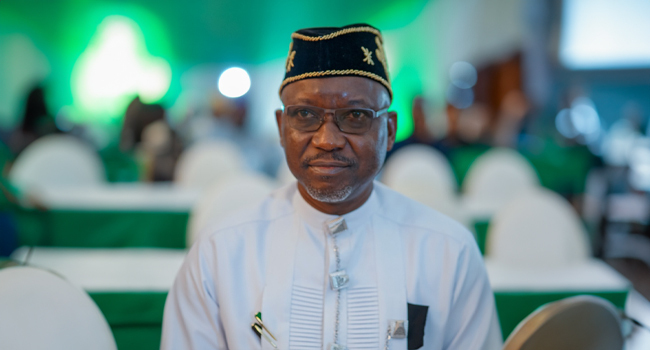
The Minister of State for Petroleum Resources (Gas), Ekperikpe Ekpo, has called for stronger regional collaboration among African nations.
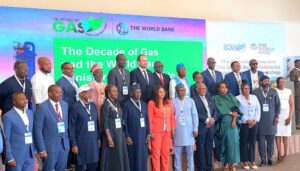
Speaking at the Ministerial Roundtable on Regional Gas Development and Cooperation in Africa, held in Abuja with participation from the World Bank, Ekpo said regional partnerships will unlock the continent’s vast natural gas potential and address persistent energy deficits.
He stressed that Africa’s energy future hinges not on the abundance of its resources but on collective action and coordinated strategies, as Nigeria pushes for an integrated gas market and cross-border projects at the Abuja Roundtable.
Addressing ministers, development partners, and stakeholders, the Minister highlighted the paradox of Africa’s energy landscape, noting that while the continent holds over 600 trillion cubic feet of proven natural gas reserves, more than 600 million people still lack access to electricity, with millions relying on traditional fuels for cooking.
“This is not a question of resource availability, but one of coordination, infrastructure, and collective action,” he said.
Ekpo described natural gas as a critical pathway to Africa’s self-reliance, capable of driving industrialisation, expanding energy access, and strengthening economic resilience.
However, he emphasised that no single country can unlock this potential alone, underscoring regional cooperation as the cornerstone of sustainable development.
He noted that Nigeria, with over 210 trillion cubic feet of gas reserves, is advancing its “Decade of Gas” initiative to position itself as a regional hub through partnerships with other African nations.
He cited key cross-border projects already demonstrating the benefits of collaboration, including the West African Gas Pipeline, Trans-Sahara Gas Pipeline, Nigeria–Equatorial Guinea Gas Pipeline, and the Nigeria–Morocco Gas Pipeline.
To scale up impact across the continent, Ekpo outlined four priority areas for deepened cooperation. These include the development of regional gas supply and market frameworks, with a shift from fragmented national systems to integrated markets featuring transparent pricing, aggregated demand, and efficient cross-border trade.
The Minister also emphasised the need to expand gas-to-power and clean cooking initiatives to ensure that gas development translates into tangible benefits such as reliable electricity and improved living standards for citizens.
On financing, the Minister called for innovative, climate-aligned funding models, including blended finance structures, increased private sector participation, and stronger collaboration with international partners like the World Bank.
Ekpo further stressed the importance of harmonising policy and regulatory frameworks across countries to reduce investment risks and accelerate project delivery, pointing to Nigeria’s Petroleum Industry Act as a useful reference model.
He described natural gas as Africa’s “transition fuel,” serving as a practical bridge for expanding energy access, supporting industrial growth, and lowering emissions intensity, while ensuring a just and inclusive energy transition.
READ ALSO: Asia Imports More Crude From Nigeria, Angola
The minister urged that the Abuja roundtable should move beyond discussions to deliver concrete outcomes, including clearly defined areas of cooperation, identification of priority bankable cross-border projects, and the establishment of institutional mechanisms to drive implementation.
Reaffirming Nigeria’s commitment, Ekpo said the country stands ready to collaborate, invest, and provide leadership where necessary in building an integrated African gas market.
He concluded that aligning vision, coordinating actions, and committing to shared progress would enable Africa to transform from a continent of stranded gas resources into one of integrated energy prosperity.
“The future of Africa’s energy lies not in isolated pipelines, but in connected systems, shared markets, and collective ambition,” he said.