We may receive a commission on purchases made from links.
Night driving often comes with a cinematic sense of romantic adventure. Yet as fun as it is, it can also be stressful and challenging, especially if you consider the fact that our visibility is significantly compromised at night. If you’re used to taking a nighttime spin across the highway, chances are you’ve come across a few accidents. With the National Safety Council claiming that around half of crashes that result in fatalities happen at night, it’s critical to be on your guard.
Given that there has been a growing focus on road safety, car manufacturers have turned to brighter headlights as a way to improve visibility when driving at night. While this tech has greatly enhanced road safety by helping drivers easily see pedestrians, oncoming vehicles, road signs, and obstacles, it also has a downside. Modern headlights are so bright that they can temporarily blind oncoming drivers, a major safety issue in itself.
Resultantly, many drivers have started searching for the best anti-glare night driving glasses that promise to minimize glare from bright LED headlights and streetlights. This begs the question: Do they really work? Based on customer testimonies online, the answer is quite complicated. While most drivers have their doubts, others still see some merits in them. To paint a clear picture of whether night-driving glasses really work, we’ve explored owners’ opinions by going through Reddit threads, discussion boards, and more.
Why some car owners love night driving glasses
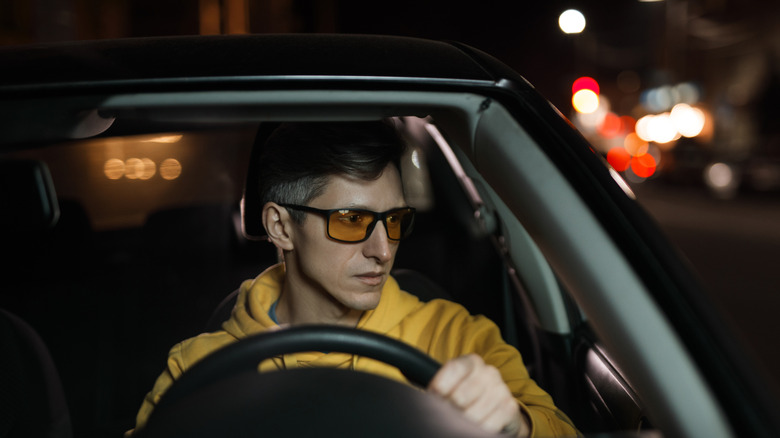
Before we get into the details, it’s worth mentioning that night driving glasses are not a replacement for prescription glasses. They’re non-prescription lenses with a tinted yellowish hue or an anti-reflective coating. Sellers often market them as specialized eyewear designed to enhance driving comfort and safety by reducing the disturbing glare from oncoming headlights.
Glasses like the Urumqi Night Vision Driving Glasses, which are available on Amazon for $25, have received positive reviews, gaining a 4.2 out of five stars from over 3,773 customers as of this writing. Five-star reviewers note that these glasses are large enough to fit over prescription lenses and offer a way to cut the glare from oncoming cars with brighter, more modern headlights.
If you love driving at night on busy roads where glare is a significant problem, proponents of yellow-tinted glasses say they will come in handy for their ability to significantly reduce eye strain. On top of that, though they’re often marketed as night-driving glasses, some products (like the Zenottic Polarized Glasses, which boasts 4.3 stars across more than 20,000 customers) have impressed users, as they are useful for daytime driving as well.
Why some users say to avoid these popular night driving glasses

Most users recognize the comfort and convenience night vision glasses offer, but some don’t believe that they can get the job done. On an AARP community discussion forum, when one user asked whether yellow-tinted glasses help with night driving, a number of people responded, lamenting that they actually made it harder for them to see at night.
Yellow-tinted glasses work by reducing the amount of blue light reaching your eyes. During the day, this might not make any significant difference when it comes to hindering your ability to observe your surroundings. At night, however, since your eyes need more light to see objects clearly, these glasses can significantly reduce your night vision by blocking specific wavelengths of light that are critical for spotting possible road hazards. Some users even complain that these glasses can actually impair their vision on non-illuminated streets or during heavy rain, making it harder to spot road markings, pedestrians, and other drivers.
Before you consider night-driving glasses, it’s worth mentioning that there are safety tips for driving at night that can improve your visibility. Think of cleaning your car’s windshield, switching off your car’s interior lights, and staying off your phone. Some users even claim that looking away or down could help handle this issue, though it’s not recommended to take your eyes off the road for any significant period of time. If you desperately need night driving glasses, however, it’s wise that you visit your optometrist to get prescription lenses with an antireflective coating rather than rely on a pair of yellow-tinted ones that you can get anywhere.