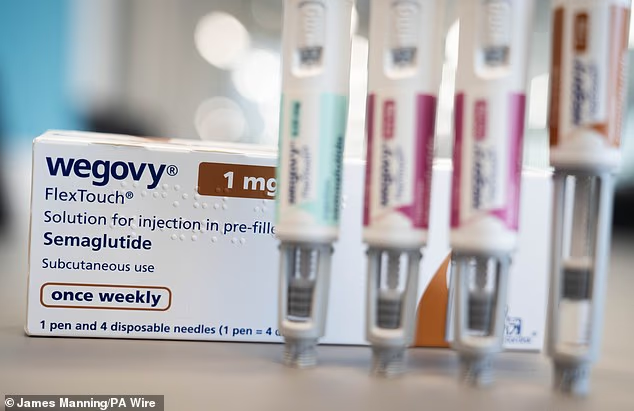
More than a million people with heart disease are set to be offered weight-loss injections on the NHS in a major shift in how the condition is treated.
Under new guidance, patients who have had a heart attack or stroke will be eligible for a weekly Wegovy jab to cut their chances of another life-threatening event.
The drug will be offered alongside cholesterol-lowering statins and blood pressure medication, as well as diet and lifestyle advice.
The decision by the National Institute for Health and Care Excellence (NICE) marks the first time it has been approved in the UK specifically to prevent further heart problems, rather than simply for weight loss.
Until now, medicines such as Wegovy and Ozempic have been used mainly for obesity and diabetes.
But growing evidence suggests they also act directly on the heart and blood vessels, lowering the risk of future events.
The move follows results from the landmark SELECT trial of more than 17,000 patients with cardiovascular disease.
Participants were given weekly injections of semaglutide – the active ingredient in Wegovy – alongside their usual care.
An estimated one in 50 UK adults now use fat jabs with demand soaring since 2023 when the National Institute for Health and Care Excellence (Nice) approved Wegovy for weight loss on the NHS
An estimated one in 50 UK adults now use fat jabs with demand soaring since 2023 when NICE approved Wegovy for weight loss on the NHS.
Those on the drug were 20 per cent less likely to suffer a major heart event, such as a heart attack or stroke, than those given a placebo.
Crucially, researchers found the benefit emerged early in the trial, before patients had lost significant weight.
This suggests the drug’s impact may not be solely down to weight loss, but could involve direct effects on the heart and blood vessels.
Heart disease remains one of the biggest killers in the UK, responsible for more than 460 deaths a day – roughly one every three minutes.
Each year, more than 200,000 people suffer a heart attack or stroke.
Around eight million people in the UK are living with cardiovascular disease, with an estimated 1.2 million thought to have a body mass index (BMI) above 27 and therefore meeting the new eligibility criteria.
Patients with conditions such as peripheral arterial disease, or those who have already experienced a heart attack or stroke, face a significantly higher risk of another potentially fatal event.
NICE’s independent committee concluded that semaglutide offers a meaningful benefit for these patients and represents a cost-effective use of NHS resources.
Helen Knight, director of medicines evaluation at NICE, said: ‘We know that people who have already had a heart attack or stroke are living with real fear that it could happen again.
‘Today’s decision gives thousands of people in that situation an extra layer of protection, on top of the medicines they are already taking.’
The guidance is expected to see the drug incorporated into routine cardiovascular care over the coming years as part of the NHS’s long-term plan.
Wegovy is already available on the NHS through specialist weight management services for people with obesity, typically those with a BMI of 35 or above. The new recommendation significantly broadens access.
Up to two million people in Britain are currently thought to be using weight-loss jabs, the vast majority paying for them privately. The NHS rollout is expected to prioritise those at highest risk first.
Dr Sunil Gupta, a GP and clinical adviser to NICE, said the decision gives doctors an ‘important’ new option for patients who remain at risk despite following medical advice.
‘For the right person, this weekly injection could offer a meaningful extra layer of protection on top of the medicines they are already taking,’ he said.
‘I’d encourage anyone who thinks they might be eligible to have a conversation with their GP.’
However, some specialists urged caution, noting that the treatment is not a substitute for existing therapies and must be targeted carefully.
Dr Oliver Guttmann, a consultant cardiologist at St Bartholomew’s Hospital, said the recommendation represents a significant step forward – but said there were practical issues to be considered.
‘In practice this could cut around three to five major cardiovascular events per 100 patients every few years.
‘It’s a genuine prevention tool beyond statins and blood pressure medications – but we need to be honest about cost, supply and picking the right patients with established cardiovascular disease.
‘It shifts the conversation from ‘obesity drugs’ to ‘cardiovascular therapy that also trims weight’.’
Others raised concerns about how evenly the treatment will be rolled out across the NHS.
Professor Riyaz Patel, a cardiologist at University College London, said there is a risk of postcode lotteries if access is not carefully managed.
‘We know that other highly beneficial drugs have been variably delivered across the country,’ he said. ‘This must not become another example where access depends on where you live.’
Juliet Bouverie, chief executive of the Stroke Association, said the new option could be valuable for patients living with the constant threat of another stroke.
‘As stroke survivors live with the worrying risk of further strokes, it’s vital they have options to help prevent that from happening,’ she said.
‘However, every stroke survivor is different, and their specific needs should be carefully considered.’
Sebnem Avsar Tuna, general manager of Wegovy manufacturer Novo Nordisk UK, said it means clinicians now have access to the first GLP-1 receptor agonist proven to reduce the risk of heart attack, stroke or cardiovascular death in this high-risk group.
NICE said it is confident the recommendation strikes the right balance between clinical benefit and value for money, paving the way for wider use of the drug in routine care.