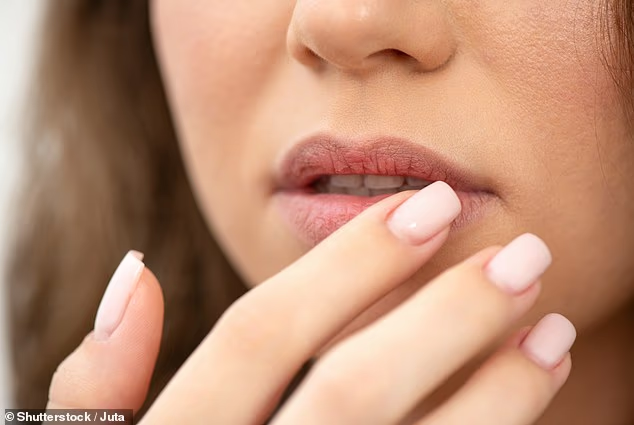
I’m constantly developing an embarrassing cold sore on my lip. It will go away for a bit and then come back a few weeks later. What can I do?
Dr Philippa Kaye answers: Cold sores are an incredibly common – not to mention annoying – problem. The good news is that there are ways to prevent them from occurring and even steps to banish them when they do arise.
Cold sores are red, often painful, blisters that appear on the lips. They are caused by the herpes simplex virus, which is carried by around two-thirds of people under the age of 50.
The virus is usually picked up in childhood, typically through ordinary skin-to-skin contact, like a kiss from a family member.
Once herpes simplex enters the body, it never fully leaves. Instead, it retreats into nerve cells near the spine.
Many people have the virus but will never experience any symptoms.
However, for others, the virus can periodically reactivate and travel to the skin surface, usually around the lips.
The first symptom is usually a tingling sensation in the skin, followed by an uncomfortable blister – or even a cluster of them.
Cold sores are caused by the herpes simplex virus, which is carried by around two–thirds of people under the age of 50

Fatigue, disrupted sleep, prolonged stress, exposure to sunlight as well as cold and windy weather, are all known to increases the chances of cold sores reoccurring
These typically will last no more than a week before crusting over and then disappearing.
But, while active, a cold sore can be painful, not to mention embarrassing. And, for many patients, these blisters can repeatedly return.
One of the most common cold sore triggers is an illness, in particular colds and the flu, which is how cold sores got their name.
However, there are also lifestyle factors that can raise the risk of recurrent cold sores.
Fatigue, disrupted sleep, prolonged stress, exposure to sunlight as well as cold and windy weather, are all known to increases the chances of the blisters returning.
Poor diet can also be a factor. This is because a balanced diet is crucial to supporting a healthy immune system, which in turns helps keep the herpes virus in check.
Patients who regularly get cold sores should keep a mental note of what they were doing in the leadup to the recurrence.
For example, were they sleeping enough? Were they overly stressed at work, and failing to manage this through exercise or relaxation techniques? Were they spending extended time in the sunshine without wearing lip balm containing UV protection? Were they eating poorly?
Keeping on top of these factors can make all the difference when trying to ward off cold sores.
There is also a daily supplement called lysine, which is meant to prevent cold sores from forming, that many patients swear by.
However, the evidence for its effectiveness is mixed.

GP, author and broadcaster Dr Philippa Kaye
There are also steps patients can take to manage cold sores after they arise.
Time is of the essence when it comes to cold sores, treatment is most effective right at the start, during that tingling phase before any blisters have appeared.
There is an antiviral cream, called acyclovir, that is available over the counter from most local pharmacies.
It stops the virus from replicating – which gives the immune system a fighting chance at suppressing it quickly.
Acyclovir needs to be applied five times a day for five days from the moment the initial tingling sensation begins.
Some patients also swear by hydrocolloids patches. These cover the sore, creating a moist and sterile environment that should accelerate healing.
These patches should also prevent further irritation.
Likewise, patients should avoid eating salty, spicy or acidic foods, which can cause irritation.
Make sure to avoid picking or squeezing the blisters, as this can cause them to get infected with bacteria, which is even more painful and long-lasting.
To manage the pain, a cool damp cloth or a wrapped ice pack should do the trick.
Also, while a cold sore is visible it is infectious, so it’s important limit the risk of spreading the virus.
Not everyone has the virus, so giving it to someone will mean they carry the virus for life and potentially have to live with cold sores for the rest of their life.
There are also certain groups – such as newborn babies and people with severely weakened immune systems – for whom the herpes simplex virus can cause more severe health issues.
So don’t forget to regularly wash your hands and avoid sharing towels, flannels, cutlery or lip balm and definitely avoid kissing.
Patients with active cold sores should refrain from oral sex. This is because the herpes virus can be transmitted from the lips to genitals, often triggering genital herpes.

There are also certain groups – such as newborn babies and people with severely weakened immune systems – for whom a cold sore can cause more severe health issues.
In turn, engaging in oral sex with someone who has active genital herpes lesions can lead to cold sores.
This is still a risk even if there no visible active lesions, but it is much smaller and can be reduced by using condoms or dental dams.
For patients who get frequent cold sores, such as several a month, or prolonged outbreaks, there are prescription medicines that a GP can offer.
These include antivirals like valaciclovir and famciclovir.
These can be given either to shorten an outbreak or taken continuously to prevent the virus from reactivating.
Patients who have a cold sore that lasts for more than ten days, or if the sores develop in the mouth, nose or the near the eyes should see their GP.
Likewise, if a cold sore is accompanied with a high fever, or the skin around the blister becomes swollen, red or has pus, then patients should see a doctor.
Pregnant patients, as well as those with a compromised immune system, should always seek medical help if they develop a cold sore.
- Write to Dr Philippa Kaye at Health, Daily Mail, 9 Derry Street, London, W8 5HY or email: health@mailonsunday.co.uk – include contact details. Dr Kaye cannot enter into personal correspondence. Replies should be taken in a general context. Consult your own GP with any health worries.