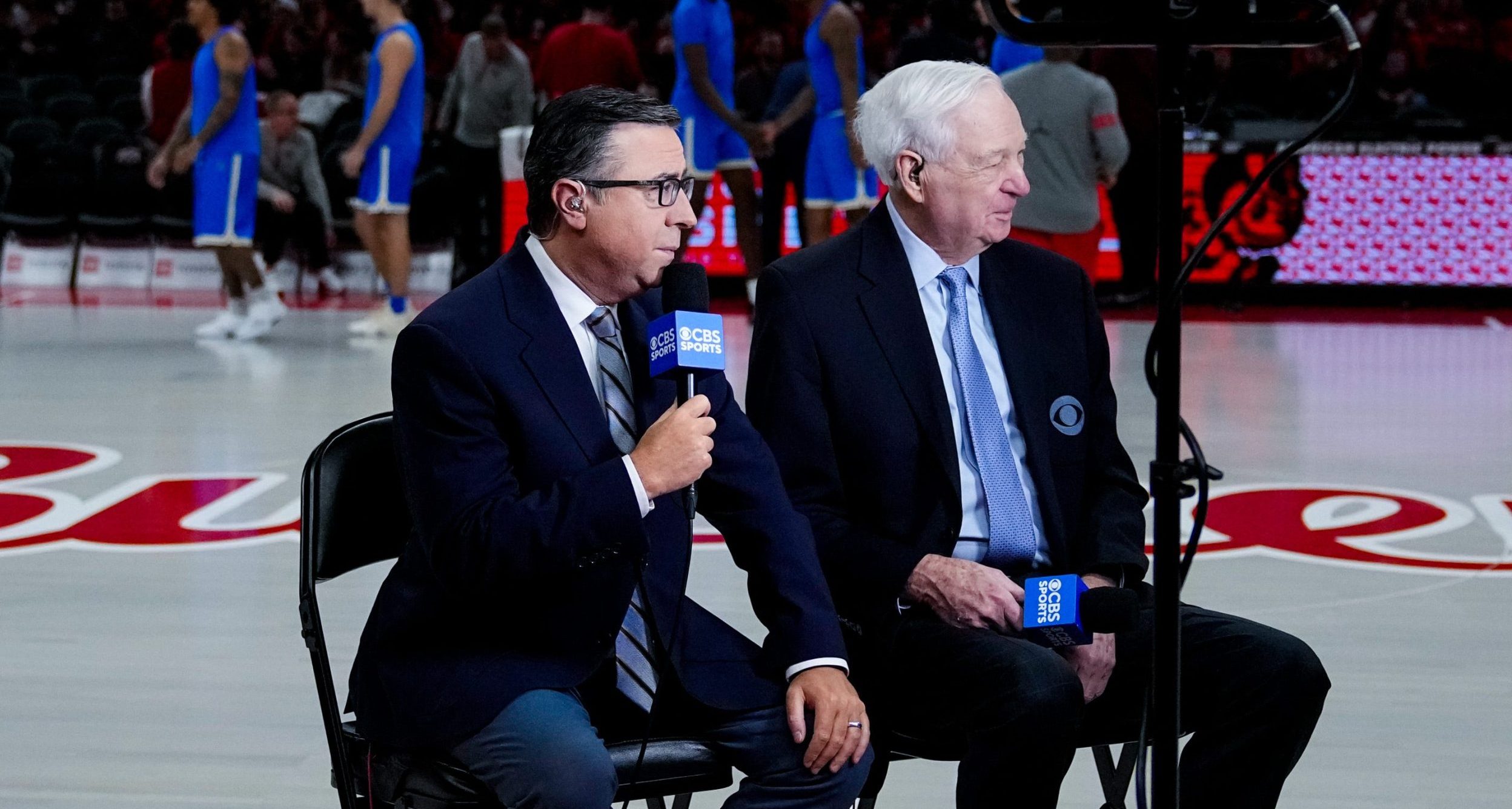
Like the rest of us, the voice of the Final Four was nervous about the impact that NIL and the transfer portal would have on college basketball. That’s Ian Eagle, who calls the final rounds of the NCAA men’s tournament for CBS and TNT Sports each year, and who worried about the chaos this era of player movement could bring to the sport he loves.
In an appearance on The Ryen Russillo Show this week, Eagle revealed that he thought March Madness might “lose a little bit of its luster” with teams evolving so much year to year, and that team chemistry and player development might suffer.
But heading into a rich slate of games in Indianapolis this weekend, Eagle has realized he is dead wrong.
Eagle argued that in fact both the quality of play and the passion of teams’ fanbases have improved since the NCAA loosened transfer rules and allowed players to begin making money from promotional opportunities.
“When we figured out that the transfer portal would basically be free agency … I didn’t know if the tournament would lose a little bit of its luster because people weren’t seeing teams develop. They weren’t seeing a group really grow together at a blue blood. And my first instinct was, ‘This might be rough.’” Eagle explained. “And it’s actually been the opposite.”
The NCAA men’s tournament announcer suggested that perhaps as a result of all the upheaval, fanbases have doubled down on their programs.
“It’s proven to me that people love rooting for their school and they love rooting for the name on the front of the jersey,” Eagle said. “And the name on the back of the jersey’s important, but in terms of priorities, they just love their squad. The names may change, but their love of their school, program will always be there.”
At the same time, Eagle said, the system now rewards fringe NBA players who stay in school. Eagle gave the example of UConn’s Alex Karaban, who has stuck with head coach Dan Hurley since his redshirt freshman year and now through two national championships and a return to the Final Four.
“There are a bunch of Alex Karabans around the country they may not be the prototypical, ‘This guy should be in the NBA,’ but he’s a really good college player,” Eagle said.
“Now, because of the setup, he can make money and in his case he stayed with the university. Others have transferred but they’re making money, and they can develop their skills. And they don’t have the two-year flameout of G League team to G League team, a dalliance in Europe, ‘He wants to come back.’
“Alex Karaban has now cemented himself in UConn history, and college basketball is better off for it. The level of play has been better because of that. Because of that scenario. Players that would leave after year two or year three, they didn’t have the skill set to play in the NBA but they remain at the Division I level, and they do something with it. And we see better games, more competitive games because of it.”
Eagle also highlighted how payment opportunities have opened up pathways for college programs to scout internationally, a strategy that Illinois and Arizona have ridden to this year’s Final Four.
Similar to his argument on behalf of the NBA last month, it is refreshing to hear Eagle go to bat for the sports he calls and find the positives in a time of change in sports. Eagle doesn’t shy away from the fact that he had the same concerns as most college basketball fans, but he also is willing to acknowledge how his opinions have changed when they do.