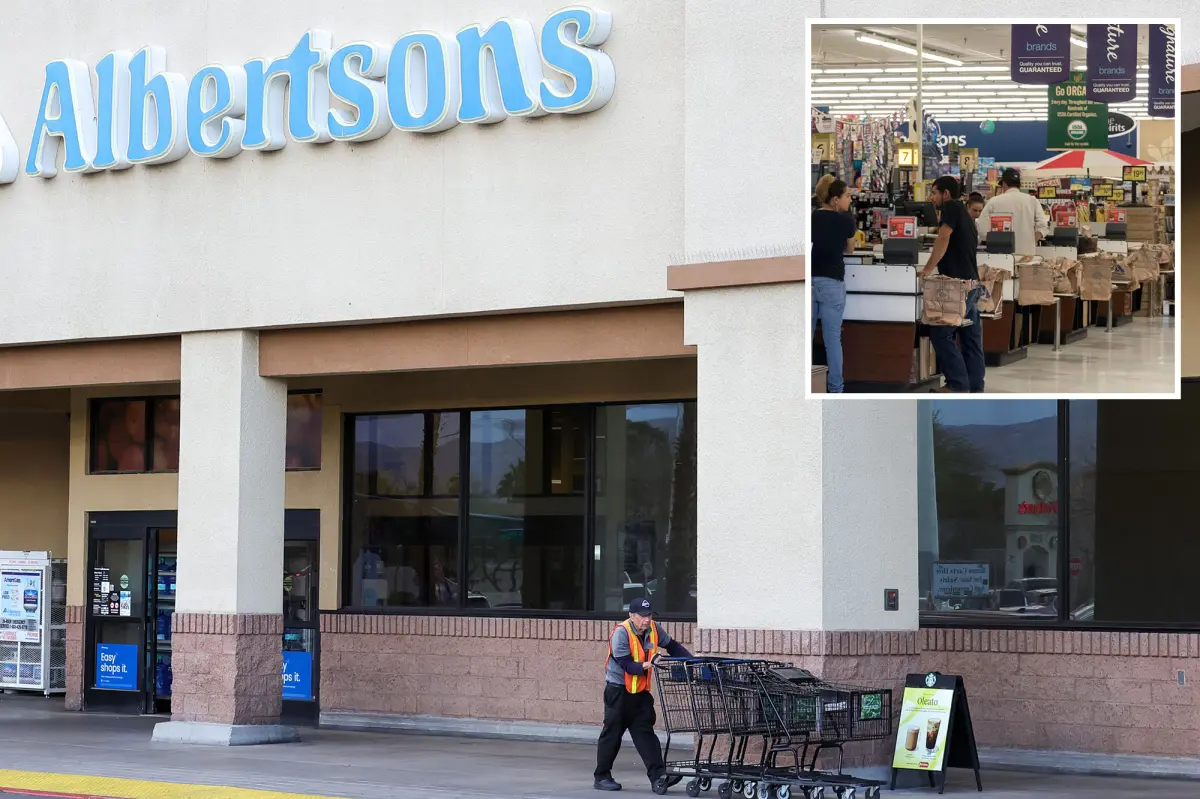
Albertsons must have one hell of a headache.
Industry insiders say the Boise-based supermarket behemoth is nursing a “merger hangover” after the Federal Trade Commision blocked a $24.6 billion marriage to Kroger — and that the grocery giant is attempting a recovery by shuttering a slew of stores in Southern California and beyond.
The failed deal was supposed to be a lifeline to help the chain compete with even bigger players like Walmart. Albertsons also operates Golden State staple brands like Safeway, Vons and Pavilions.
The latest round of cuts impacts Vons locations in Escondido and Redlands, which will close in April — wiping out 135 jobs. The unwelcome news comes after an Albertsons store near Riverside shuttered Mar. 19, resulting in 75 layoffs.
In February, a Safeway in the Alameda area shut its doors for good, impacting 76 employees.
The latest round of pantry pain isn’t limited to the West Coast — it’s also hitting North Texas, where two Tarrant County locations are set to go dark by late April, pink-slipping 138 employees, per Worker Adjustment and Retraining Notification filings reported by USA Today.
A Safeway in Washington, D.C. is slated for a May closure, impacting 87 workers.
USA Today reported that Albertsons’ CEO Susan Morris is leaning heavily into AI and automation to trim the fat, reporting that its Q3 2025 digital sales have jumped 21%.

While the company boasts of “smarter decisions” and “greater efficiency” through tech, that efficiency is coming at the cost of human cashiers and stockers.
The company had already shuttered some 20 stores in 2025, according to reports.
The news comes after California competitor Grocery Outlet announced the closure of dozens of stores last month — focusing on those that were “underperforming financially,” according to President and CEO Jason Potter.
Meanwhile, Albertsons stock has taken a significant hit over the past year — reflecting investor jitters as the 87-year-old giant tries to prove it isn’t a retail dinosaur in an increasingly digital world.
But even the likes of Walmart aren’t immune to headwinds on the automation front — critics dumped on the discounter after news that it had won two patents giving computer algorithms more of a role in product pricing, The Post previously reported.
One new tool is reportedly able to grab sensitive consumer data, including driver’s license numbers, to learn more about customers, while the other is said to be able to quickly change pricing based on product popularity.
“Dynamic pricing or anything that smells like it is playing with fire,” an industry insider warned of the news.
“The goodwill that you can lose by getting customers to think or suspect or worry even slightly that you are doing things with pricing that are to your benefit and their detriment,” they said.