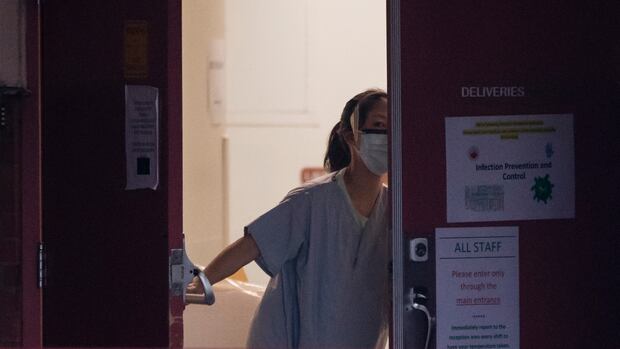
Turnover is erasing more than half of the nurse hiring gains Manitoba is making, a provincial document shows.
The breakdown of nurse hires and departures, obtained by CBC News through a freedom of information request, shows for every 100 nurses the province brought into the public health-care system between April 2024 to May 2025, around 57 nurses left.
“That is a lot, but nurses are very, very frustrated,” said Sonia Udod, an associate professor in the University of Manitoba’s nursing college who has studied challenges in retaining nurses.
The document shows a net gain of 735 nurses in full- and part-time positions during that time period, with the province bringing 1,697 nurses into the public health-care system and losing 962.
The number lost would include nurses who quit, retired or went to a private agency.
“Right now we’re in a crisis,” said the U of M’s Udod.
“So we’re trying to recruit what we can to make the … health authorities look better and to calm people in the community that we do have enough people,” she said.
“But that’s responding to a crisis. Where we need to be looking is at retention.”
Co-ordinated approach to retention: minister
Udod held a nurse retention workshop last November in Winnipeg, where nurses described excessive workloads and not feeling recognized or valued for their work as major complaints.
New nurses crave mentorship, Udod also found, but there aren’t enough senior nurses still working to provide that.
Establishing minimum nurse-to-patient ratios, which the NDP government is working toward, is one way to address those complaints, but more measures are needed, said Udod.
The provincial hiring numbers align with a recent report from the Montreal Economic Institute, Udod noted, which found 58 Manitoba nurses under the age of 35 left the workforce for every 100 who entered in 2023.
“It’s those new nurses that are leaving, those ones that are just graduating up to one year, and the nurses from one to five years [of experience] are leaving as well,” Udod said.
Health Minister Uzoma Asagwara said the hiring breakdown, which still showed an overall net gain, is a “snapshot in time rather than the full trajectory of Manitoba’s nursing workforce.”
The province is taking a co-ordinated approach to recruitment and retention, they said in a statement, including “expanding pathways for internationally educated nurses, strengthening training and re-entry programs, and working directly with rural and regional partners” to expand the workforce.
Net loss in Prairie Mountain
The breakdown also provides hiring and departure numbers by regional health authority over the same 13 months.
Both the Winnipeg Regional Health Authority and Shared Health, the provincial agency, saw roughly half of their gains lost to departures.
Winnipeg’s health region gained 793 nurses but lost 438, while Shared Health hired 415 nurses and lost 209.
The only health region to experience a net loss in permanent nursing staff was Prairie Mountain, in western Manitoba, which saw a net loss of 23 nurses (161 departures versus 138 hires).
Manitoba Nurses Union president Darlene Jackson said those numbers are particularly worrying because nurses are graduating from Brandon University and Assiniboine Community College in the region.
Prairie Mountain has a number of small facilities in close proximity to each other, which sometimes share emergency services because of staffing vacancies, she said.
“Brand new nurses want to work in an environment that is busy, where they’re supported, and I think that in some of the smaller facilities, there just isn’t the support that a new grad needs,” Jackson said.
However, Prairie Mountain Health said that if casual nurses are included in the provincial count — which only incorporates full- and part-time employees — there was actually a net gain of 59 nurses over the 2024-25 period.
But Jackson said a net gain of casual nurses isn’t the same as adding permanent staff, since casual employees don’t have guaranteed hours.
“They do not represent a stable or predictable addition to baseline staffing,” she said.
However, Asagwara said in a recent interview the province’s count is a “more conservative approach” and “a bit of an underrepresentation of the net new nurses who are joining the front-lines.”
A ministerial spokesperson also said Prairie Mountain saw an increase in 48 net new permanent nurses if the timeline is expanded from October 2023, when the NDP government was elected, to July 2025.
Asagwara also said Prairie Mountain has historically faced the steepest staffing challenges, but there are signs of improvement.
Officials in Prairie Mountain have visited schools to highlight careers in health and launched a training program for health-care aides, said Asagwara.
The region has also brought more nurses into the float pool — the public system’s answer to private nursing agencies — than any other, they said.

A 13-month breakdown of nurse hiring data ending in May 2025 shows Manitoba is gaining new nurses, but at least half of the gains are being wiped away because other nurses are leaving their jobs.