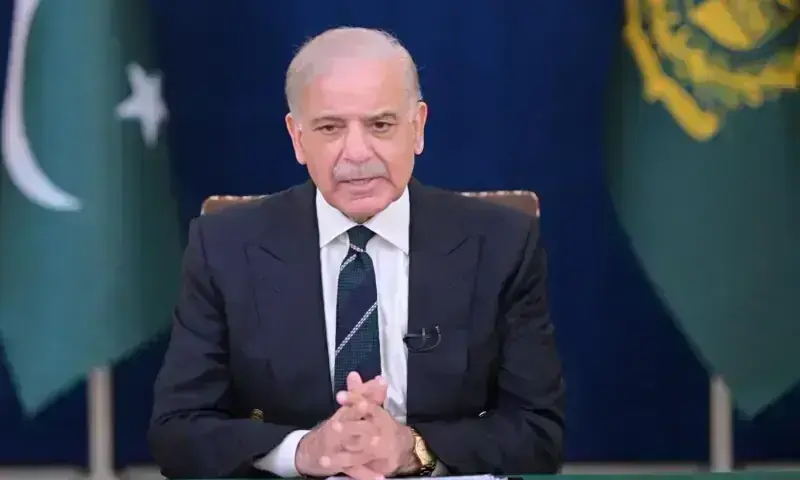
Prime Minister Shehbaz Sharif announced on Friday that the government was reducing the petrol levy by Rs80 per litre, after which the commodity would be available to the end consumer for Rs378 per litre.
He said the new price would take effect at 12am on Saturday.
The premier said this in a televised address to the nation a day after the government announced an unprecedented increase of 43 per cent and 55pc in the prices of petrol and high-speed diesel (HSD), respectively.
The petrol price had increased to Rs458 per litre after the hike, which the premier said was being reduced to Rs378 per litre for at least one month.
The new prices would be effective across the country, he added.
He assured the federal and all four provincial governments would continue to work toward easing the difficulties being faced by the people at this “critical time”.
He also said that previously it was decided that federal cabinet members would not receive their salaries for two months as part of the austerity measures taken by the government to deal with the fuel crunch. But now, the premier said, they would not get their salaries for six months.
PM Shehbaz said that he had, however, not been able to consult the members of his cabinet on this decision due to “haste”.
The PM had begun his address by detailing the impacts of the ongoing Middle East conflict. He said he was once again addressing the nation at a challenging time, with a war going on in the Middle East. And due to that war, oil prices had skyrocketed across the region, he said, adding that Pakistan had also been feeling the impact of the soaring prices.
In these circumstances, he continued, the poor, the common man, and farmers were facing difficulties.
He said he had tried his best to utilise the “national resources, which are limited”, to reduce those difficulties and for the public welfare.
Reiterating that oil prices had soared in international markets, he said, adding that even big economies were struggling in the face of rising inflation. “Certainly, Pakistan is also badly affected by it,” he said.
He added that he “did not find it appropriate to pass on the burden of the increase in oil prices to the people over the past three weeks” as he was aware of the difficulties of the common man.
More to follow