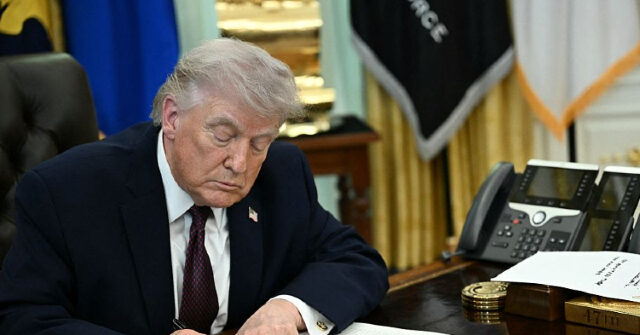
President Trump has signed an executive order (EO) intended to reform and structure college sports, primarily by limiting the number of years a player is eligible and the number of transfers.
“The order states college athletes can play a maximum of five seasons during a five-year window and allows them to transfer schools only once before they graduate without having to sit out a season,” ESPN reports. “A school that plays an athlete who doesn’t meet these new limits could risk losing its federal funding.”
Serious legal obstacles could prevent the order’s implementation. Trump hinted at as much during his roundtable with former college coaches and administrators last month.
Chiefly, the question is whether any parts of the order would be enforceable. Multiple legal experts have opined that judges would find the president’s order unconstitutional and/or unenforceable if it were challenged in court, as it most certainly will be.
While the president’s threat to use the power of the purse by withholding funds from institutions that don’t comply is real, a recent decision by a federal judge prevented the Trump administration from withholding funds from Harvard University over that institution’s antisemitic behavior.
The college sports landscape has shifted in recent years in ways that few could have imagined.
It is no longer uncommon to find athletes seeking a sixth or even seventh year of eligibility, as name, image, and likeness (NIL) earnings have made staying in school far more attractive. Nor is it uncommon to find players who have transferred as many as three or four times in their collegiate careers.
The president has multiple times indicated his willingness to help solve the problem.
One of the president’s key initiatives is to eliminate unfair NIL practices, such as organizations created by boosters or other university-affiliated parties that pay players above the market NIL value. The order also prohibits “collectives,” which make direct payments to players regardless of whether they have NIL value.
The EO also implements revenue-sharing that “preserves or expands scholarships” in women’s and Olympic sports and prohibits the use of federal funds for NIL/revenue sharing.
“In the Senate, Republican Ted Cruz and Democrat Maria Cantwell are actively negotiating in hopes of producing a bipartisan bill this spring, according to sources on Capitol Hill,” ESPN reports. “Cruz told ESPN earlier this year it was “absolutely critical” that new legislation include language that would prevent college athletes from being deemed employees of their school. Several Democrats believe employment and collective bargaining is the best route to finding a sustainable future for college sports. Sources said the employment debate remains one of the largest obstacles to reaching a compromise.
“The president’s executive order does not address employment or other major unresolved issues in college sports, such as a push from Cantwell to reshape how schools share the revenue from their television contracts.”