It’s an argument practically as old as the combustion engine itself: What’s the best configuration of cylinders? V6 or V8, V8 or V12, straight engines versus V engines, and so on. And, in this case, an inline-4 or an inline-3? At first glance, it appears to be a simple answer — four cylinders are better because there’s a higher cylinder count. More cylinders, more displacement, more power, more good, right? But the further we dive down the rabbit hole, the more nuanced the answer becomes.
First of all, what are you using the engine for? A three-cylinder engine will be more compact and suitable for city cars, whereas a four-cylinder engine is more general-purpose. Are the displacements the same — do you have three large cylinders or four small cylinders? What about factors like fuel economy, smoothness, simplicity, and so on? Each configuration holds its own unique advantages and disadvantages, which we’ll discuss in detail.
In short, there is no simple answer here because it’s ultimately about the engine’s application. A three-cylinder will never work in, say, an American SUV; conversely, a four-cylinder is too big for a tiny kei car or a European subcompact. So individual regions and owners may favor one over the other for their own needs. However, generally speaking, four cylinders is the sweet spot, owing to its simplicity, mature technology, and versatility. It may not be better at everything, but there’s a reason why many cars have featured four-cylinder configurations since the technical marvel that was the Ford Model T’s four-cylinder engine.
Four-cylinder versus three-cylinder engines
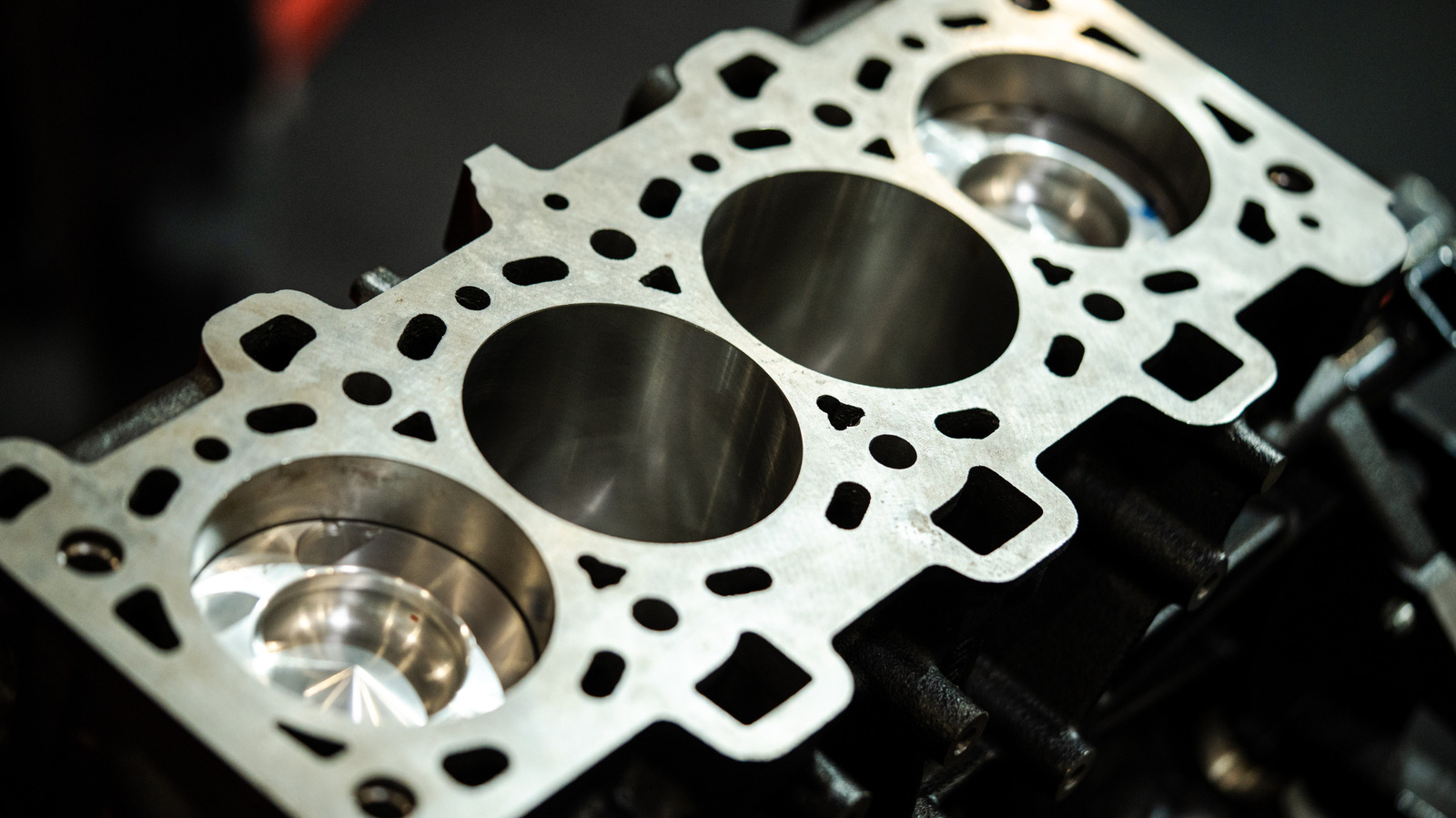
Let’s forget individual engines for a second and focus on the physical properties of the four-cylinder layout. An inline-four has four cylinders in a line, and can be seen as two 2-cylinder engines operating in sync. When piston 1 moves up, so does 4, and the same goes for pistons 2 and 3. Because the pistons move in pairs, they cancel out each other’s momentum, meaning four-cylinder engines have excellent primary balance.
Thus, four-cylinder engines are generally smoother than three-cylinder engines. They’re not perfectly smooth, however, because they don’t have perfect secondary balance. Engine pistons move further for their first half of travel than for the second half. In other words, from 0 to 90 degrees, the piston moves a further distance than from 90 to 180 degrees of rotation. This slowing effect means the sum of inertia isn’t equal, and therefore, there’s an imbalance. Four-cylinder engines must use balancing shafts or other solutions to counteract this.
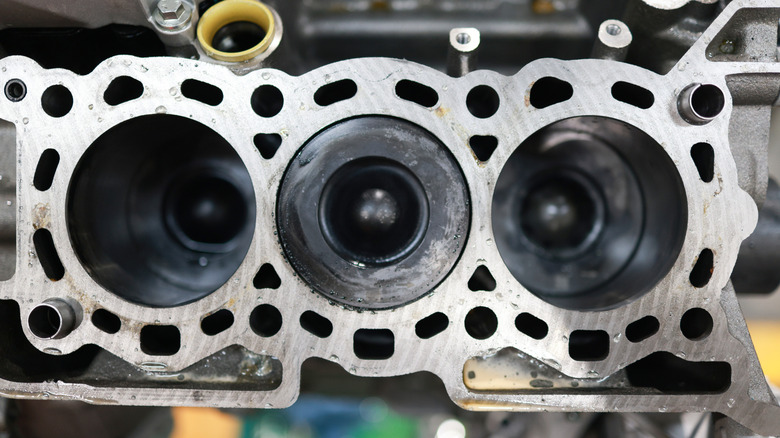
Three-cylinder engines are the reverse; they have excellent secondary balance, owing to the cylinders being 120 degrees apart (120+3=360). However, this is offset by the pistons having unequal primary balance — the pistons don’t have an opposite pair, as would be the case in a straight-six engine (one argument in favor of the straight-six versus the V6). This means that, despite a lower cylinder count, inline-threes are deceptively complex engines, requiring balancing components to maintain smoothness.
Why the four-cylinder layout wins out
Aside from specialized vehicles such as kei cars, which often need three-cylinder engines to meet strict size requirements, four-cylinder engines generally win out due to their relative simplicity. One key point is that while three-cylinders are naturally more efficient than four-cylinders — due to performing less combustion — they also tend to make less power, which is why you’ll often see them paired with turbochargers.
We’re not going to get into the debate of naturally-aspirated versus turbocharged engines here, but the relevant point here is that a turbo adds more complexity. It’s entire system bolted onto the engine’s exhaust to help compensate for the power deficit, and a broken turbo can potentially be a costly ordeal. The simplicity afforded by a four-cylinder, which can produce similar power to a turbo three-cylinder — with no turbo lag to boot — gives it a distinct advantage here. Plus, no one’s saying you can’t turbocharge the four-cylinder, either, at which point its power output will likely exceed the three-cylinder’s.
Ultimately, then, the argument is a question of specialty. Is the car small enough that a four-cylinder engine would be too large to fit? Does the vehicle have a niche focus, such as hypermiling? Then a turbo three-cylinder is a better bet. Otherwise, four-cylinder engines offer a balanced combination of simplicity, compactness, and power, which is likely why so many manufacturers continue using them today.